

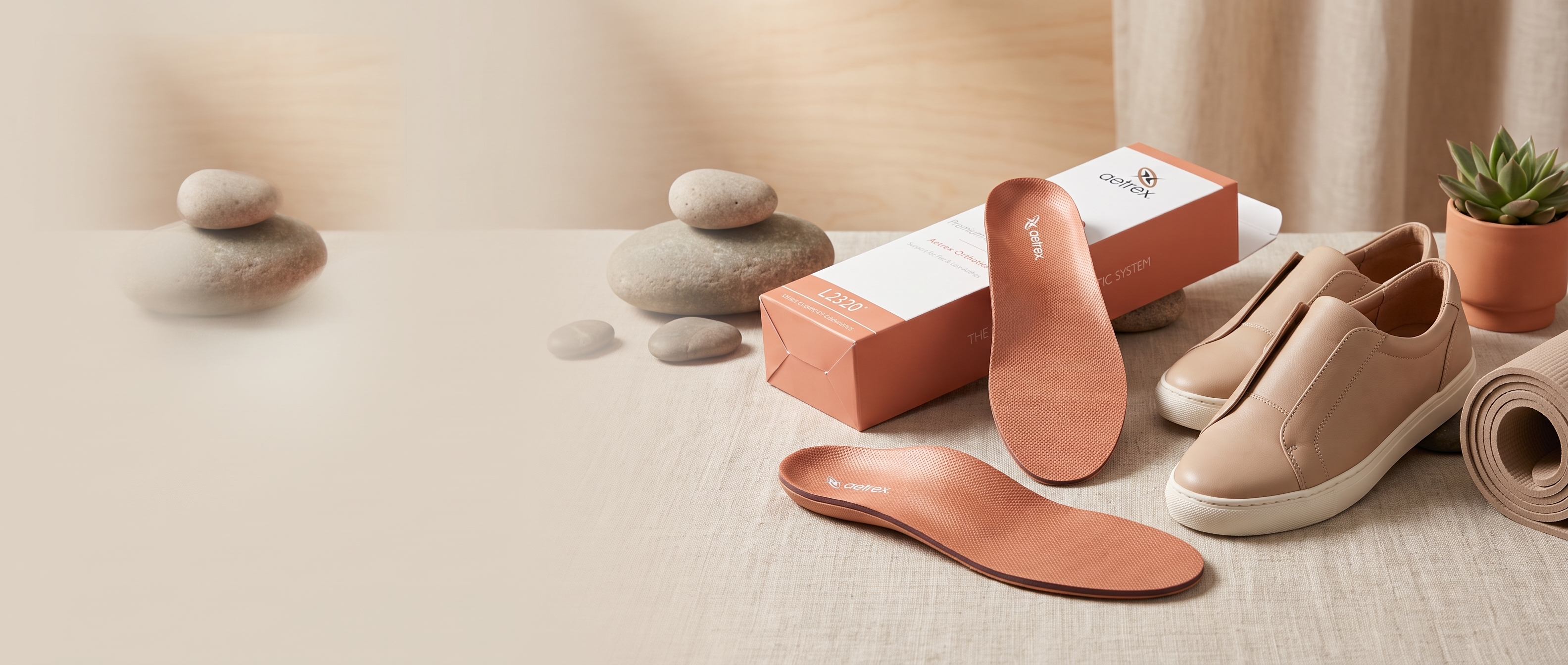
In Short: The best insoles for plantar fasciitis combine three things — structured arch support, a posted heel to control overpronation, and forefoot cushioning that absorbs morning-step impact. Aetrex Premium Memory Foam Posted Orthotics feature Aetrex's Signature Arch Support designed to help prevent plantar fasciitis, arch pain, and metatarsalgia — all three criteria in a single insert. Aetrex's designs are informed by its foot-scanning technology, so the arch geometry reflects real-world foot data. At $79.95, they offer that support at a fraction of what custom orthotics cost.
Not all arch support is the same. Not all cushioning addresses the right problem. Heel cups without proper posting do little to control the motion that strains the plantar fascia in the first place.
Three criteria matter most:
Each criterion addresses a distinct biomechanical factor. An insole missing any one of them leaves a gap in how it helps. The arch prevents overstretching, the posted heel prevents the inward roll that causes overstretching, and the forefoot cushioning protects the attachment point where damage concentrates. Together, they form a complete approach.
Why does arch geometry matter so much? Aetrex's designs are informed by its foot-scanning technology — which means the arch shape targets specific conditions rather than approximating a generic curve. If you've cycled through multiple insoles without relief, the frustration is real. Donald now uses his across every pair of footwear he owns: “I use them in all my shoes and work boots. No need to search anymore” (Donald).

Shop Premium Memory Foam Orthotics
Aetrex concentrates cushioning at the heel and forefoot attachment points — the specific zones where plantar fasciitis pain concentrates — rather than distributing it uniformly across the foot.
The Premium Memory Foam Orthotics contain 43% more memory foam in the forefoot compared to other Aetrex orthotics. That additional material cushions the plantar fascia's attachment point during first steps — the moment when discomfort peaks after overnight tightening.
The L2320 model is designed for low arches to flat feet, featuring a posted heel to control overpronation — a common biomechanical pattern associated with plantar fasciitis. The posted heel addresses it at the rearfoot, before the chain reaction reaches the fascia.
Two layers work together: the center cushioning is lQl50™ Memory Foam, sitting over an Aerocell™ polyurethane base designed for high energy return. The memory foam conforms to your foot's pressure points, while the polyurethane base maintains structural integrity mile after mile.
At $79.95, these offer data-informed design at a fraction of the cost of custom orthotics, which can run several hundred dollars — a practical first step before committing to a custom solution. Steven, who has used the L2320 for several years, describes the sustained benefit: “stay on my feet longer without ankle pain” (Steven).
Individual experiences vary, but some owners report noticing a difference quickly. Billy, who wears the orthotics daily: “I've had mine a week and can tell a difference already” (Billy).
For people who stand all day, the stakes are higher. Paula describes her husband wearing them through demanding shifts: “He is on his feet up to 12 hours at a time when he's working, and he now wears these insoles religiously” (Paula). The orthotics are recommended for walkers, nurses, doctors, teachers, chefs, and those who are on their feet often.
An honest note on fit: The L2320 is purpose-designed for low arches to flat feet. The large majority of owners report satisfaction, but people with very high arches or specific forefoot conditions may need a different Aetrex model. This isn't a universal-fit product — it's a targeted one.
Remove existing insoles before inserting. The Aerocell™ base is designed to sit directly on the shoe's midsole for proper alignment; stacking insoles compromises both fit and biomechanical correction.
The top cover uses CopperGuard® antimicrobial lining and microfiber — keeping the orthotic fresh through daily wear. Wipe down periodically with a damp cloth. Never machine wash.
They're suited for everyday casual shoes, work boots, and athletic footwear. Scott keeps them “in every pair of boots and shoes” (Scott). At 0.25 inches thick, they fit without crowding the toe box in most standard-depth footwear.
Are insoles effective for morning heel pain from plantar fasciitis?
Structured arch support and a posted heel help reduce fascia strain from the first step. The Premium Memory Foam Posted Orthotics contain 43% more memory foam in the forefoot compared to other Aetrex orthotics — specifically to absorb morning impact when the fascia is tightest.
Which Aetrex insole is best for plantar fasciitis?
The L2320 is designed for low arches to flat feet, with a posted heel to control over-pronation. For higher arches or forefoot-specific concerns, other Aetrex orthotic models may be a better match. Matching arch geometry to your foot type matters more than choosing a one-size-fits-all insert.
How do these compare to custom orthotics?
They feature Aetrex's signature arch support designed to help prevent plantar fasciitis, arch pain, and metatarsalgia, informed by Aetrex's foot-scanning technology. At $79.95, they cost a fraction of custom-molded alternatives, which can run several hundred dollars.
Share:
Best Sandals for Plantar Fasciitis and Foot Pain During Summer
Stylish Supportive Sandals With Arch Support for Beach, Dinner, and All-Day Walking