

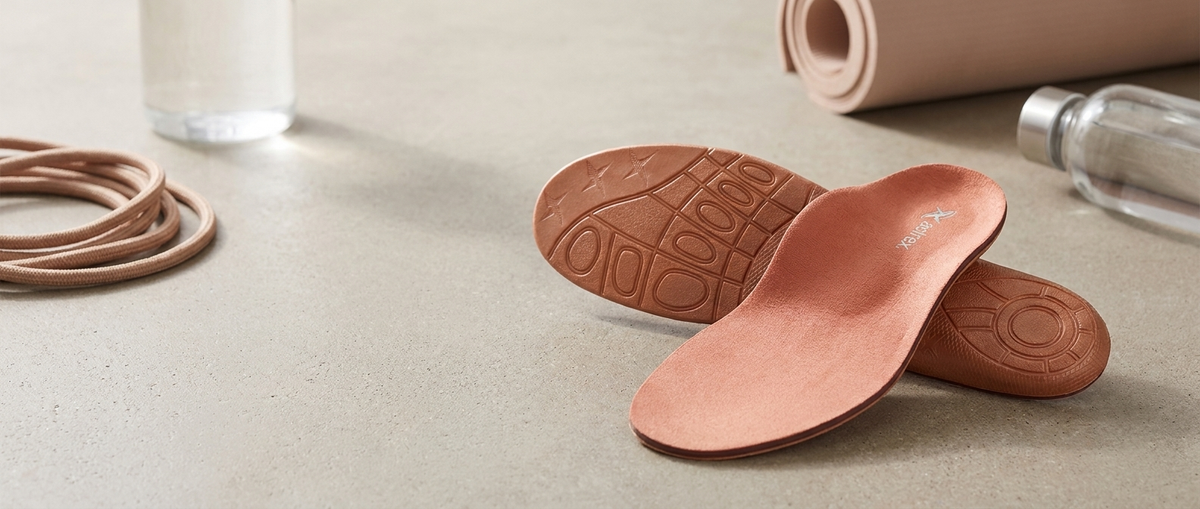
In Short: The miles you put in walking and running are exactly what flattens a stock shoe insole and leaves your arch unsupported. A good drop-in insole adds structured arch support to keep the foot aligned, cushioning that absorbs repeated impact, and a firm base that doesn't pack flat. The Aetrex Premium Memory Foam Posted Orthotic ($79.95) covers all three.
The thin foam insole that comes in most shoes is a placeholder. Under the repeated loading of walking and running, it compresses quickly and offers the arch no real structure — so by the time you've logged serious mileage, your foot is essentially unsupported inside the shoe. That's when arch fatigue, heel soreness, and that "my shoes went flat" feeling show up.
Structured arch support. A contoured, firm arch that holds the foot in position mile after mile, instead of collapsing under load.
Impact cushioning. Real absorption at the heel and forefoot, where running and walking concentrate force — on top of the structure, not instead of it.
A base that lasts. A firm foundation under the cushioning so the insole keeps its shape rather than packing flat in a few weeks.
A fit that works in your shoes. Slim enough to drop into athletic and walking shoes once the factory insole is removed.
The Aetrex Premium Memory Foam Posted Orthotic ($79.95) is built for exactly this load. It pairs signature arch support with a posted heel to control the inward roll that long miles exaggerate, and carries 43% more memory foam in the forefoot than other Aetrex orthotics for impact. The layered build — a cushioning top over a firm base — resists the flattening that kills stock insoles. At about a quarter-inch, it drops into everyday athletic and walking shoes; remove the factory insole first. Aetrex's designs are informed by data from over 50 million foot scans.
Start by wearing them for shorter walks or runs and build up, letting your feet adjust to the added support — especially if you've been in flat, unsupported insoles. Rotate and air them out between long sessions so the cushioning recovers, and replace them when the arch starts to feel flat or foot fatigue returns.
What makes a good insole for running and walking? Structured arch support, impact cushioning, and a firm base that doesn't pack flat — plus a slim fit for athletic shoes. The Aetrex Posted Orthotic combines all four.
Will they fit my running shoes? At about a quarter-inch they fit most everyday athletic and walking shoes once you remove the factory insole.
Do I need to break them in? Ease into them over shorter sessions first, especially coming from flat insoles, so your feet adjust to the support.
Shop the full range at aetrex.com.
Share:
Shoes for Lower-Back Pain: Does Foot Support Actually Help?