

In Short: When a friend is in a walking boot, the booted foot is handled by their doctor — the thoughtful gift targets everything else the injury creates: the other foot now working harder, hard floors at home, and the transition once the boot comes off. Two Aetrex picks address that — the Premium Memory Foam Posted Orthotics ($79.95) for the shoe on their good foot, and the Mandy Closed Toe Slipper ($84.95) for home comfort. This is general comfort information, not medical advice — these are comfort products, not medical devices. Follow doctor's advice and guidance.
Your instinct is to focus on the injured ankle. But the walking boot is already doing its job. The foot nobody thinks about is the other one.
With one foot immobilized, the uninjured foot works harder — it hits the floor first every time and bears weight on every trip across the house. That foot could use some comfort, and it's the one you can actually help. So gift around that foot and the hard floors at home: an orthotic for the shoe on their good foot, and a slipper for padding around the house — or for later, when the boot finally comes off.
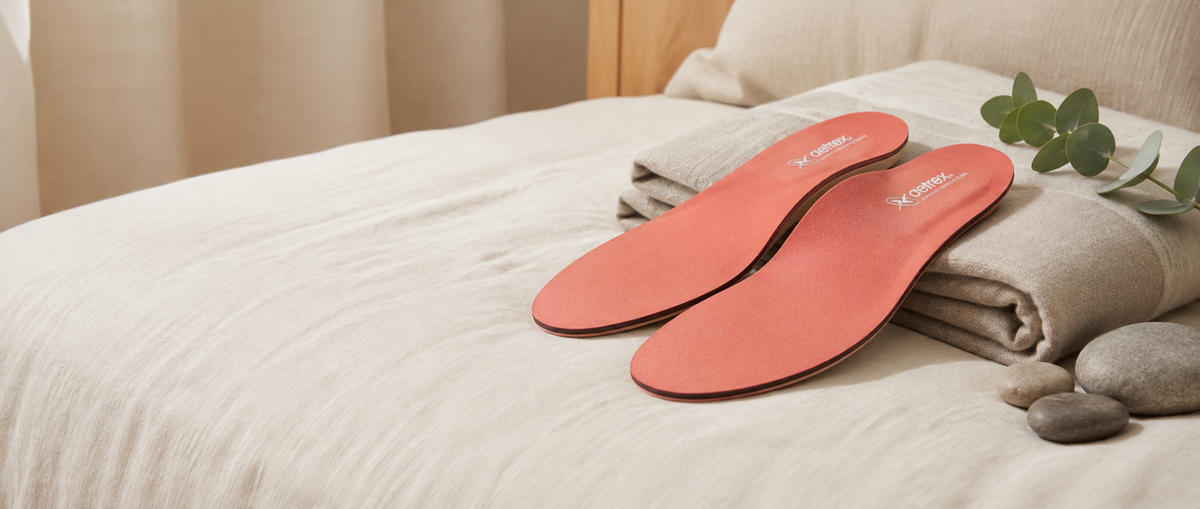
The Aetrex Premium Memory Foam Posted Orthotics ($79.95) drop into the shoe your friend is already wearing on their good foot, adding arch support and cushioning while that foot carries extra load. Each Aetrex orthotic features the signature Aetrex Arch Support to help with alignment, minimize overpronation, and help with common foot pain such as plantar fasciitis, arch pain, and metatarsalgia.
Because it's an insert rather than a standalone shoe, there's less risk of getting the wrong thing — it goes into shoes they already own. The orthotics are designed using data from more than 50 million foot scans, which informs the arch contour and cushioning placement.
The Mandy Closed Toe Slipper ($84.95) works for two moments: home comfort now, and everyday wear once the boot comes off. It's a closed-toe house shoe with arch support and memory foam cushioning designed to help with foot pain at home.
The detail that makes it a strong comfort gift: a hook-and-loop closure whose adjustable straps accommodate multiple widths. Swelling changes day to day during recovery, so a slipper that adjusts means your friend isn't fighting rigid footwear on a foot that's a different size each morning. The closed-toe design also shields a tender foot from furniture and doorframes.
The upper and footbed lining are soft, plush fabric (the lining treated with antimicrobial technology to help with everyday odor); the outsole is lightweight rubber with a 1.1-inch heel. The arch support is designed to help support natural alignment and help with plantar fasciitis and common heel/arch pain. It comes in women's sizes 5–5.5 US through 11.5–12 US and five colors — Black, Coffee, Grey, Ivory, and Wine.
Care note worth passing along: don't machine wash or dry; spot-clean with mild soap and a damp cloth, and air dry.
Size up if you're unsure — the orthotic is lower risk since it goes inside existing shoes, and the Mandy's strap adds adjustability. Keep the framing around comfort, not treatment: your friend is already working with a care team. The gift is practical — arch support and cushioning for the foot handling more than usual, and an adjustable slipper for hard floors at home.
What do you get someone in a walking boot? Something for the other foot and for home comfort — not the booted foot. An orthotic for the shoe on their good foot, and a supportive, adjustable slipper for the house.
Why orthotics as a recovery gift? The uninjured foot works harder when the other is in a boot. The orthotic adds arch support to a shoe they already own — minimal sizing risk.
“Whenever your foot hits the ground, there’s an equal and opposite impact force that pushes back up through your body. To accommodate this force, your body is designed to absorb some of that shock. if it doesn’t absorb or distribute that force well, it can contribute to discomfort that may affect the foot or other joints. Depending on your alignment and footwear, this can contribute to pain and overuse injuries. One of the main reasons I encourage patients to use orthotics is because of how they can redistribute forces through the foot to support more optimal alignment. Over time, this may reduce stress on the joints and promote better body mechanics.”
— Dr. Brian Nicholls, DO (Emergency medicine)
This article is general comfort information, not medical advice.
Share:
Thoughtful gift ideas for foot surgery recovery
Foot-care gifts & stocking stuffers: supportive picks for every part of the day