

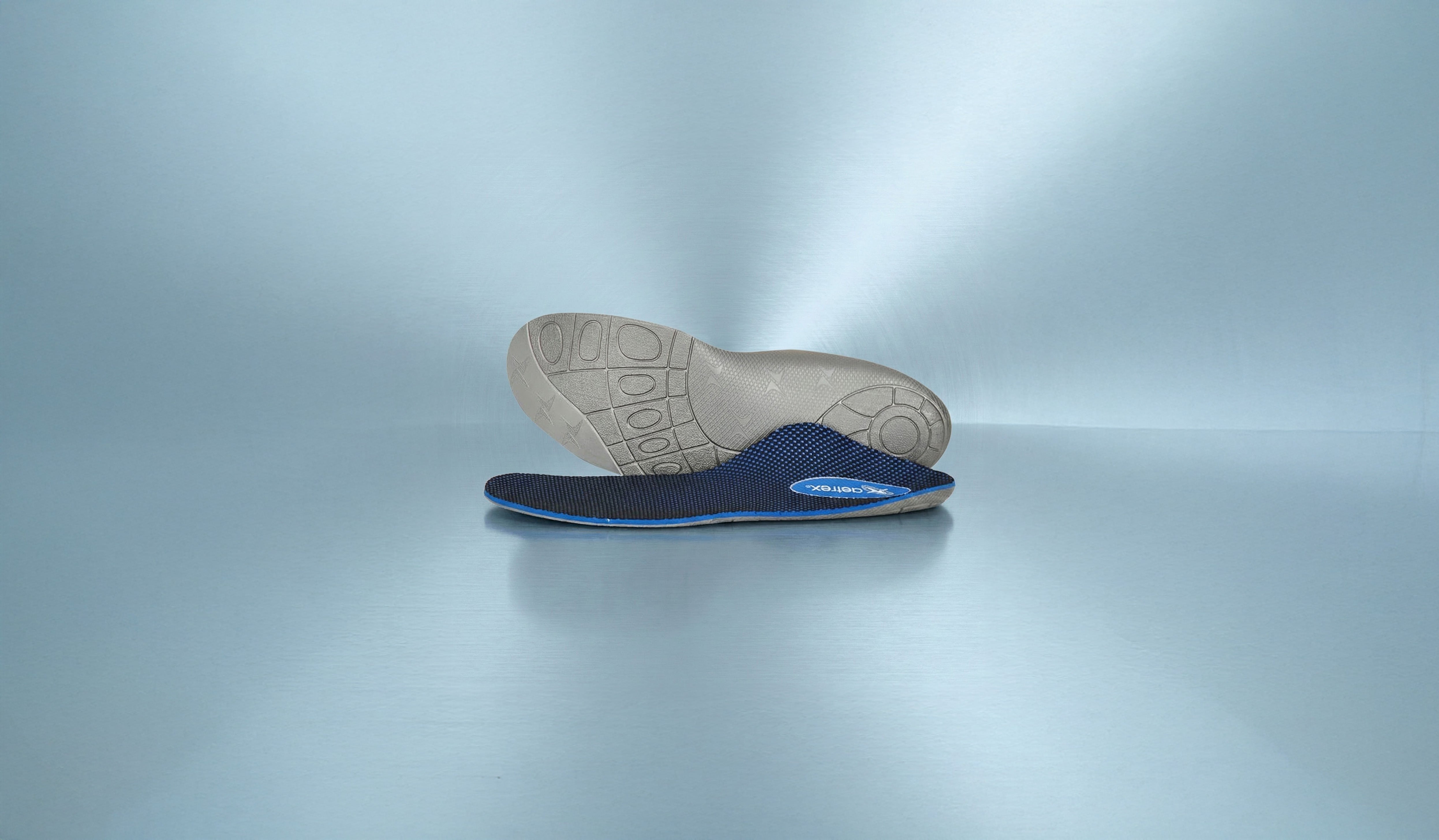
If your foot's arch is a bridge, a high arch is one without enough pillars. All of your body's weight lands on just two points: your heel and the ball of your foot. This is why everyday activities can feel so jarring and lead to focused pain. The goal is to give that bridge the support it needs to distribute the load evenly. This is exactly what high arch support does. It acts as the missing pillar, making full contact with your arch to absorb shock and stabilize your foot. Aetrex helps to provide this crucial structure with orthotics that cradle your arch, improving alignment and making every step feel more secure.
Key Takeaways
- Prioritize structure over squish: The most effective high arch insoles provide firm, "total contact" support that fills the gap under your foot. This distributes pressure evenly and properly aligns your body, which is more beneficial than simple soft cushioning.
- Know your arch before you buy: A generic, one-size-fits-all insole can create new pressure points and make pain worse. Understanding your unique foot profile is the first step to finding an orthotic that provides support in the right places.
- Use insoles for prevention, not just pain relief: Don't wait for an injury to start using orthotics. Adding the right support to your running shoes now helps absorb shock and prevent common issues, making every run more comfortable from the start.
Understanding High Arches (Pes Cavus)
If you've ever felt like your feet are taking a beating from everyday activities, you might be dealing with high arches. This condition, known medically as pes cavus, means the arch of your foot is raised more than normal. Think of it this way: instead of your body weight being distributed evenly across your foot, it's concentrated on your heel and the ball of your foot. This lack of a "middle ground" for support can lead to a host of uncomfortable issues, from general foot pain to instability. It’s a structural variation that requires a different approach to foot support, focusing on filling that gap to create a more stable foundation for your entire body.
What Are High Arches?
The Medical Term: Pes Cavus
When a doctor talks about high arches, they'll likely use the term "pes cavus." It's simply the clinical name for a foot structure where the arch sits higher off the ground than is typical. This can be something you're born with or a condition that develops over time. Unlike a neutral or flat arch that makes full contact with the ground to absorb impact, a high arch creates a rigid lever. This can be great for pushing off, but it's not so great for shock absorption, which is why many people with high arches experience pain in their feet, ankles, and even knees.
A Less Common and Progressive Condition
Having high arches is actually less common than having flat feet. According to the Cleveland Clinic, only about 20% of the population has this foot type. For some, high arches don't cause any problems, but for many, the condition can be progressive. This means that over time, the arch can become even higher and more rigid, potentially leading to changes in your foot's shape. As the structure changes, walking can become more painful and your balance might feel less steady, making supportive footwear an essential part of your daily routine.
Potential Causes of High Arches
Underlying Medical Conditions
While many people simply inherit their high arches, the condition can sometimes be a sign of an underlying neurological or muscular issue. Health problems that affect nerve and muscle function can lead to muscle imbalances in the foot, causing the arch to heighten. If you notice a sudden change in your foot structure or experience symptoms like weakness or loss of sensation, it's always a good idea to check in with a healthcare professional. They can help determine the root cause and recommend a comprehensive plan to manage your symptoms and support your foot health.
Types of High Arches
Pes Cavovarus vs. Pes Calcaneocavus
Not all high arches are the same. The most common type is pes cavovarus, where the arch is high and the heel tilts slightly inward. This alignment can put extra stress on the outer edge of your foot, leading to instability and an increased risk of ankle sprains. A less common variation is pes calcaneocavus, where the heel points upward and the front of the foot points down. Understanding the specific structure of your foot is key to finding the right support, as different shapes require different solutions to properly align your body and alleviate pressure.
Related Health Complications
Common Pains and Ailments
The focused pressure on the heel and ball of the foot can lead to a variety of painful conditions. People with high arches often report issues like metatarsalgia (pain in the ball of the foot), plantar fasciitis, and frequent ankle sprains. Because the foot is less flexible and doesn't absorb shock well, that impact travels up your leg, potentially causing shin splints, knee pain, and even hip and back problems. The right support is crucial for mitigating these issues. Aetrex helps to address these pains with footwear designed with built-in arch support that cushions and stabilizes the foot.
Long-Term Issues
If left unsupported, high arches can lead to more significant problems down the road. The progressive nature of the condition means your foot shape can continue to change, making walking more difficult and painful. This can also lead to secondary issues like hammertoes (bent toes) or claw toes (toes that curl downward) as the foot tries to grip for stability. Investing in proper footwear and orthotics early on is a proactive way to manage the condition. Aetrex helps to prevent these long-term issues by providing immediate comfort and alignment with a range of supportive orthotics.
How High Arches Are Diagnosed
Figuring out if you have high arches usually starts with a visit to a healthcare provider, like a podiatrist or an orthopedist. They can often diagnose the condition with a simple physical exam. They’ll look at your feet while you stand and walk to observe your foot's structure and gait. They might also perform a "wet test," where you step onto a piece of paper with wet feet to see your footprint; a high arch will leave a very thin print on the outside of the foot, with a noticeable gap in the middle. This professional assessment is the first step toward getting the right kind of support for your specific needs.
Getting a Professional Diagnosis
Physical Exams and Imaging Tests
During a physical exam, a foot doctor will assess your foot's flexibility and check for related issues like calluses or hammertoes. In some cases, they may order an X-ray to get a clearer picture of your bone structure. While a doctor provides the official diagnosis, you can gain valuable insights into your own feet with modern technology. For instance, Aetrex’s advanced foot scanners can map your arch type and pressure points in just a few seconds, giving you personalized data to help you find the perfect orthotic or shoe for your unique feet.
Medical Treatment Options Beyond Insoles
While finding the right insoles and footwear is a game-changer for most people with high arches, sometimes additional treatments are needed. Depending on the severity of your symptoms and the underlying cause of your pes cavus, a doctor might recommend a multi-faceted approach. These treatments aim to relieve pain, improve stability, and prevent the condition from progressing. It's all about creating a comprehensive plan that supports your feet from every angle, ensuring you can stay active and comfortable.
Physical Therapy, Braces, and More
For more significant cases, a doctor might suggest treatments like physical therapy to stretch tight muscles and strengthen weaker ones, improving overall foot function. Custom braces or splints can also be used to hold the foot in a properly aligned position and provide stability, especially if you're prone to ankle sprains. In rare instances, surgery may be considered to correct structural issues. However, for many, the journey to relief starts with a simpler, non-invasive step. Aetrex helps to provide that foundational support with a wide selection of women's and men's footwear featuring built-in orthotics that make a world of difference.
Do You Need Insoles for High Arches?
If you have high arches, you might feel like you’re balancing on just your heels and the balls of your feet. This can lead to a host of issues, from general foot pain and instability to more specific conditions like plantar fasciitis and metatarsalgia. That significant gap under the middle of your foot isn’t getting the support it needs, which concentrates pressure on other areas. This is where high arch insoles come in.
High arch insoles are inserts designed to support your foot's natural arch, providing what’s known as "total contact." Instead of leaving your arch suspended, they fill the space to distribute pressure more evenly across your entire foot. This simple change can make a world of difference. By providing this support, Aetrex helps to bring your foot back into a more natural alignment, which can reduce strain on your ankles, knees, and even your back. For runners, this proper alignment is crucial for maintaining stability and preventing injuries on the track or trail.
So, how do you know if you need them? A few common signs include persistent pain in your heels or the balls of your feet, frequent ankle rolling, or noticing that your shoes wear down excessively on the outer edges. The best way to know for sure is to understand your unique foot type. An Aetrex foot scan can map your pressure points and arch height in precise detail. If you can't get a scan, our Orthotic Finder can guide you to the right support. Adding the right orthotics to your running shoes is a proactive step toward greater comfort and better performance.
How Insoles Provide Relief for High Arches
If you have high arches, you've probably noticed that most shoes feel like they have a big, empty space right where you need support the most. This lack of contact means all your body weight lands on the ball and heel of your foot with every step. It’s no wonder this can lead to discomfort in your feet and even contribute to issues like plantar fasciitis or metatarsalgia.
This is where a good insole makes all the difference. Think of it as creating a custom-fit surface for your foot inside your shoe. The primary job of an insole for high arches is to fill that gap, providing what’s called “total contact” support. By meeting your arch where it is, the insole helps distribute pressure evenly across your entire foot, instead of letting it all concentrate on two small spots. This simple change can make a world of difference in cushioning impact when you walk or run.
Aetrex Helps to provide this essential support with orthotics designed to match your specific arch type. By supporting your foot's natural structure, these insoles also help guide your foot into a more stable alignment. This doesn't just feel better on your arches; it can also reduce stress on your ankles, knees, and hips by promoting a more balanced stride. It’s all about giving your foot the foundation it needs to move comfortably and efficiently.
How High Arch Support Can Improve Your Run
If you have high arches, you know that running can sometimes feel like a high-impact sport for your feet. The right support doesn't just make your runs more comfortable; it can fundamentally change how your body handles the stress of each stride. Integrating a supportive insole into your running shoe is one of the most effective ways to protect your feet and improve your overall running experience.
High arches can cause your foot to roll outward slightly when you run, a motion known as supination. This can throw your body's alignment off-balance, putting extra stress on your ankles, shins, and knees. High arch orthotics help guide your foot into a more neutral position. This simple correction can make a world of difference, helping to relieve that nagging pain in your heel or the ball of your foot.
Think of your arch as your body's built-in spring. With high arches, that spring can be too rigid, failing to absorb shock effectively. This means more impact travels up your legs with every footfall. Arch support insoles help distribute that pressure more evenly across your foot. This not only provides immediate comfort but also helps prevent common issues like plantar fasciitis, which often stems from excessive strain on the foot. When your feet are properly cushioned and supported, you can run with greater confidence and less discomfort.
The Best Running Insoles for High Arches
When you’re searching for the right running insoles, the number of options can feel overwhelming. To make it easier, I’ve broken down some of the best choices on the market, starting with my top recommendation for runners with high arches. The goal is to find an insole that properly supports your foot's unique structure, helping to absorb impact and align your body with every stride.
Why We Recommend Aetrex for High Arch Support
When it comes to supporting high arches, Aetrex stands out. Aetrex orthotics are specifically engineered with a signature arch support system that helps to biomechanically align your body and relieve pressure on your feet. For runners, this means targeted cushioning that absorbs shock and a design that helps to stabilize your foot during your run.
Instead of offering a generic fit, Aetrex focuses on providing support exactly where high arches need it most. This thoughtful design helps to redistribute pressure away from the ball of the foot and heel, which can make a world of difference in comfort and performance. If you’re unsure which insole is right for you, the Aetrex Orthotic Finder can help you pinpoint the perfect match for your needs.
More Great Insole Brands for High Arches
While Aetrex is our premier choice, it’s helpful to know what else is available. You’ll find other brands that also focus on arch support for athletes. For example, some companies create insoles designed to provide stability and reduce fatigue during long runs. Many of these options feature a deep heel cup to hold your foot in place and use various cushioning materials to absorb impact.
When looking at alternatives, pay close attention to how they address high arches specifically. A good insole for high arches should help bring your foot into a more neutral alignment, providing support to the areas that don't make full contact with the ground. The key is finding a balance of firm support and flexible cushioning that feels right for your running style.
What to Look For in High Arch Insoles
Finding the right running insoles can feel like a game of trial and error, but it doesn’t have to be. When you have high arches, the stakes are a bit higher—the right support can make a world of difference, while the wrong one can leave you feeling worse than before. To make an informed decision, you need to know what to look for. It comes down to three key areas: the features that provide support, the materials that ensure longevity, and a fit that feels like it was made just for you.
Must-Have Features for Arch Support
The main job of a high arch insole is to support your foot's natural shape, filling the space between your arch and your shoe. This contact helps distribute pressure evenly across your foot instead of concentrating it on the ball and heel. The right insole brings your foot into a more natural alignment, which can reduce strain not just in your feet, but in your ankles and knees, too. Look for insoles that offer a combination of firm, structured support to stabilize your arch and strategic cushioning to absorb impact. Aetrex helps to provide this balance with orthotics designed to cradle your arch and realign your foot for greater comfort on every run.
Deep Heel Cups for Stability
When you have high arches, your foot can be prone to rolling outward, a motion known as supination. A deep heel cup is a feature designed to counteract this instability. Think of it as a cradle for your heel that holds it securely in place, preventing unwanted side-to-side movement as you run. This added stability is crucial because it helps maintain proper alignment from the ground up. High arch insoles with this feature help guide your foot into a more neutral position. This simple correction can make a world of difference, helping to relieve that nagging pain in your heel or the ball of your foot. By keeping your heel centered, a deep heel cup provides a solid foundation for every stride, reducing stress on your ankles and knees.
A Stabilizer Cap for Structure
While cushioning is important, structure is what truly makes an insole effective for high arches. A stabilizer cap is a firm, supportive shell that is often built into the heel and arch of an orthotic. This component acts as the insole's skeleton, providing rigidity and ensuring it holds its shape under the pressure of your body weight. Without this structure, a soft insole would simply compress and fail to provide the consistent support your arch needs. This firm foundation is essential for maintaining proper foot alignment and preventing your arch from collapsing. Aetrex helps to provide this necessary structure in its orthotics, ensuring you get durable, reliable support that won't flatten out after a few runs.
Why Material and Durability Matter
The materials used in an insole determine how well it performs and how long it lasts. While soft, gel-like insoles might feel comfortable at first, they often lack the structure needed to support a high arch. For running, you need something that can withstand repeated impact. Materials like polyurethane are excellent because they are durable, absorb shock effectively, and hold their shape over time. Unlike lighter foams that can compress and lose their supportive qualities, a high-quality base provides lasting structural support. This ensures your insoles continue to do their job mile after mile, giving you a consistent and reliable foundation for every run.
Choosing Semi-Rigid Materials
It’s easy to think that the softest, most cushioned insole is the best choice, but for high arches, that's often not the case. Those plush, gel-like materials can feel great for a moment, but they often compress under the impact of running, failing to provide the consistent structure your arch needs. This is why semi-rigid materials are so important. They offer a perfect balance: firm enough to support your arch and fill that gap under your foot, yet flexible enough to move with you. Materials like high-density foams and polyurethane hold their shape, absorb shock effectively, and provide the durable foundation needed to prevent your arch from collapsing with each stride. Aetrex helps to achieve this ideal support by using premium, resilient materials in their orthotics, ensuring you get lasting comfort and proper alignment without sacrificing cushioning.
Making Sure Your Insoles Fit Correctly
Fit is everything when it comes to insoles. An insole with an arch that’s too high, too low, or in the wrong spot can create new pressure points and make pain worse. The goal is to achieve total contact with your arch, meaning the insole should contour perfectly to the curve of your foot without any gaps. This is where personalization becomes so important. Understanding your specific foot profile is the first step to finding that perfect match. Using advanced technology like Aetrex’s foot scanners can give you precise data on your arch height and pressure points, taking the guesswork out of finding an insole that provides targeted, effective support right where you need it.
Finding the Right Arch Height
Not all high arches are the same, which is why finding an insole with the correct height is critical. If the arch is too low, it won't provide enough support, leaving that gap under your foot. If it's too high, it can create new pressure points and feel like you have a lump in your shoe. Generally, an arch height between 29-35 millimeters is considered ideal for high arches, but the goal is always total, comfortable contact. This is where understanding your specific foot profile becomes a game-changer. Aetrex helps to take the guesswork out of the equation with tools like our online Orthotic Finder, which can guide you to the perfect level of support for your unique feet.
Considering 3/4 Length Orthotics
A full-length insole doesn't always work, especially in running shoes with a snug toe box or in your everyday dress shoes. This is where 3/4 length orthotics can be a fantastic solution. These insoles provide targeted support right where you need it most—in your heel and arch—without adding extra bulk to the front of your shoe. This means you get the essential stability and alignment benefits without sacrificing space or making your toes feel cramped. They are an excellent choice for runners who want to add support to their racing flats or for anyone who needs versatile support that can move between different pairs of shoes, from athletic to casual.
Pairing Insoles with Cushioned Shoes
Think of your insoles and running shoes as a team. High arches are often more rigid, meaning they don't absorb shock as well as flatter feet. To compensate for this, pairing a supportive insole with a well-cushioned shoe is a great strategy. The shoe provides the overall shock absorption, while the insole delivers the structural support and proper alignment your arch needs. This combination ensures your foot is both supported and protected from impact. The right insole brings your foot into a more natural alignment, which can reduce strain on your ankles and knees. Aetrex helps to create this perfect system by offering both expertly designed orthotics and a line of supportive, cushioned footwear.
Matching Your Insoles to Your Running Style
Finding the perfect running insole isn't a one-size-fits-all situation. Your unique running style, foot shape, and personal comfort needs all play a role in determining which orthotic will work best for you. The goal is to find an insole that supports your foot's natural movement, not one that forces it into an unnatural position. By paying attention to your body and understanding what to look for, you can choose an insole that feels like it was made just for you, helping you run comfortably and confidently.
How to Identify Your Arch and Foot Type
Before you can find the right support, you need to know what you’re working with. Understanding your arch type is the most critical step in selecting an insole that will actually help. For those with high arches, the foot often doesn't absorb shock effectively, which can lead to pain in the feet, ankles, and even knees. The right insole provides targeted support to this area, helping to distribute pressure more evenly across your foot with every stride.
To get a clear picture of your arch, you can try the "wet test" at home or get a precise analysis from an Aetrex foot scanner. This technology gives you a detailed look at your specific pressure points and arch profile. Using a tool like the Aetrex Orthotic Finder can then guide you to an insole designed for your exact needs, ensuring the arch support isn’t too high or too low—a mismatch that can make pain worse.
Using an Aetrex Foot Scanner
For the most accurate understanding of your feet, nothing beats data. While the wet test is a good starting point, an Aetrex foot scanner takes all the guesswork out of the equation. In just a few seconds, this advanced technology maps your unique pressure points and measures your arch height with incredible precision. This gives you a detailed profile of your feet, showing you exactly where you need support. It’s the difference between estimating and knowing. This information is invaluable for finding an insole that provides targeted, effective support right where you need it most. If you can't make it to a location with a scanner, the online Orthotic Finder is the next best thing, guiding you to the right support based on your specific needs and activities.
Easing Into Your New Insoles
When you first slip a new pair of orthotics into your running shoes, they might feel a bit different. That’s completely normal. Your feet need time to adjust to the new support system. Instead of heading out for a long run right away, ease into them gradually. Start by wearing your new insoles for just an hour or two on the first day, then add an additional hour of wear each following day.
This slow and steady approach gives your muscles and ligaments time to adapt to the improved alignment. Aetrex Helps to realign your foot, and this adjustment period is key to long-term comfort. While you might feel the new support, you shouldn't feel any sharp or increasing pain. If you do, it could be a sign that you need a different fit. Listening to your body is the best way to ensure your new orthotics become a seamless and supportive part of your run.
Common Mistakes to Avoid When Buying Insoles
Finding the right insoles can be a total game-changer for your runs, but it's easy to make a few missteps along the way. Let's walk through some common mistakes so you can choose your insoles with confidence and get the support you actually need.
One of the biggest errors is thinking insoles are only for people who already have foot pain. While Aetrex helps to provide incredible relief for conditions like plantar fasciitis, insoles are also a fantastic proactive tool. They offer extra cushioning and support that can prevent issues from starting in the first place, keeping your feet happy mile after mile. It's about adding comfort and stability, not just reacting to discomfort.
Another major pitfall is grabbing a generic insole off the shelf without considering your unique foot shape. Your arch type is incredibly important. An insole with an arch that's too high or too low for your foot won't just be ineffective; it could actually make things worse. It's essential to find support that matches your specific needs. Using a tool like an Orthotic Finder can take the guesswork out of the process and guide you to the perfect match for your high arches.
Finally, don't assume that all insoles are created equal or that they're only for a certain age group. Runners of all ages put significant stress on their feet. The right pair of orthotics is designed to absorb shock, align your body, and reduce strain, which is a benefit for anyone looking to improve their performance and comfort. Ignoring your individual needs and arch type is the quickest way to end up with a product that doesn't work for you.
The Best Places to Buy High Arch Insoles
Once you know what you’re looking for, the next step is to find the best place to buy your insoles. Shopping for orthotics isn’t like buying a new t-shirt; the right fit and feel are everything. That’s why it’s crucial to buy from a retailer that understands foot health and stands behind its products. You’ll want to look for companies that not only offer high-quality, supportive insoles but also provide excellent customer support and flexible policies. This ensures you can shop with confidence and find the perfect match for your high arches without any added stress.
Shop Smart: Understanding Return Policies
Finding the right insole can take a little trial and error, which is why a generous return policy is a must. Aetrex makes this easy with a 30-Day Wear Test, giving you a full month to wear your orthotics and make sure they’re the right fit for you. This kind of guarantee is a sign of a company that is confident in its product. Many other quality brands offer similar comfort guarantees, so be sure to check the policy before you buy. To make your shopping experience even more precise, you can use an online tool like the Aetrex Orthotic Finder quiz. It helps you select the best insoles for your specific needs, taking the guesswork out of the process.
How Much Should You Spend on Insoles?
High-quality running insoles are an investment in your comfort and performance, and their prices reflect the technology and research that goes into them. You can expect to pay between $60 and $70 for a pair of premium orthotics designed for high arches. Aetrex orthotics fall right in this range, offering a cost-effective alternative to expensive, custom-made shoe inserts. While you can find cheaper insoles at a drugstore, they typically lack the structured, durable support that high arches require. Aetrex helps to provide professional-grade support by using superior materials and designs that stabilize and balance your foot, making them a reliable choice for runners seeking lasting pain relief and comfort.
Related Articles
- 8 Best Insoles for Walking and Standing All Day – aetrex
- 5 Best Insoles for Plantar Fasciitis and Flat Feet – aetrex
- 7 Best Insoles for Standing All Day (2025 Guide) – aetrex
- Best Insoles for Supination & High Arches: A Guide – aetrex
Frequently Asked Questions
How can I be sure I actually have high arches? A simple way to check at home is the "wet test." Just wet the bottom of your foot and step onto a piece of cardboard. If the footprint shows only your heel and the ball of your foot with a thin line on the outside, you likely have high arches. For a more precise analysis, an Aetrex foot scan can map your unique pressure points and arch height, giving you a definitive answer.
Will adding insoles make my running shoes feel too tight? This is a common concern, but quality orthotics are designed to replace the flimsy liner that comes with your shoes, not to be added on top of it. When you swap out the original insert for an Aetrex orthotic, it should fit seamlessly without creating extra bulk or crowding your toes. This ensures you get the support you need without sacrificing a comfortable fit.
How often should I replace my running insoles? The lifespan of your insoles depends on how frequently and intensely you run. A good rule of thumb is to replace them every 9-12 months or with every new pair of running shoes. Aetrex orthotics are made with durable materials designed to withstand repeated impact, but if you notice signs of wear or feel the support lessening, it’s time for a fresh pair.
Can I move my Aetrex orthotics from my running shoes to my everyday shoes? While you can certainly move them between similar types of shoes, you'll get the best results by having dedicated pairs for different activities. Your running shoes require a specific type of support to handle high impact, which might differ from the support you need in a casual walker or a work shoe. Using the right orthotic for the right shoe ensures you get optimal comfort and alignment all day long.
What makes Aetrex orthotics different from the soft, gel insoles I see at the pharmacy? While soft gel insoles might provide a temporary feeling of cushion, they lack the structure needed to properly support a high arch. They often compress quickly and fail to address the root cause of discomfort. Aetrex orthotics are different because they feature a firm, supportive arch designed to provide total contact with your foot. This design helps to distribute pressure evenly and align your body, offering a more effective and lasting solution for foot comfort.
Share:
The 4 Best Women's Slippers with Arch Support
5 Best Women's Insoles for Heel Pain From Standing