

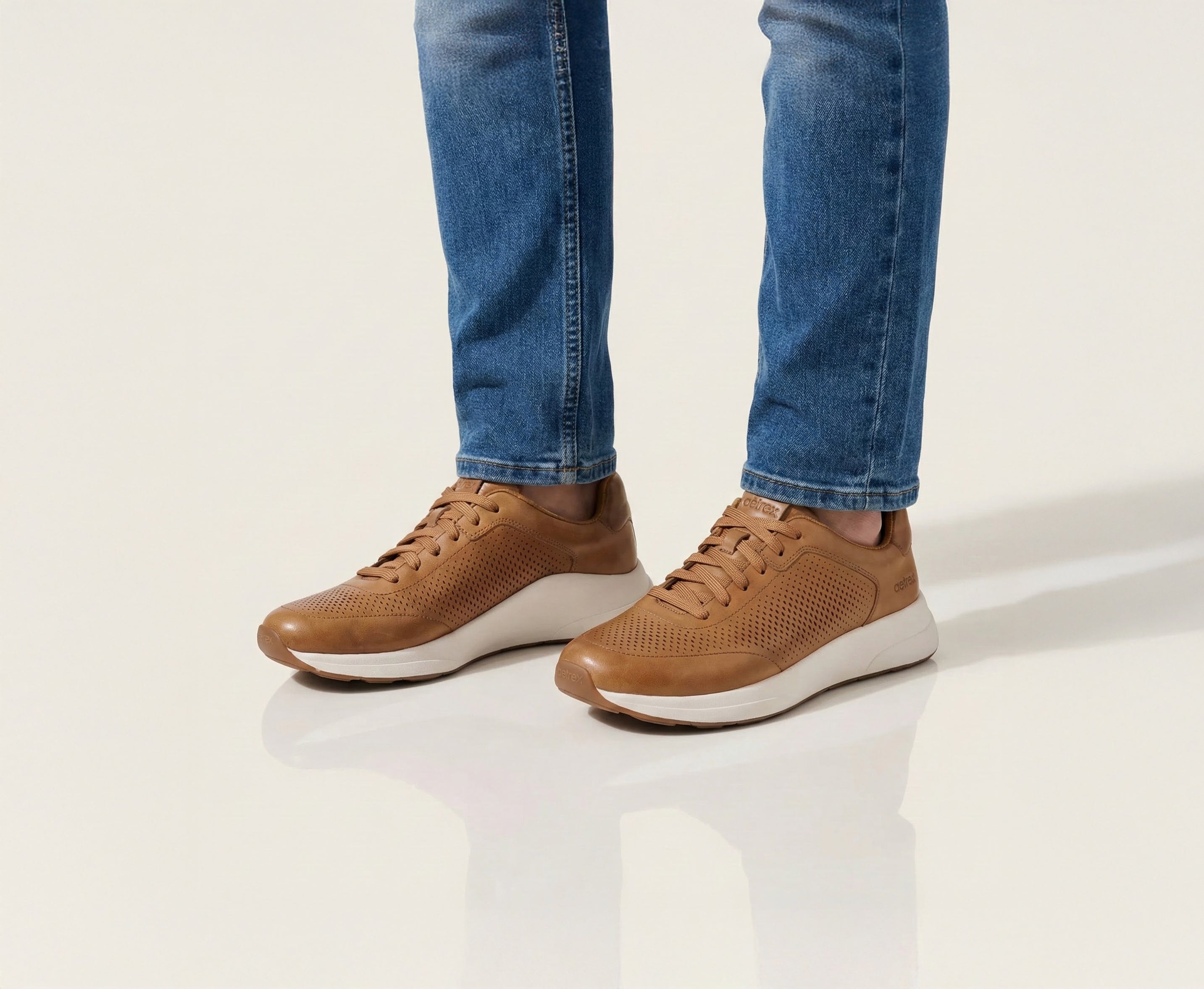
Let’s be honest. The term "orthopedic shoe" might bring to mind clunky, outdated styles. But the world of supportive footwear has changed. You no longer have to sacrifice style for comfort, especially when looking for the best walking shoes for arthritis. Brands like Aetrex now design shoes that look as good as they feel, blending modern looks with foot-health technology. This guide will introduce you to footwear that delivers the critical support and cushioning your joints need, proving you can find stylish, effective shoes you’ll actually want to wear every day.
The word "orthopedic" might bring to mind clunky, medical-grade footwear, but the reality is much more stylish and straightforward. An orthopedic shoe is simply designed with your foot's health and mechanics as the top priority. Unlike standard shoes that focus mainly on fashion, orthopedic shoes are built to provide superior support, accommodate specific foot conditions, and promote proper alignment from the ground up.
So, what are the key ingredients? First and foremost is exceptional support. This starts with robust arch support that helps distribute pressure evenly across your foot, which is crucial for stability. Aetrex helps to achieve this with its signature built-in orthotic support in every pair. Next is superior cushioning. A well-designed orthopedic shoe features layers of cushioning that absorb the shock of every step, protecting your joints from your feet all the way up to your hips and back.
The fit is also fundamentally different. You’ll notice a roomier toe box that allows your toes to spread out naturally, preventing painful crowding and pressure on conditions like bunions or hammertoes. Many also include adjustable closures or removable insoles to accommodate custom orthotics or daily fluctuations in swelling. Ultimately, an orthopedic shoe combines all these features to create a comfortable, supportive environment that helps reduce pain and makes walking a more enjoyable experience.
When you're dealing with arthritis, a walking shoe is more than just footwear—it's a tool that can significantly impact your comfort and mobility. The right shoe does more than just cover your foot; it supports your entire body from the ground up. Choosing a shoe with the right features can make the difference between a painful walk and a pleasant one. Let's look at the key elements you should look for to find relief and stay active.
Proper arch support is the foundation of a great orthopedic shoe. When your arches are correctly supported, your feet are better aligned, which creates a positive ripple effect all the way up your body. This alignment helps to distribute pressure evenly across your feet, reducing stress on sensitive joints in your ankles, knees, and even your hips and back. For men with arthritis, this can mean less pain and more stability with every step. Aetrex helps to provide this essential feature by building its signature arch support directly into all of its men's footwear, ensuring you get consistent support and better body alignment.
Think of a well-cushioned shoe as a personal shock absorber for your feet. Each step you take on a hard surface sends a jolt through your body, which can be especially painful for arthritic joints. Superior cushioning, often made from materials like memory foam or lightweight EVA, softens that impact. This extra padding lessens the stress on your feet and joints, helping to reduce the pain and discomfort caused by arthritis. By absorbing the shock of walking, a well-cushioned shoe allows you to move more comfortably and confidently throughout your day.
Feeling cramped is the last thing you want when your joints are already sensitive. A shoe with a roomy toe box gives your toes the space they need to spread out naturally. This is crucial for preventing pressure on the front of your foot, which can aggravate arthritis pain. It also helps accommodate other common foot issues like bunions or hammertoes. A wider front ensures your toes aren't squeezed together, reducing friction and irritation. This simple feature provides significant relief and makes it easier to find a truly comfortable fit for all-day wear.
Heavy, clunky shoes can feel like you're dragging weights on your feet, adding unnecessary strain to already aching joints. A lightweight walking shoe, on the other hand, makes movement feel more effortless. Lighter materials reduce the energy you need to lift your foot for each step, which can help decrease fatigue and minimize the overall load on your body. Many modern orthopedic shoes take inspiration from athletic designs to provide support without the bulk, allowing you to walk further and more comfortably without feeling weighed down.
Arthritis can cause your feet to swell or change shape throughout the day. That’s why adjustable features are so important. Shoes with laces, straps, or buckles allow you to customize the fit to your exact needs at any given moment. A secure fit ensures your foot stays in place without your toes having to grip the inside of the shoe, which can cause additional strain. The ability to loosen or tighten your shoes as needed provides personalized comfort and support that a standard slip-on shoe just can't match.
A rocker sole features a curved design that helps your foot roll forward naturally as you walk. This design helps with forward momentum, making your stride feel smoother and more efficient. By guiding your foot through a gentle heel-to-toe motion, a rocker sole reduces the amount of pressure placed on your lower back, knees, and foot joints. This can be particularly beneficial for those with arthritis in their big toe joint. The smooth transition minimizes the effort required to take a step, putting less stress on your body and helping you walk with greater ease.
Walking into a shoe store can feel overwhelming with walls of athletic shoes all claiming to be the best. Terms like "stability" and "neutral" get thrown around, but what do they actually mean for your arthritic feet? The truth is, not all sneakers are built the same. The technology inside a shoe designed for a marathon runner is very different from what you need for a comfortable daily walk. Understanding these key differences is the first step toward choosing a shoe that helps reduce your pain instead of adding to it.
Stability sneakers are designed with a specific purpose: to help control overpronation, which is when your foot rolls too far inward with each step. They typically feature denser cushioning and firmer materials in the midsole to guide your foot into a more aligned position. According to the Arthritis Foundation, this can be beneficial if you have arthritis in your hips, knees, or feet, as it helps to stabilize your joints. However, it's crucial to know if you actually overpronate. Wearing a stability shoe when you don't need one can sometimes cause discomfort. This is where technology like Aetrex's foot scanners can be incredibly helpful, giving you precise data on your foot's pressure points and arch type to determine if this level of support is right for you.
If stability shoes are about motion control, neutral sneakers are all about pure cushioning and shock absorption. These shoes are designed for individuals who have a normal gait without significant inward or outward rolling. They provide a soft, comfortable ride that absorbs the impact of walking on hard surfaces, which is a huge benefit for sensitive, arthritic joints. Many people also find neutral shoes are ideal for accommodating custom or specialized orthotics. Aetrex helps to combine the best of both worlds by offering men's walking shoes with a neutral cushioning platform that also includes the signature Aetrex arch support for gentle, effective alignment without over-correcting your stride.
It’s a common mistake to grab a pair of running shoes for everyday walking, but they aren't always the best choice. Running shoes are engineered for one thing: repetitive, forward motion. They are often very flexible in the forefoot to accommodate this movement. Cross-trainers, on the other hand, are built for more varied, multi-directional activity. They tend to be a bit stronger and more stable, offering better support for the side-to-side movements common in daily life. For general walking and light exercise, a supportive cross-trainer or a dedicated walking shoe often provides a more stable and durable foundation for arthritic feet than a shoe designed specifically for running.
When you're dealing with arthritis, you quickly learn that not all shoes are created equal. What you put on your feet can make the difference between a day spent moving comfortably and a day spent wincing with every step. So, what sets orthopedic shoes apart from the regular pairs you might find at any department store?
The main difference is intention. Orthopedic shoes are specifically designed to support the structure and mechanics of your feet, ankles, and legs. Think of them as a support system. They often feature a wider toe box to prevent cramping, strategic arch support to promote proper alignment, and superior cushioning to absorb the shock that travels up your joints when you walk. These aren't just random features; they're there to minimize pressure on your sensitive joints.
On the other hand, most regular shoes are designed with fashion as the top priority, not function. They might lack the necessary arch support or have narrow, pointed toes that can worsen conditions like bunions. The Arthritis Foundation points out that the wrong shoes can actually make joint pain worse by failing to distribute pressure evenly.
This is why specialized footwear is so important. It’s not just about cushioning your feet. Research shows that well-designed shoes and orthotics can change how your muscles work and how you walk, which helps reduce stress on your joints all the way up to your knees, hips, and back. At Aetrex, our women's and men's footwear is built on these principles. Aetrex helps to provide relief and support with built-in arch support and memory foam cushioning, so you get that orthopedic benefit without sacrificing style.
When you're living with arthritis, every step can feel like a challenge. The right pair of orthopedic walking shoes isn't just about comfort; it's about giving you the support you need to stay active and manage your symptoms. These shoes are specifically engineered to address the mechanical issues that contribute to joint pain. By providing targeted support and cushioning, they can make a significant difference in your daily mobility and overall foot health. Think of them less as simple footwear and more as a tool that helps you walk with greater ease and less pain.
The primary goal of an orthopedic shoe is to reduce the stress placed on your joints. Shoes designed for arthritis are built with support, cushioning, and stability in mind to reduce pressure on sensitive areas in your feet, ankles, and knees. When your foot is properly aligned and cushioned, the shock from each step is absorbed by the shoe, not your body. This protection helps to alleviate the common aches associated with arthritis and can prevent further strain on your joints, allowing you to walk more comfortably for longer periods.
Arthritis can sometimes affect your balance, making a stable base more important than ever. Orthopedic shoes provide a strong, reliable foundation for your entire body. Superior cushioning helps absorb the impact of walking on hard surfaces, while features like built-in arch support ensure your foot is held in an optimal position. Aetrex helps to create this stability with its signature arch support, which is designed to properly align your body from the ground up. This combination of shock absorption and alignment reduces jarring movements and gives you a more secure, confident stride.
Pain can significantly limit your mobility and independence. Orthopedic shoes act as powerful shock absorbers, using extra cushioning and robust arch support to lessen the force on your feet with every step you take. By reducing pain and discomfort, these shoes can transform walking from a painful task into a pleasant activity. This newfound comfort can empower you to move more freely, whether you're running errands, taking a walk in the park, or simply moving around your home. It's about reclaiming your ability to stay active on your own terms.
Wearing the right shoes is about more than just immediate relief—it's an investment in your long-term health. Orthopedic footwear and supportive orthotics do more than just cushion your feet; they can actually help improve your body's mechanics. By correcting alignment issues, these shoes can change how your muscles engage and how you walk. Over time, this reduces the cumulative stress on your joints, not just in your feet but also in your knees, hips, and back, contributing to better overall joint health for years to come.
Living with arthritis doesn't mean you're stuck wearing the same pair of athletic shoes everywhere you go. Your footwear needs can change depending on the activity, whether you're heading to a formal event, enjoying a summer day, or just walking around the neighborhood. The key is knowing what features to look for in each style. You can find supportive, comfortable, and stylish options for nearly any occasion, ensuring your joints are protected no matter what's on your schedule. Let's explore how to choose the right shoe style without compromising on your foot health.
For daily activities like walking or standing for long periods, your shoes need to provide a blend of stability and cushioning. Look for casual sneakers or walking shoes with supportive cushioning to absorb impact, a roomy toe box that allows your feet to spread naturally, and a firm heel for stability. Some of the best options also feature a "rocker bottom" sole, which is slightly curved to help your foot roll forward smoothly, taking pressure off the front of your foot. Aetrex helps to deliver on all these fronts, with a line of men's casual shoes designed with built-in arch support and premium cushioning for all-day comfort and relief.
Finding dress shoes that don't aggravate arthritis pain can be a challenge, but it's not impossible. The most important thing to avoid is a narrow, pointy toe box that squeezes your toes and puts pressure on sensitive joints. Instead, opt for styles with a wider, more accommodating front. A good dress shoe should also have a supportive, stiffer sole that only bends at the ball of the foot, providing a stable platform for walking. Many modern brands, including Aetrex, now offer sophisticated dress shoes that incorporate these essential orthopedic features, so you don't have to choose between looking sharp and feeling good.
Warm weather doesn't have to mean foot pain. While many sandals are flat and unsupportive, the right pair can be great for arthritic feet. Look for sandals that feature significant arch support and multiple adjustable straps. This allows you to customize the fit to your foot, which is especially helpful if you experience swelling. A strap around the back of the ankle is also a crucial feature; it secures the sandal to your foot so your toes don't have to grip with every step, which can cause strain. Aetrex sandals are designed with these principles in mind, featuring signature arch support and adjustability for a secure, comfortable fit.
Boots are an excellent choice for people with arthritis, especially styles that offer good ankle support. A boot with a fitted ankle helps keep your foot secure, reducing the need for your toes to grip and providing overall stability. When shopping for boots, look for features like soft materials that won't irritate your skin, adjustable laces or buckles to ensure a perfect fit, and a chunky or wedged heel for a stable base. These elements combine to create a supportive environment that protects your joints, making boots a practical and comfortable option for cooler weather or when you need extra support.
Traditional, flat flip-flops are generally not recommended for anyone, especially those with arthritis. They lack any form of support or stability, which can increase the risk of falling and put unnecessary strain on your joints. While some research suggests that being barefoot or wearing flat shoes might reduce stress on the knees in specific cases, the lack of shock absorption and arch support is a major drawback. A far better option is a supportive flip-flop, like those from Aetrex, which are built with the signature Aetrex arch support. This design provides the open, airy feel you want with the critical support your feet and joints need.
When you're dealing with arthritis, the brand of shoe you choose matters. Some brands are simply built differently, with a deeper focus on the technology and design features that provide meaningful relief. While many companies make comfortable shoes, a select few stand out for their commitment to creating footwear that specifically addresses the needs of people with joint pain. We’ve rounded up the top brands that consistently deliver on support, cushioning, and overall comfort, helping you find the perfect pair to keep you moving.
When it comes to orthopedic support, Aetrex is in a class of its own. Every pair of Aetrex men's footwear is designed with signature built-in arch support that helps to properly align your body from the ground up. This isn't just a basic foam insole; it's a strategically designed system that helps relieve pressure on your feet, ankles, and knees, which is essential for managing arthritis pain. The superior cushioning materials absorb shock with every step, while features like roomy toe boxes and adjustable straps prevent irritation. Aetrex helps to provide a foundation of support that makes walking a more comfortable and enjoyable experience, setting the standard for therapeutic footwear.
When you're dealing with arthritis, the specific shoe you choose can make a world of difference in your day-to-day comfort. The goal is to find a model that combines all the essential features—arch support, cushioning, and a proper fit—to help reduce stress on your joints.
Leading the way are Aetrex’s thoughtfully designed men’s footwear collections. Every pair comes with Aetrex’s signature arch support built right in, which Aetrex helps to properly align your body and relieve pressure on your feet, knees, and hips. Models like the Aetrex Chase Sneaker are engineered with premium cushioning and a roomy toe box, giving your feet the space and shock absorption they need to move comfortably.
Finding the right shoe is more than just picking your size. For men with arthritis, the right fit is the difference between a day spent in discomfort and a day of active living. A shoe that fits perfectly provides the stability and cushioning your joints need, helping to distribute pressure evenly and reduce strain. But how do you find that perfect shoe? It comes down to understanding your unique feet and knowing what to look for when you try on a new pair. These simple steps will guide you toward finding a walking shoe that feels like it was made just for you.
The best way to understand your feet is to see what's happening on a deeper level. A professional foot scan can reveal your exact arch type, pressure points, and areas that need more support. While a podiatrist can offer great insights, you can also get a precise, digital analysis using Aetrex’s innovative foot scanners. This technology maps your feet in incredible detail, giving you a clear picture of your specific needs. Knowing this information is the first step to selecting a shoe with the right kind of built-in arch support, ensuring you get targeted relief right where you need it most.
It might seem obvious, but it’s crucial to wear shoes designed for the activity you’re doing. A shoe built for walking has different features than one made for running or court sports. The Arthritis Foundation advises to "choose shoes that fit the activity you're doing" because walking shoes are engineered to support the natural heel-to-toe motion of your stride. They typically offer more flexibility in the forefoot and solid arch support to keep you stable over longer distances. Using the wrong type of shoe can put unnecessary stress on your joints, so sticking with a dedicated walking shoe ensures you get the right kind of support where you need it most.
Beyond your shoe size, understanding your unique foot type is essential for finding true comfort. Do you have high arches, flat feet, or a neutral arch? Knowing this helps you select a shoe that provides the right kind of support to prevent pain. While you can get an idea by looking at your old shoes' wear patterns, a digital foot scan offers a much more precise analysis. Aetrex’s advanced foot scanners, available at various retail locations, map your pressure points and arch type in seconds. This data gives you a personalized recommendation for footwear and orthotics, taking the guesswork out of finding the perfect supportive shoe for your arthritis needs.
A simple trick to check if a shoe is the right length is the "index finger" test. When you're trying on a new pair, make sure you're wearing the type of socks you'd normally wear and slide your foot all the way to the front of the shoe. Then, try to slip your index finger between your heel and the back of the shoe. If your finger fits snugly in that space, you've likely found a good length. This ensures there's about a half-inch of room in front of your longest toe, which is crucial for preventing your toes from hitting the end of the shoe as you walk.
The perfect walking shoe should strike a balance between being secure and spacious. You want a snug fit around your midfoot and heel to prevent your foot from sliding around, which can cause instability and blisters. At the same time, you need a roomy toe box that allows your toes to spread out naturally. This is especially important if you have bunions or hammertoes. A shoe that’s too tight will create painful pressure points, while one that’s too loose won’t provide adequate support. Look for shoes with adjustable features, like laces or straps, to help you achieve that perfect, secure fit.
Heel-to-toe drop refers to the height difference between a shoe's heel and its forefoot. A lower drop, typically 10mm or less, places your foot in a more natural, level position. This can be incredibly beneficial for arthritis because it helps to distribute pressure more evenly across your foot instead of concentrating it on the ball of your foot. A lower drop can also reduce stress on your joints, including your ankles, knees, and hips, by promoting better alignment. While it might feel different at first if you're used to a higher heel, many find it leads to a more comfortable and efficient stride.
If you live with arthritis, you know that your feet can change throughout the day. Swelling is common and can make shoes that felt fine in the morning feel tight and uncomfortable by the afternoon. To get the most accurate fit, try on new shoes at the end of the day when your feet are at their largest. It's also why shoes with adjustable features, like straps or laces, are so beneficial. The Arthritis Foundation emphasizes that the right shoes are essential for mobility and pain prevention, so accounting for these daily changes is a simple but critical step in protecting your joints.
You can read all the reviews in the world, but the true test is how a shoe feels on your foot. When you try on a new pair of walking shoes, don''t just sit down. Walk around the store or your home to get a real sense of the fit and feel. Pay attention to how the arch support cradles your foot and whether there’s enough room in the toe box for your toes to move freely. Check for any rubbing or pinching, especially around the heel and ankle. A great orthopedic shoe should feel comfortable and supportive from the moment you put it on, without needing a long "break-in" period.
When you're dealing with arthritis pain, hearing from people who have walked in your shoes (literally) can make all the difference. Looking at reviews and testimonials gives you a real-world picture of how a shoe performs and can help you decide which pair is right for you.
Unsurprisingly, many men find that Aetrex shoes provide significant comfort. Customers often talk about the immediate sense of relief they feel from the signature built-in arch support, which is designed to correctly align the body and take pressure off sensitive joints. Many reviews for Aetrex men's footwear highlight how the combination of premium cushioning and thoughtful design helps to make daily walks more enjoyable and less painful.
Other brands also receive high marks for specific features. The Hoka Bondi is so well-regarded for its cushioning and support that it has earned the American Podiatric Medical Association’s Seal of Acceptance. Similarly, Brooks running shoes are praised for their blend of cushioning and stability, which many find ideal for managing joint discomfort.
For those who prioritize a soft, cushioned feel, Skechers is a popular choice. One customer review for the Go Walk Arch Fit Glee mentioned, "Walked 2.5 miles this a.m., and felt great when finished." Meanwhile, brands like Orthofeet are noted for their user-friendly designs. Customers report that models like the Hands-Free Tilos offer exceptional comfort and ease of use, a huge plus when arthritis affects your mobility.
Even the best walking shoes have a lifespan. When you have arthritis, knowing the right time to say goodbye to your favorite pair is key to maintaining comfort and support. So, how do you know when it's time for a new pair? The general rule of thumb from experts is to replace your walking shoes every 300 to 500 miles. As orthopedic surgeon Dr. Lauren Hannon Redler explains, "a shoe meant for walking or running should be changed about every 300 to 500 miles."
This guideline is widely accepted, with organizations like the American Academy of Podiatric Sports Medicine backing the 300-to-500-mile window. Of course, this can change depending on how often you walk and the surfaces you walk on. If you're not tracking mileage, you can think about it in terms of time. For example, if you follow tips for choosing walking shoes and walk briskly for about 30 minutes a day, five days a week, you could be ready for a new pair every few months.
For those whose jobs keep them on their feet all day, the timeline is even shorter. To ensure you’re getting consistent support and cushioning, it’s a good idea to replace your shoes every three to four months. Paying attention to these replacement schedules is more than just a suggestion—it's an essential practice for managing arthritis discomfort. Fresh, supportive shoes help absorb impact, reduce stress on your joints, and keep you moving comfortably.
Finding the right pair of walking shoes is a huge step toward comfort, but your journey doesn't end there. Pairing great footwear with smart habits can make a world of difference in how your feet, and the rest of your body, feel. Think of it as creating a complete support system for your daily activities. These simple, actionable tips can help you manage discomfort and keep you moving with greater ease.
The foundation of comfortable walking starts with what’s on your feet. The right shoes act as the first line of defense, helping to distribute the forces from walking correctly through your body. But for many of us, especially those with arthritis, an off-the-shelf shoe isn't enough. This is where adding a layer of personalized support comes in. High-quality orthotics can be a game-changer. They do more than just cushion your step; they help properly align your feet, which can alter how your muscles work and reduce stress on your joints from your ankles all the way up to your back. Aetrex helps to provide this crucial support with orthotics designed to address your specific pressure points and arch type.
Do you know your arch type? Or where you carry the most pressure when you stand and walk? Many people don't, but this information is key to finding true comfort. Podiatrists often recommend getting professionally fitted for shoes because our feet are complex and unique. An even better step is to get a detailed analysis of your feet. Aetrex foot scanners, available in stores across the country, can give you a comprehensive look at your foot length, width, arch type, and pressure points in just a few seconds. This data helps you make informed decisions, ensuring you choose the shoes and orthotics that will provide the most relief and support exactly where you need it.
Your body is excellent at sending signals, and it’s important to listen, especially when it comes to pain. Pushing through discomfort can often make things worse. Instead, focus on gentle care. Incorporate simple stretches for your feet and ankles into your daily routine to maintain flexibility. Also, remember that even the best shoes have a lifespan. Over time, the materials that provide cushioning and support break down. Make a habit of checking your shoes for signs of wear and replacing them regularly to ensure you’re always getting the protection you need. This simple act of maintenance is a crucial part of long-term foot health.
While we've focused a lot on foot comfort, arthritis can affect your whole body, including your hands. Managing hand arthritis often comes down to small, consistent efforts that make a big impact. Simple hand exercises can be incredibly helpful for maintaining joint flexibility, but relief also comes from making small adjustments in your daily life. Using tools with larger, padded grips or switching to lightweight cups and plates can reduce strain. These practical home adaptations, especially in the kitchen and bathroom, help you conserve energy and manage tasks more easily. Together, these changes can make a real difference in protecting your joints and maintaining your independence.
What is the single most important feature to look for in a walking shoe for arthritis? While superior cushioning is a huge plus, the most critical feature is robust arch support. Think of it as the foundation for your entire body. Proper arch support helps to align your feet correctly, which in turn helps align your knees, hips, and back. This alignment distributes pressure evenly across your foot, reducing the strain on your sensitive joints with every step you take.
Are orthopedic shoes always bulky and unattractive? That’s a common myth that is thankfully no longer true. While orthopedic shoes of the past may have prioritized function over fashion, today’s designs are much more stylish. Brands like Aetrex focus on creating footwear that looks as good as it feels, offering modern sneakers, sandals, and boots. You can absolutely find a shoe that provides the therapeutic support you need without sacrificing your personal style.
Can I just put a supportive insole into my regular sneakers? Adding a quality orthotic to a standard shoe can certainly provide some benefit, but it often works best when the shoe itself is designed to accommodate it. Orthopedic shoes are created as a complete support system, with features like a wider toe box, a stable heel, and a firm sole that all work together with the insole. Aetrex helps to perfect this by building its signature arch support directly into the shoe, ensuring every component is working in harmony for your comfort.
How can I find the right fit if my feet swell during the day? Dealing with swelling is a common challenge, but you can find a great fit with a simple strategy. Always try on new shoes at the end of the day, when your feet are at their largest. More importantly, choose shoes with adjustable features, like laces or hook-and-loop straps. This allows you to customize the fit as needed, giving you the ability to loosen them for more room or tighten them for a secure feel.
What makes Aetrex different from the other shoe brands mentioned? Many brands offer comfortable shoes, but Aetrex designs its footwear with a primary focus on foot health and proper body alignment. The key difference is that every pair of Aetrex shoes comes with signature arch support built right in. This isn't just a cushioned insert; it's a system designed to help relieve pressure and provide a strong foundation for your entire body, making it a comprehensive solution for managing discomfort from arthritis.
Share:
How to Choose the Best Walking Shoes for Arthritis
5 Best Insoles for Steel Toe Boots for Max Comfort