

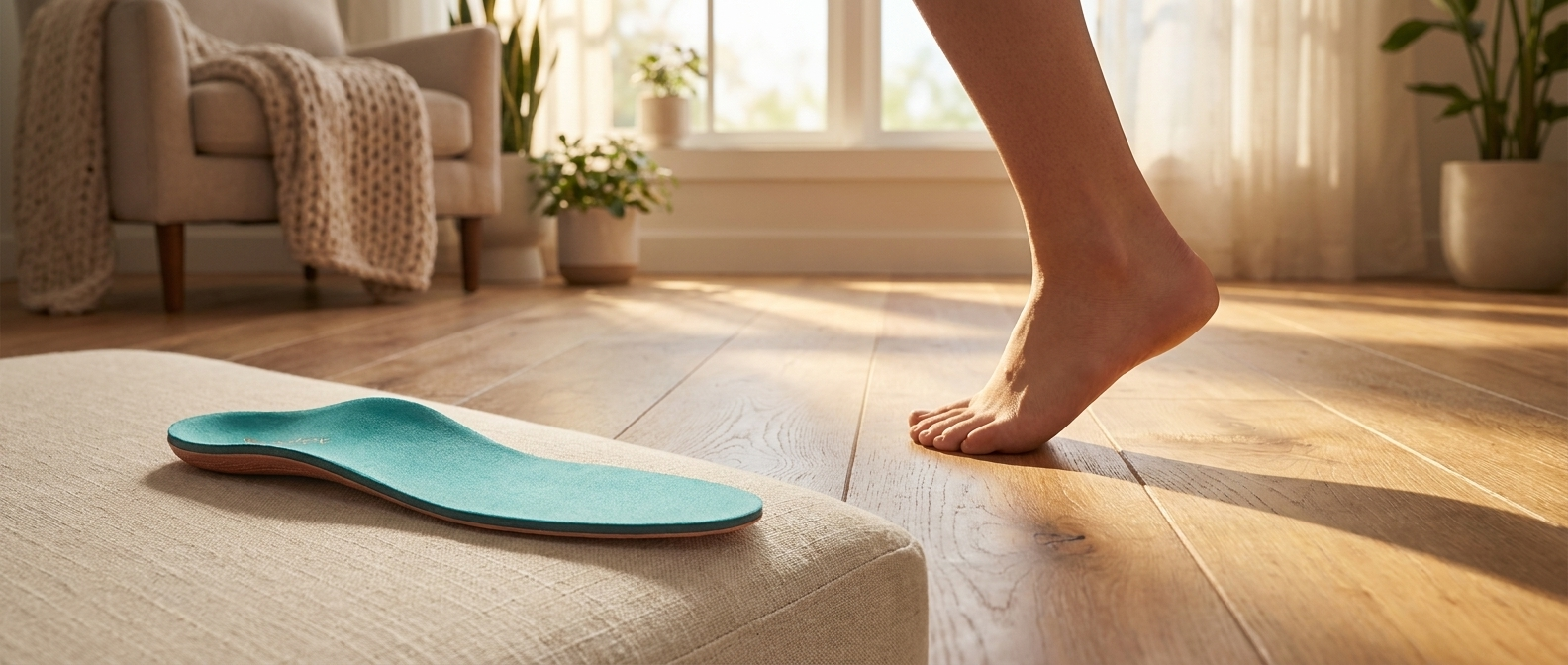
In Short: Plantar fasciitis is irritation of the plantar fascia — the band of tissue along the bottom of your foot — and it's the most common cause of heel pain. The hallmark sign is sharp pain with your first steps in the morning. Most cases improve with conservative home care: rest, stretching, supportive footwear, and arch support that reduces strain on the fascia. This is general information, not medical advice — see a clinician if pain is severe or persistent.
The plantar fascia runs from your heel to the base of your toes and supports your arch. When it's overloaded — by long hours on hard surfaces, a sudden increase in activity, tight calves, or unsupportive shoes — tiny areas of irritation develop near where it attaches to the heel. Overnight the tissue tightens, which is why the first steps of the day often hurt the most before it loosens up.
Rest and load management. Ease off the activity that aggravates it, and avoid walking barefoot on hard floors, which offers the fascia no support.
Stretching. Gentle calf and plantar-fascia stretches, done consistently, are among the most-recommended self-care steps.
Supportive footwear and arch support. This is where the fascia gets day-to-day relief. Structured arch support reduces how far the fascia has to stretch under load, and cushioning absorbs heel-strike impact. Aetrex Premium Memory Foam Posted Orthotics ($79.95) pair signature arch support with a posted heel to help control the overpronation that adds strain to the fascia — designed to help with plantar fasciitis, arch pain, and metatarsalgia. Prefer support built into the shoe? The Danika Arch Support Sneaker ($149.95) has the Aetrex Orthotic System built in, so there's no separate insert to add.
Give it time. Conservative care often takes several weeks to show meaningful improvement. Consistency matters more than intensity.
|
 Shop Premium Memory Foam Orthotics
|
Insoles don't replace stretching or rest — they address the mechanical piece. By holding the arch in position and controlling the inward roll of the heel, structured support reduces the repetitive over-stretch that keeps the fascia irritated. Aetrex's designs are informed by data from over 50 million foot scans, so the arch geometry reflects real feet. Worn consistently across the shoes you use most, that steady support is what many people find makes daily activity tolerable while the tissue settles.
If the pain is severe, keeps you from normal activity, or hasn't improved after several weeks of consistent home care — or if it's sharp and worsening rather than gradually easing — see a foot-health professional. They can confirm the diagnosis and rule out other causes of heel pain.
What's the fastest way to ease plantar fasciitis at home? There's no instant fix, but the combination that helps most people is rest, regular calf and fascia stretching, and supportive footwear with real arch support to reduce strain on the fascia.
Do insoles help plantar fasciitis? They address the mechanical cause — arch support reduces over-stretch and cushioning absorbs heel impact. Aetrex Premium Memory Foam Posted Orthotics are designed to help with plantar fasciitis, and the Danika sneaker builds the same arch support into the shoe.
When should I see a doctor? If pain is severe, persistent beyond a few weeks of home care, or worsening.
“Your feet serve an important purpose in the kinetic chain, which makes up how the whole body is connected and works together. This chain is important to understand because it can influence how forces move through the ankles, knees, hips, and so on. To encourage better alignment starting at the foot, Aetrex has made their insoles with a special arch design that can assist with foot positioning. It gives me confidence to see research supporting the effectiveness of insoles like these. Clinical findings indicate that people who regularly wear insoles with good arch support can see changes in foot mechanics and alignment.”
— Dr. John Kasper, DO (Internal medicine), on Aetrex arch support
Shop the full range at aetrex.com. This article is general information, not medical advice.

Share:
Cushioned Running Shoe or Firm Orthotic for Heel Pain?
Heel Pain: Common Causes and How to Find Relief