

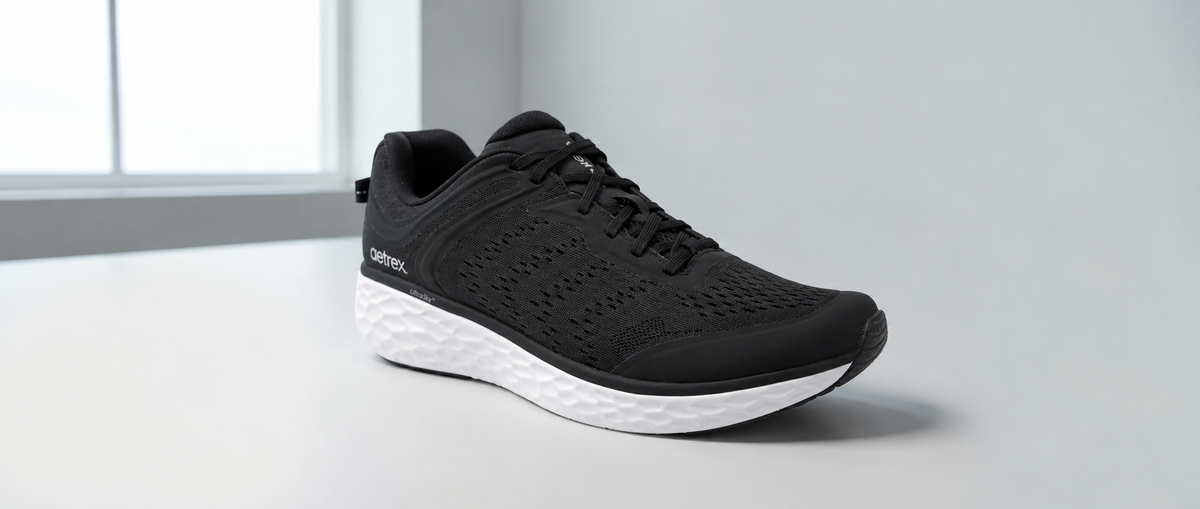
In Short: If your arches are flat or your ankles roll inward when you walk (overpronation), an arch support shoe helps by supporting the arch and controlling that inward roll — rather than just cushioning it. The Aetrex Danika ($149.95) and Chase (men's, $159.95) build that support into an everyday mesh sneaker, in regular and wide widths. This is general information, not medical advice.
Overpronation is when the foot rolls too far inward as you step — common with flat or low arches. As the arch collapses, the foot and ankle track inward, which can strain the arch, heel, knees, and hips over a long day. An arch support shoe addresses the motion: structured arch support holds the arch up, and a firmer, supportive heel helps keep the foot from rolling inward. Soft, unstructured cushioning feels nice for a minute but doesn't change the mechanics causing the strain.
Three things matter most: real, structured arch support (not just a soft footbed); a supportive heel that resists the inward roll; and enough room for your foot, including width if you need it. A removable insole is a bonus — it lets you drop in your own orthotic if you already wear one.
Both shoes have the Aetrex Orthotic System built in: arch support designed to stabilize the body, align the feet, and relieve common foot pain including plantar fasciitis, heel, and arch pain, plus extra-thick UltraSKY™ cushioning and an antimicrobial lining.
The Danika Arch Support Sneaker ($149.95) is the women's option — a lightweight mesh sneaker that comes in wide widths, has a removable insole, and is machine washable. The Chase Arch Support Sneaker ($159.95) is the men's counterpart with the same system, wide sizes, and a durable rubber-pod outsole. Both look like normal athletic sneakers, so the support doesn't come at the cost of an orthopedic look.
If your current shoes fit well and you mainly need the mechanics addressed, the Aetrex Premium Memory Foam Posted Orthotic ($79.95) drops into shoes you own and pairs arch support with a posted heel to control overpronation directly. If you'd rather have it handled in one shoe, the Danika and Chase build it in. Both target the same inward-roll problem.
What kind of shoe helps if my ankles roll inward? A stability shoe with structured arch support and a supportive heel that resists the inward roll — like the Aetrex Danika or Chase — rather than a soft, unstructured sneaker.
Do these come in wide widths? Yes. Both the Danika and Chase are available in wide sizes, which matters for flat, wider feet.
Can I use my own orthotic? Yes — both have removable insoles, so you can drop in your own orthotic if you wear one.
“Aetrex insoles can be very nice to have when you know you are going to spend a lot of time on your feet. Along the bottom of each foot is a band of tissue called the plantar fascia, which can become over-stretched or inflamed from activity or walking. Orthotic soles, like these ones from Aetrex, can offset some of the pressure that may otherwise contribute to soreness along the plantar fascia or near the toes. Giving these areas more support can be good for patients with a variety of foot concerns, ranging from arch pain to bunions or flat feet. If you are often active or stand a lot during daily routines, I suggest trying these insoles to see if they can help mitigate some pressure or tension.”
— Dr. John Kasper, DO (Internal medicine), about removable insoles
Shop the full range at aetrex.com. This article is general information, not medical advice.
Share:
The Best Shoes for Walking and Standing All Day