

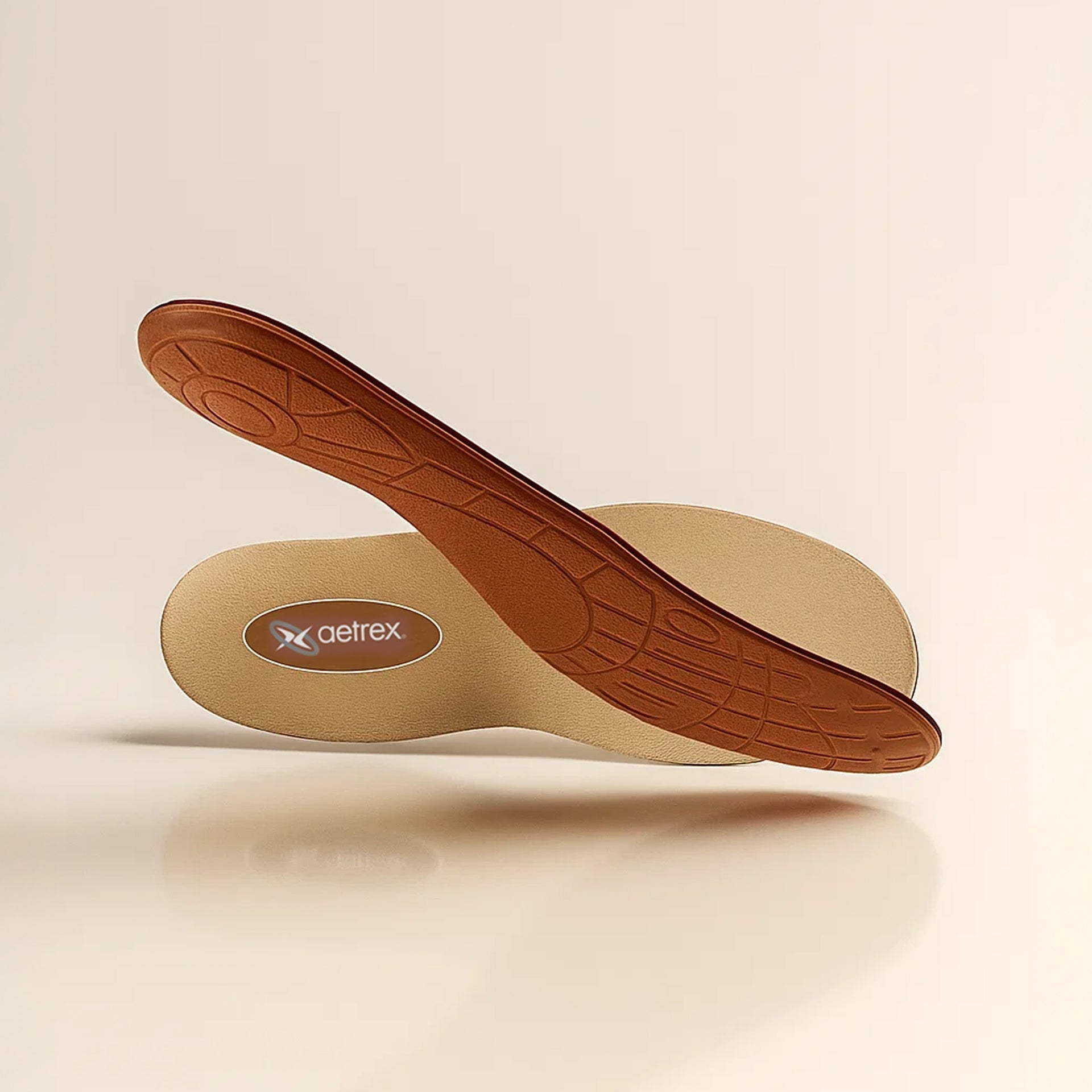
Your favorite shoes might be trying to tell you something. Go ahead, flip them over. See how the inside edge is worn down? That's a classic sign of overpronation. This uneven wear shows your foot is rolling too far inward with every step, which can throw your entire body out of alignment. It’s a clear signal that your foundation needs more stability. Finding the right supportive insoles for overpronation is key. We’ll break down exactly what to look for to get the stability you need and relieve discomfort from the ground up.
Let's talk about pronation. When you walk or run, your foot naturally rolls inward to absorb shock and adapt to the ground. This is a normal, healthy movement that helps distribute your body weight evenly. The issue arises when that inward roll becomes excessive—that’s called overpronation. Think of it as your foot’s arch collapsing a little too much with each step.
Overpronation is especially common in people with flat feet or very flexible arches. While it might not sound like a big deal, this repeated motion can throw your body’s alignment off balance. Over time, it can place extra stress not just on your feet, but on your ankles, knees, and even your hips and back. Understanding if you overpronate is the first step toward finding the right support to keep your body aligned and comfortable from the ground up. Aetrex helps to provide that essential support with thoughtfully designed orthotics and footwear.
So, what's behind that excessive inward roll? Overpronation is often a combination of factors, and some of them are simply part of your unique makeup. For many, it comes down to genetics—you might have inherited a foot structure with looser ligaments or more flexible joints, making you more susceptible. This is especially true for people with flat feet, as a lower arch provides less natural support against the inward roll. Beyond your natural foot type, other life factors can play a role. Things like pregnancy, carrying extra weight, or even old ankle injuries can place additional stress on your feet, causing the arches to collapse more than they normally would. It’s not about one single cause, but rather how your body’s structure handles daily pressures.
Not sure if you’re an overpronator? Your shoes can offer some great clues. Take a look at the soles of a well-worn pair. If you see significant wear on the inside edge, especially around the ball of the foot and the inner heel, it’s a classic sign of overpronation. Another indicator is having flat feet or arches that are very flexible. You might also feel the effects elsewhere, with unexplained aches in your heels, knees, hips, or lower back. These little signals are your body’s way of telling you that your foundation might need a bit more stability.
It’s easy to think of overpronation as just a foot problem, but it creates a chain reaction that can travel all the way up your body. When your foot rolls too far inward, it causes your lower leg to rotate inward as well. This subtle twist can misalign your knee, which in turn can affect your hip and lower back alignment. This imbalance forces muscles and ligaments to work harder to keep you stable, leading to strain and discomfort in areas far from your feet. Providing proper arch support is key to helping correct this alignment and reduce stress on your joints.
That constant inward roll doesn't just cause general aches; it can lead to specific, painful conditions. One of the most common is plantar fasciitis, where the ligament connecting your heel to your toes becomes strained and inflamed from the collapsing arch. Overpronation can also contribute to shin splints, as the muscles in your lower leg work overtime to stabilize your foot. It can even lead to bunions by putting extra pressure on your big toe joint. And as we've touched on, that misalignment often results in persistent knee, hip, and lower back pain. These issues are all signals that your body is compensating for a lack of foundational support. Aetrex helps to address these concerns by designing orthotics and footwear that provide the necessary stability to realign your feet and reduce stress throughout your body.
There are a few common misconceptions about overpronation. First, many people think all pronation is bad. In reality, a certain amount of pronation is a natural and necessary part of how we move. It’s only when it becomes excessive that it can contribute to discomfort. Another myth is that supportive orthotics are only for serious athletes or older adults. The truth is, anyone who experiences discomfort from overpronation can benefit from the right support. Finding the perfect match for your feet is simple with tools like the Aetrex Orthotic Finder, which helps you identify the best option for your specific needs.
When you’re dealing with overpronation, the right insole can make a world of difference. But with so many options out there, it’s easy to feel overwhelmed. The key is to look past the flashy packaging and focus on a few core features that provide genuine support and alignment. Think of it as building a solid foundation for your feet, which in turn supports your entire body. Let’s walk through exactly what makes an insole effective for managing overpronation.
Arch support is non-negotiable when it comes to overpronation. It’s the primary feature that helps to counteract the inward rolling of your foot. Aetrex helps to correct overpronation with orthotics that feature targeted arch support and advanced motion control technology. Instead of a flimsy, soft arch, you need a firm, supportive structure that can guide your foot into a more neutral position. This support helps to properly distribute pressure across your foot with every step you take. By supporting your arch and controlling excess motion, a quality insole can improve your body's alignment from the ground up, which can help relieve stress on your ankles, knees, and back.
While arch support gets a lot of attention, the heel cup is just as important for stability. A deep heel cup is designed to cradle your heel, holding it securely in place. This simple feature is incredibly effective at controlling side-to-side motion and preventing your foot from sliding around inside your shoe. For anyone with overpronation, this stabilization is crucial. It works together with the arch support to create a solid base for your foot. By keeping your heel properly positioned, a deep heel cup helps to align your entire foot, ensuring that the arch support can do its job effectively and giving you a more stable, confident stride.
It’s a common mistake to think that the softest, most cushioned insole is the best one. While cushioning feels nice, it doesn’t do much to address the underlying biomechanical issue of overpronation. What you really need is a balance between cushioning and firm, structural support. The best insoles use firmer materials to create a supportive shape that aligns your foot, combined with strategic cushioning in high-pressure areas like the heel and ball of the foot. This combination provides both comfort and control. If you're unsure what level of support you need, using an Orthotic Finder can help you identify the perfect match for your feet and lifestyle.
When you’re dealing with overpronation, finding the right insole isn’t just about comfort—it’s about getting the specific support your feet need to function properly. Aetrex stands out because our orthotics are designed with a deep understanding of foot biomechanics. We combine premium materials with data from millions of foot scans to create an insole that doesn't just cushion your foot, but actively helps guide it into a healthier alignment. This thoughtful approach is what makes Aetrex a trusted choice for relieving the discomfort associated with overpronation.
What truly sets Aetrex apart is our signature arch support. It’s not just a generic bump in the middle of the insole. Instead, it’s strategically placed to make contact with your arch, providing the support needed to help realign your foot and control overpronation. This design helps to stabilize your foot, maintain proper alignment, and distribute pressure more evenly across your feet with every step you take. By supporting the arch correctly, our orthotics help to prevent the excessive inward rolling that causes so much strain, giving your feet a solid and supportive foundation.
Beyond arch support, Aetrex orthotics are engineered with advanced motion control technology. This is a key feature for anyone who overpronates. Motion control helps to limit that excessive side-to-side movement of your foot, keeping your body in better alignment from the ground up. Our designs often include a deep heel cup that cradles your heel to provide rearfoot stability and stop it from rolling inward. This technology is backed by data from our innovative foot scanners, ensuring that every curve and contour serves a purpose in helping to correct overpronation and improve your overall stability.
The effectiveness of our orthotics isn’t an accident; it’s the result of a design process rooted in science and data. We work closely with doctors and pedorthists to understand the complexities of foot biomechanics. But what truly sets our approach apart is the information we’ve gathered from millions of individual foot scans using our innovative foot scanning technology. This incredible pool of data gives us unparalleled insight into how different foot types handle pressure and alignment. By analyzing this information, we can design orthotics that address the specific needs of overpronators, ensuring the support is placed exactly where it’s needed most for optimal function and comfort.
Ultimately, the goal is to feel better, and that’s where Aetrex truly delivers. By providing proper alignment and stability, our orthotics help to relieve the stress that overpronation places on your body. This can reduce common aches and pains not just in your feet, but also in your ankles, shins, knees, and even your lower back. Aetrex orthotics are designed to help prevent overpronation and its related discomforts, making them an excellent choice for maintaining an active lifestyle. If you're unsure where to start, our Orthotic Finder can help you identify the perfect match for your feet and daily activities.
When you start looking for insoles, you'll find a lot of options out there, from high-end specialty brands to the ones you see at your local pharmacy. It can be tough to sort through them all and know which one is right for you. The most important thing is to find an insole that provides the right combination of support, stability, and comfort for your specific needs. While many brands offer some level of relief, the technology and design philosophy can vary quite a bit. Some focus heavily on rigid control, which can feel restrictive, while others prioritize soft cushioning that might not offer enough structure to properly guide your foot. The key is finding a balance that helps to correct your alignment without feeling harsh or uncomfortable. Aetrex stands out by combining premium materials with advanced technology, like our signature arch support, to provide a solution that addresses overpronation at its source. Our goal is to deliver support that feels like it was made just for you, adapting to your foot and your lifestyle. Let's look at how other types of insoles stack up.
Beyond Aetrex, other premium orthotics are available that promise relief. These brands often focus on providing firm, structured support and a deep heel cup to help stabilize the foot and ankle. Their goal is to improve your body's alignment by controlling your foot's motion. While this approach can be effective for some, it can sometimes feel rigid. Aetrex helps to correct overpronation with orthotics that feature targeted arch support designed to align your body and relieve pressure where you need it most. This advanced motion control technology offers stability that feels supportive, not restrictive, giving you a more comfortable and personalized fit.
You can easily find budget-friendly insoles at most drugstores. These options are often marketed for general foot fatigue or mild discomfort. Some are designed with basic stabilizing features to help control motion and align the ankles, while others focus on shock absorption. While they can offer a slight improvement over a shoe's factory liner and are very accessible, they typically lack the targeted, biomechanically engineered support needed to properly address overpronation. For lasting relief and true alignment correction, investing in a higher-quality orthotic with proven arch support is a much more effective long-term strategy for your foot health.
If you're a runner or athlete, you might look for insoles specifically designed for high-impact activities. Many athletic insoles offer excellent arch support and stability to help prevent common issues like blisters and foot fatigue during exercise. They are built to withstand the demands of an active lifestyle. Aetrex orthotics are also engineered to support you through every activity. They are designed to help prevent overpronation and its related aches and pains, like plantar fasciitis, making them a fantastic choice for anyone living an active life. By providing proper alignment and cushioning, Aetrex helps ensure your feet are supported whether you're on a run, at the gym, or simply on your feet all day.
If you’re dealing with persistent foot pain, you’ve likely come across the term “overpronation.” But how do you know if it’s actually what you’re experiencing? Understanding the signs is the first step toward finding relief. Overpronation isn’t just about your feet; it can create a ripple effect of discomfort throughout your body. By paying attention to a few key indicators, from how your body feels to the story your shoes are telling, you can get a clearer picture of what’s going on with your gait and decide if insoles are the right next step for you.
Overpronation happens when your foot’s arch flattens and rolls too far inward or downward with each step. It’s especially common if you have low or flexible arches. You might feel this as a general soreness or fatigue in your feet, but the effects don't stop there. Because your feet are the foundation for your entire body, this inward rolling can misalign your ankles, knees, hips, and even your back, leading to aches and pains in those areas. You might also notice secondary issues like blisters or calluses forming as your foot slides around in your shoe. If you experience pain in your arches, heels, or along your shins after walking or standing, overpronation could be the culprit.
Your shoes can be surprisingly honest storytellers. Go grab a pair of your most-worn sneakers or flats and flip them over. If you overpronate, you’ll likely see a distinct wear pattern on the soles. Look for significant wear along the inside edge, especially at the heel and the ball of your foot, just under your big toe. This pattern shows exactly where your foot is absorbing the most impact as it rolls inward. It’s a clear visual sign that your gait is uneven and could benefit from more stability. The right pair of supportive shoes combined with a good insole can help correct this imbalance.
While checking your symptoms and shoe wear is a great start, you should consider a professional opinion for persistent or severe pain. A podiatrist can perform a gait analysis to get a detailed look at your foot mechanics. For some, custom orthotics may be recommended, but they aren’t always the first or only option. An excellent step is to get a precise 3D measurement of your feet. Aetrex’s advanced foot scanners, available at various retail locations, can identify your specific pressure points and arch type in just a few seconds. This data gives you a personalized starting point for finding the right over-the-counter orthotics to provide the support you need.
A gait analysis is the most accurate way to find out for sure if you overpronate. It’s a professional assessment where an expert, like a podiatrist, observes how you walk and run to get a detailed look at your foot mechanics. This goes beyond just looking at your shoe wear patterns and gives you a clear, data-driven picture of what your feet are doing with every step. While a full analysis from a doctor is a great option for complex issues, modern technology has made this kind of insight much more accessible. For example, Aetrex foot scanners use advanced technology to map your pressure points and identify your unique arch type in seconds. This personalized data takes the guesswork out of finding the right support, giving you a clear starting point for selecting an over-the-counter orthotic that truly matches your needs.
Walking down the aisle of a pharmacy, you’ll see dozens of insoles promising relief. On the other hand, you’ve probably heard about custom orthotics from a podiatrist, which come with a much higher price tag. So, which path is right for you? The answer depends on your specific needs, the severity of your overpronation, and your daily activities.
Over-the-counter (OTC) insoles are pre-fabricated and designed to fit a wide range of shoe sizes and foot types. They are an accessible and affordable first step for addressing foot discomfort. Custom orthotics, by contrast, are created from a mold of your feet and are prescribed by a medical professional to address a specific biomechanical issue. While they offer a truly personalized fit, they require a significant investment of time and money. For many people dealing with the effects of overpronation, a high-quality, supportive OTC insole provides the ideal balance of comfort, support, and value.
If you're dealing with mild to moderate overpronation, a quality over-the-counter insole is often all you need to feel a significant difference. Over-the-counter insoles can provide adequate support for many individuals, as they often feature arch support and cushioning that can help alleviate discomfort. Unlike flimsy gel inserts, premium orthotics are designed with specific biomechanics in mind. Aetrex helps to properly align your feet and control overpronation with our Signature Arch Support, providing relief not just for your feet, but for your knees, hips, and back, too. For many, this is the perfect solution for everyday comfort and support.
While premium OTC insoles are effective for many, there are times when a custom solution is the better choice. If you’ve tried supportive insoles and still experience persistent or severe pain, it might be time to consult a professional. Podiatrists often find that specific foot conditions, like severe flat feet, high arches, or issues resulting from an injury, require the targeted, prescription-level support that custom orthotics provide. If your discomfort interferes with your daily life or you have a diagnosed foot deformity, a podiatrist can help determine if a custom-molded device is necessary to give your feet the precise alignment they need.
Whether you choose an over-the-counter or custom option, the right fit is everything. An ill-fitting insole won’t just be ineffective; it can create new problems. A proper fitting is crucial for insoles to be effective, as insoles that do not fit well can lead to additional foot problems by failing to provide the necessary support. This is where technology can give you a major advantage. Aetrex’s state-of-the-art foot scanners, available at retailers nationwide, capture precise data about your unique foot profile, including your arch height and pressure points. This allows you to get a personalized recommendation for the best OTC insole, giving you the confidence of a custom-like fit without the prescription price tag.
When your feet are causing you pain, turning to a professional is always a smart move. Podiatrists are the experts in foot health, and they have a wealth of knowledge when it comes to managing conditions like overpronation. They look beyond just the symptoms to understand the underlying mechanics of your feet and how they affect your entire body. Their recommendations often combine supportive footwear, targeted exercises, and the right kind of insoles to guide your feet back into a healthier alignment. By understanding what these experts look for, you can make more informed choices about your own foot care and find lasting relief.
Podiatrists agree that not all insoles are created equal, especially when it comes to overpronation. They recommend looking for specific features that provide stability and proper alignment. First on the list is firm, targeted arch support. This is crucial for preventing the arch from collapsing inward. Next is a deep, stabilizing heel cup, which cradles the heel to control motion and prevent it from rolling. Finally, strategic cushioning helps absorb shock without feeling too soft, which could worsen instability. Aetrex helps to correct overpronation with orthotics that are designed with these expert-backed features, combining our signature arch support with advanced materials to align your body and relieve pressure.
If you suspect you overpronate, a podiatrist can give you a definitive answer. During an evaluation, they’ll likely watch you walk to observe your gait and examine your foot structure, looking for signs like flat feet or overly flexible arches. They might also check the wear pattern on your shoes. A telltale sign of overpronation is excessive wear on the inside edge of the sole, particularly around the heel and the ball of the foot. For a highly detailed look at your feet, advanced technology can provide incredible insights. Aetrex foot scanners, for example, can map your pressure points and arch type in seconds, giving you a precise picture of your foot’s needs.
While orthotics are a cornerstone of managing overpronation, podiatrists often recommend specific exercises to strengthen the muscles that support your feet and ankles. Think of it as building a stronger foundation from the inside out. Simple, effective movements can make a significant difference in your alignment and comfort. Some of the most commonly recommended strengthening exercises include calf stretches, calf raises, and rolling a tennis ball under your foot to release tension. These routines help improve your foot posture and enhance the benefits you get from your supportive insoles, creating a comprehensive approach to foot health.
While the right insoles are a game-changer, they work best as part of a holistic approach to foot health. Think of your shoes as the foundation; even the best orthotic can’t do its job in a flimsy, unsupportive shoe. Choosing supportive footwear with features like a firm heel counter provides a stable base for your insole to work effectively. You can also build support from within by incorporating simple strengthening exercises to bolster the muscles that support your arches. For more personalized insights, a professional can perform a gait analysis to observe how you walk. An even more accessible first step is getting a 3D foot scan, which can give you a detailed look at your pressure points and arch type, helping you understand your unique needs.
Investing in a good pair of insoles is an investment in your daily comfort and long-term foot health. While prices can vary, understanding what you're paying for helps you make a smart choice. A higher price tag often reflects advanced design, durable materials, and technology specifically engineered to provide support and relief, not just temporary cushioning. Think of it less as a simple shoe insert and more as a tool to help your body feel and function its best from the ground up.
When you start shopping for quality over-the-counter insoles, you’ll find that most effective options for overpronation fall in the $40 to $70 range. This price point typically includes insoles made with premium, durable materials and biomechanically engineered features, like a supportive arch and deep heel cup. Aetrex orthotics, for example, are priced competitively within this range and are designed to provide immediate and lasting comfort. While you can find cheaper insoles, they often lack the structure needed to properly support your feet and may wear out quickly, costing you more in the long run.
The best value doesn't always mean the lowest price. True value comes from finding an insole that effectively addresses your specific needs. Instead of soft, flimsy inserts that only provide cushioning, look for an orthotic with firm, yet flexible, support that matches your arch shape. This structure is what helps to control overpronation and relieve related aches and pains. Aetrex helps to deliver this value by incorporating our Signature Arch Support into every pair of orthotics. To get the most out of your investment, a proper fit is essential. Using a tool like the Aetrex Orthotic Finder can help you identify the perfect match for your feet and lifestyle, ensuring you get lasting relief and support.
Buying a new pair of orthotics is an investment in your comfort, so it's natural to want some reassurance that you're making the right choice. This is where a satisfaction guarantee or a solid return policy becomes so important. A company that stands behind its product gives you the confidence to try their insoles without risk. It means you can wear them for a period of time to see how they feel during your daily activities. Aetrex helps to ensure you find the right fit by offering a 30-day wear test on all orthotics, giving you ample time to experience the benefits of our signature arch support. This kind of guarantee is a clear sign that a brand is confident in its ability to provide real relief.
Finding the right insoles can feel like a game of trial and error, but it doesn’t have to be. The key is to move beyond generic, squishy inserts and look for options that provide genuine structure and support tailored to your specific needs. When you’re dealing with overpronation, you need an insole that does more than just cushion your foot—it needs to guide it into proper alignment.
Think about your daily activities, the shoes you wear most often, and the specific symptoms you’re experiencing. Are you on your feet all day for work? Are you an avid runner? Do you feel pain in your arches, heels, or even your knees and back? Answering these questions will help you narrow down your choices and find an insole that truly works for you. The goal is to find a solution that integrates seamlessly into your life, providing consistent support and relief with every step.
An excellent insole can only do its job if it’s in the right environment. Placing a supportive orthotic inside a flimsy, worn-out, or unsupportive shoe is like building a strong house on a shaky foundation—it just won’t work. Your shoe and insole need to function as a team to provide true stability. Look for footwear with a firm heel counter (the part that wraps around your heel) and good torsional stability, meaning it shouldn't twist easily. It’s also important that the shoe has enough space to accommodate the insole without crowding your toes. Many Aetrex shoes are designed with removable footbeds, making it easy to slip in your favorite orthotic for a perfect, supportive fit that works in harmony with the shoe's built-in features.
When shopping for shoes to pair with your insoles, you’ll often see terms like "stability" and "motion control." Stability shoes are designed for mild to moderate overpronation, offering a great balance of cushioning and support to gently guide your foot. Motion control shoes provide maximum support and are best for those with more significant overpronation or very flat feet, as they are more rigid and work to limit excess movement. The key is to match the level of support in your shoe with your insole. Aetrex helps to simplify this by engineering footwear with our signature support built right in, creating a complete system that promotes proper alignment and helps to relieve the discomfort associated with overpronation.
Your feet are unique, and your insoles should be too. The first step is to identify your arch type and understand how it contributes to overpronation. Avoid flimsy, overly soft insoles that collapse under pressure; they might feel comfortable for a moment, but they don't offer the structural support needed to correct alignment. Instead, look for an orthotic with firm, yet flexible, arch support that matches your foot’s contour.
Aetrex helps to correct overpronation with orthotics that feature targeted arch support and advanced motion control technology. This design helps align your body and relieve pressure where you need it most. Consider your lifestyle as well—an insole designed for high-impact athletic activity will have different features than one meant for casual walking shoes. Using a tool like an Orthotic Finder can simplify the process, guiding you to the perfect match for your feet and daily routine.
A proper fit is crucial for an insole to be effective. The insole should sit snugly in your shoe without buckling or sliding. Many high-quality orthotics can be trimmed at the toe for a perfect fit. Look for features like a deep heel cup, which cradles the heel to provide stability and help control excess motion. This simple feature makes a significant difference in keeping your foot properly aligned from the moment it hits the ground.
Give your body time to adjust to the new support. Start by wearing your new insoles for just an hour or two on the first day, gradually increasing the time over a week. This allows the muscles and ligaments in your feet to adapt. Remember that the right women's footwear or men's footwear is also part of the solution. Pairing a supportive insole with a well-structured shoe creates the ideal environment for happy, healthy feet.
Beyond the initial fit, the design of the insole itself is what provides lasting support. For overpronation, two features are essential: firm arch support and a deep heel cup. The arch support should be structured enough to prevent your arch from collapsing, while the deep heel cup cradles your heel to control side-to-side motion and improve stability. Aetrex helps to deliver this with orthotics that combine our signature support with premium, shock-absorbing materials. To maintain their integrity, it’s important to care for your insoles properly. Clean them regularly with a mild soap and water, and always allow them to air dry. Avoid exposing them to direct heat from a radiator or dryer, as this can warp the materials and compromise their supportive shape.
If I have flat feet, does that automatically mean I overpronate? Not necessarily, but there is a strong connection. Many people with flat or very low arches do overpronate because there isn't enough structure to support the foot, causing it to roll inward. However, it's the excessive inward motion that defines overpronation, not just the arch height. The best way to know for sure is to look at the wear pattern on your shoes or get a professional opinion.
How long will it take for my feet to get used to new orthotics? Give your body a little time to adapt to the new support. It's best to ease into it. Start by wearing your new insoles for just an hour or two the first day, then gradually add more time over the course of a week. This allows the muscles in your feet and legs to adjust to the new alignment without feeling strained.
Will insoles make my shoes feel too tight? A well-designed insole shouldn't cramp your style. Most quality orthotics are made to replace the removable liner that came with your shoes, so they won't take up a lot of extra space. If your shoes are already quite snug, you might feel a difference, but a proper fit should feel supportive, not tight.
Is a softer, more cushioned insole better for foot pain? It’s a common myth that more cushion equals more comfort. While a soft, gel-like insole might feel nice at first, it often lacks the structure needed to address the root cause of overpronation. For lasting relief, you need a balance of strategic cushioning and firm, supportive arch support that guides your foot into proper alignment.
Can I move my orthotics from one pair of shoes to another? Absolutely! One of the best things about high-quality orthotics is their versatility. You can easily move them between your everyday sneakers, work shoes, and boots. Just make sure the insole fits well inside each shoe without buckling or sliding around to ensure you're getting consistent support throughout your day.
Share:
How to Choose Walking Shoes for Arthritic Feet
The Expert Guide to Comfortable Sandals for Men