

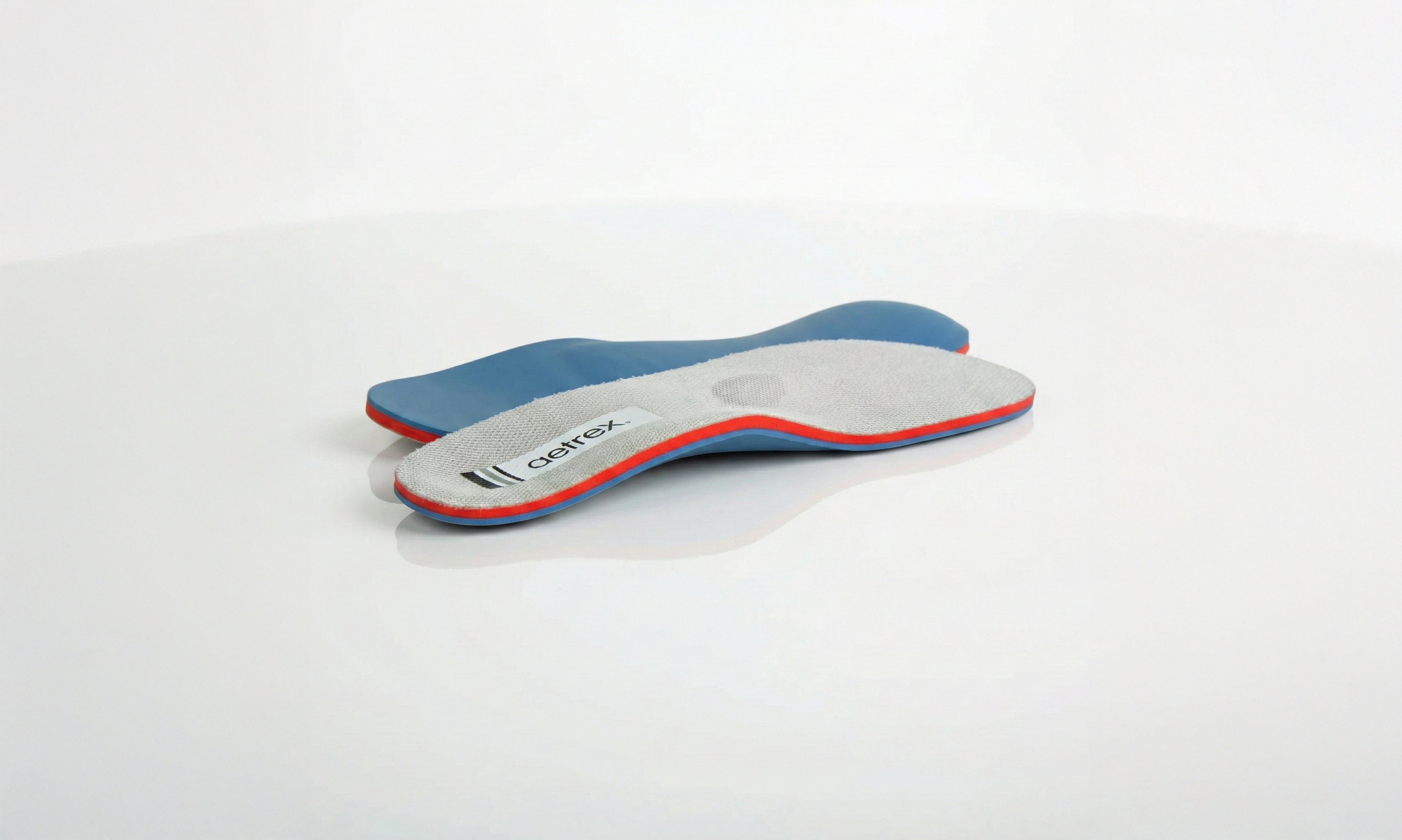
A foot support that won’t stay put is incredibly frustrating. You carefully place a stick-on metatarsal pad, only for it to shift, bunch up, or completely lose its stick. After a few hours, you're ready to give up. But you deserve reliable, hassle-free comfort. The best metatarsal pads are the ones you don't have to think about. That’s why it’s crucial to look at how a pad is integrated into your footwear. We'll compare simple adhesive pads to advanced orthotics with built-in support, so you can find a dependable solution that stays exactly where you need it.
If you're dealing with that nagging pain in the ball of your foot, you've probably heard about metatarsal pads. Often called "met pads," these small but mighty supports are specifically designed to bring relief to your forefoot. But they aren't just simple cushions. So, how exactly do they work?
The primary job of a metatarsal pad is to redistribute pressure away from the sensitive ball of your foot. Unlike a gel cushion you might place directly under the sore spot, a met pad is a firmer support that sits just behind the ball of the foot. This strategic placement helps to gently lift and spread the metatarsal bones. By doing this, it eases the strain on the nerves and tissues in your forefoot, which is especially helpful for conditions like metatarsalgia and Morton's neuroma.
This support also plays a crucial role in maintaining your foot's transverse arch, which runs across the forefoot. When this arch is properly supported, your foot bones can align correctly, allowing muscles and ligaments to function more effectively. While placing a stick-on pad correctly can take a bit of trial and error, many Aetrex orthotics feature a built-in met pad. This design takes the guesswork out of placement, ensuring you get targeted, consistent support right where you need it most, helping you move with greater comfort and less pain.
Metatarsal pads are not a one-size-fits-all solution. The best choice depends on your specific foot needs, the shoes you wear, and your daily activities. Understanding the different materials and styles is the first step toward finding lasting comfort. Let’s walk through the most common types so you can find the right fit for your feet.
If you’re looking for soft, flexible cushioning, gel pads are an excellent choice. They are typically thin and discreet, making them ideal for shoes where space is tight, like heels, flats, or dress shoes. The primary job of a gel pad is to absorb shock, reducing the impact on the ball of your foot with every step you take. This makes them particularly effective for people who spend a lot of time on their feet on hard surfaces. Their soft texture is generally comfortable against the skin, providing gentle relief without adding bulk inside your women's footwear.
Foam pads are a versatile option known for providing durable, all-day cushioning. Most are made from open-cell polyurethane foam, which balances softness with support that won’t flatten out after a few hours of wear. You can also find pads made from wool or polyester felt, which offer firmer support but may take longer to dry if they get wet. Because of their reliable cushioning, foam pads are a great choice for everyday shoes like sneakers and work boots. Many high-quality orthotics incorporate medical-grade foam to provide this kind of long-lasting comfort.
When you need more significant pressure relief, a firm, dome-shaped pad is often the most effective option. These pads are engineered to support the metatarsal arch, which helps spread the bones in your forefoot and reduce pressure on the nerves and joints. This design mimics the natural splaying of the foot, which is essential for restoring healthy foot function. If you're dealing with persistent pain from conditions like metatarsalgia or Morton's neuroma, a firm pad can provide the targeted support needed to feel better. Aetrex helps to provide this type of targeted metatarsalgia relief through footwear with built-in support.
Metatarsal pads come in two main styles: those that stick directly to your foot and those that attach to your shoe’s insole. For comfort and hygiene, it’s usually best to choose a pad that sticks to the insole. This prevents the adhesive from irritating your skin and allows you to use the pad across multiple pairs of shoes. Some pads use a strong adhesive that is meant to be placed once, while others use a less permanent glue or a Velcro system. Repositionable pads are a great advantage, as they let you adjust the placement multiple times to find the perfect spot for relief without losing their stickiness.
The shoes you wear and the activities you do have a huge impact on your feet. A metatarsal pad that works wonders in your running shoes might not fit into your favorite pair of heels, and the gentle cushioning you need for a day at the office is different from the robust support required for a long hike. Choosing the right type of pad for the occasion is key to getting consistent relief. Let’s look at the best options for dressier shoes versus high-impact activities, so you can stay comfortable no matter what’s on your schedule.
Finding comfort in shoes with limited space, like heels or flats, can feel like an impossible task. This is where thin, discreet pads come in. If you’re looking for soft, flexible cushioning, gel pads are an excellent choice because they absorb shock without adding bulk. They reduce the impact on the ball of your foot with every step, which is a lifesaver in less-supportive footwear. While a stick-on gel pad can offer temporary relief, an even better solution is to find women's footwear designed with this type of support already built in. Aetrex helps to integrate premium cushioning and metatarsal support directly into many of its dress shoe styles, giving you targeted relief that never shifts or bunches up.
When you’re running, walking, or playing sports, your feet are under a lot more stress. For these high-impact activities, you need more than just a soft cushion; you need serious structural support. A firm, dome-shaped pad is often the most effective option because it’s engineered to properly support the metatarsal arch. This helps spread the bones in your forefoot, taking pressure off sensitive nerves and joints. Instead of relying on a simple stick-on pad that can move around during activity, consider a high-quality orthotic with a built-in metatarsal pad. This ensures the support stays exactly where it needs to be, providing consistent pressure relief and promoting healthy foot function when you need it most.
If you’ve ever felt a sharp, burning, or aching pain in the ball of your foot, you know how disruptive it can be. This area, which supports a huge amount of pressure with every step, is prone to a variety of issues. Metatarsal pads are a simple yet effective tool designed to provide targeted relief right where you need it. By lifting and spreading the metatarsal bones, these small pads help to redistribute pressure, reduce impact, and alleviate discomfort from several common foot conditions. Let's look at some of the specific problems that metatarsal pads can help address.
Morton's neuroma involves a thickening of the tissue around a nerve leading to your toes, typically between the third and fourth toes. This can feel like you have a pebble in your shoe, causing sharp, burning pain and numbness. Metatarsal pads are a go-to for this condition because they help by gently spreading the long bones in your foot. This action creates more space and stops the bones from pinching the irritated nerve. By relieving this compression, the pad helps reduce the inflammation and pain, allowing you to walk more comfortably. For even greater relief, Aetrex helps to pair this support with footwear for metatarsalgia that features a wide toe box.
If you've ever felt like you're walking on a pebble or a fold in your sock that you just can't seem to find, you might be experiencing Morton's neuroma. This condition involves a thickening of the tissue around a nerve leading to your toes, typically between the third and fourth ones. This thickening can cause a sharp, burning pain in the ball of your foot, and your toes might also feel numb or tingly. Metatarsal pads are a go-to for this condition because they help by gently spreading the long bones in your foot. This action creates more space and stops the bones from pinching the irritated nerve, which in turn helps reduce inflammation and pain.
While a metatarsal pad provides targeted support, the shoes you wear are just as important for managing Morton's neuroma. Squeezing your feet into narrow, tight footwear can make the problem worse by pinching the nerve even more. To give your feet the space they need, look for shoes with a wide toe box that allows your toes to spread out naturally. For even greater relief, Aetrex helps to pair this support with footwear designed for metatarsalgia, which often includes this crucial feature. It's also wise to avoid high heels, as they shift more of your body weight onto the forefoot, increasing pressure on the already sensitive area.
Metatarsalgia is a catch-all term for pain and inflammation in the ball of your foot. It can be caused by high-impact activities, ill-fitting shoes, or other foot conditions. The primary function of a metatarsal pad is to tackle this exact problem. These pads work by taking pressure off the ball of your foot. They are placed just behind the tender area, which supports the transverse arch and helps spread the pressure that would normally be concentrated on the metatarsal heads. This even distribution of weight provides significant relief from the constant ache. Many high-quality Aetrex orthotics come with this feature built right in for consistent, all-day support.
Over time, the natural fatty cushion on the ball of your foot can begin to thin, a condition known as fat pad atrophy. This leaves the metatarsal bones with less protection from the hard ground, leading to pain and a feeling of walking directly on bone. A metatarsal pad can act as a substitute for this lost natural cushioning. It provides an extra layer of shock absorption, protecting the sensitive bones and tissues from repeated impact. This added support helps to reduce the burning pain and calluses that often accompany fat pad atrophy, making daily activities like walking and standing much more manageable.
Sesamoiditis and bursitis are two conditions that cause localized pain in the ball of the foot. Sesamoiditis is the inflammation of two small bones (sesamoids) located beneath the big toe joint, while bursitis is the swelling of the small, fluid-filled sacs that cushion your joints. A metatarsal pad can be incredibly helpful for both. By supporting the metatarsal arch, the pad helps to offload pressure from the inflamed sesamoids or bursae. This reduces the direct force on the painful area with every step, giving the irritated tissue a chance to calm down and heal. Finding the right orthotic with precise support is key to targeting these specific spots effectively.
Beyond the common forefoot issues, metatarsal pads can also offer surprising relief for other conditions like arthritis and plantar warts. For those dealing with arthritis, the pain in the forefoot joints can be debilitating. A metatarsal pad helps by redistributing pressure away from these sensitive joints. By lifting and spreading the metatarsal bones, it eases discomfort and can improve overall foot function, making daily activities more manageable. Similarly, if you have a plantar wart, the constant pressure from walking can be very painful. A metatarsal pad provides a cushioning effect that reduces the direct impact on the wart, which can lessen irritation and make moving around much more comfortable. It’s all about shifting the load to provide targeted relief where it’s needed most.
The material of your metatarsal pad plays a huge role in its comfort, durability, and effectiveness. From soft gels that cushion every step to integrated support systems that realign your foot, the right material depends on your specific needs and lifestyle. Understanding the differences can help you find the perfect match for your feet and your favorite shoes. Let's look at the most common options available.
When it comes to providing targeted relief, nothing compares to an integrated support system. Aetrex orthotics with built-in metatarsal pads are designed to offer perfectly placed support right where you need it. Unlike simple stick-on pads that can shift or flatten out, our metatarsal support is a core feature of the insole’s design, ensuring consistent comfort and alignment. This approach Aetrex Helps to relieve pressure on the ball of your foot with every step. Plus, these insoles can be easily moved from your sneakers to your work shoes, giving you reliable support in any pair of footwear.
Gel pads are a popular choice for their excellent shock-absorbing qualities. Typically made from a soft, polymer gel, they provide a layer of plush cushioning that can make standing and walking much more comfortable, especially in less-supportive shoes like flats or heels. Some gel pads come inside fabric sleeves that you can slip over your forefoot, which is particularly helpful for conditions like Morton's Neuroma or Sesamoiditis. While they offer great cushioning, they often lack the structured, corrective support needed for proper foot alignment.
If you're looking for a pad that molds to your unique foot shape, memory foam is a great option. This material responds to your body heat and pressure, creating a personalized cradle for the ball of your foot. This custom fit can feel incredibly comfortable and provide a soft, supportive experience throughout the day. While the personalized feel is a major plus, memory foam can compress over time, meaning it may not offer the same level of long-term, biomechanical support you'd get from a more structured orthotic designed to address conditions like metatarsalgia.
For a reusable and long-lasting solution, silicone pads are a practical choice. Often made from a latex-free, medical-grade gel, these pads are designed for durability. Many have a sticky surface that adheres directly to your foot or shoe and can be reactivated simply by washing it with soap and water. This makes them a cost-effective option for daily wear. While their reusability is a key benefit, their primary function is cushioning rather than corrective support, and their placement needs to be precise to be effective.
When you’re shopping for metatarsal pads, it’s easy to get overwhelmed by the options. But focusing on a few key features will help you find a solution that provides real, lasting comfort. The right design can make all the difference between temporary relief and all-day support. Think about how the pad is shaped, where it’s placed, and what it’s made of. These details determine how effectively the pad can do its job of alleviating pressure and supporting the ball of your foot.
The effectiveness of a metatarsal pad comes down to its shape and, more importantly, its placement. Many people mistakenly think the pad should sit directly under the painful area. However, for true relief, the pad should be placed just behind the ball of your foot. This position helps to lift and support the transverse arch, which spreads the metatarsal bones and takes pressure off the nerves and joints. A properly placed pad redistributes your weight more evenly across the forefoot, which is essential for anyone seeking metatarsalgia relief. Look for a teardrop or dome shape that fits comfortably in that small pocket behind the ball of your foot.
When it comes to metatarsal pads, shape is everything, and research consistently points to one winner: the dome. Unlike flat cushions that just add a layer of padding, a dome-shaped pad is engineered to provide structural support. Its curved design fits perfectly into the pocket behind the ball of your foot, helping to lift the transverse arch. This gentle lift encourages your metatarsal bones to spread out into a more natural position, which takes direct pressure off the sensitive nerves and joints in your forefoot. This is why Aetrex helps to design its orthotics with a strategically placed, dome-shaped met pad, ensuring you get effective, targeted relief that supports your foot’s natural mechanics.
You’ll find two main types of met pads: stick-on versions and those built directly into an orthotic or shoe. While stick-on pads offer flexibility, they can also shift around in your shoe, lose their adhesiveness, and end up in the wrong spot, reducing their effectiveness. Aetrex helps to solve this problem by incorporating met pads directly into our orthotics. This built-in approach ensures the support is perfectly positioned every time you slide your foot into your shoe. It provides consistent, reliable pressure relief without the hassle of readjusting a loose pad, giving you a seamless and supportive experience from the moment you put your shoes on.
Comfort isn't just about pressure relief; it's also about keeping your feet cool, dry, and fresh. When a metatarsal pad is part of an insole, the materials covering it are crucial. Look for options with moisture-wicking top covers and antimicrobial treatments. These features help prevent the growth of odor-causing bacteria, which is especially important if you’re on your feet all day. High-quality materials not only feel better against your skin but also contribute to a healthier foot environment. Aetrex prioritizes premium, breathable materials in all our orthotics to ensure your feet stay comfortable and odor-free.
The material of your metatarsal pad plays a huge role in its comfort, durability, and effectiveness. Soft gels are great for shock absorption in shoes with less room, like heels, while foam offers a versatile balance of softness and support that won’t flatten out after a few hours. For more significant relief, a firmer, dome-shaped pad provides the structure needed to properly support the metatarsal arch. While these materials are available as stick-on pads, the most effective solutions often incorporate them into a complete support system. High-quality orthotics, for example, use premium, medical-grade foams that provide both durable cushioning and the corrective alignment needed for lasting comfort, ensuring you get the best of both worlds.
A metatarsal pad only works if it stays put. While some stick-on pads use Velcro for adjustability, this can still lead to slipping and requires trial and error to get right. The most secure and effective fit comes from a system designed around your unique foot shape. Aetrex helps to eliminate the guesswork with our advanced foot scanning technology. By getting a precise map of your feet, including your pressure points, you can find an orthotic with metatarsal support that is perfectly placed for your foot structure. This ensures a secure, non-slip fit that provides targeted relief exactly where you need it, without any need for manual adjustments.
Finding the right metatarsal pad is a personal process that depends on your unique needs. With so many shapes, sizes, and materials available, it’s easy to feel overwhelmed. The key is to match the pad to your specific pain, your shoes, and your lifestyle. Think of it as finding the perfect puzzle piece for your foot comfort. By considering a few key factors, you can select a pad that provides targeted relief and helps you get back to your daily activities without that nagging ball-of-foot pain. Let’s walk through what you need to know to make the best choice.
First, take a moment to identify exactly where you feel the discomfort. Is it a sharp pain under one specific toe, or a dull ache across the entire ball of your foot? Metatarsal pads work by supporting the bones just behind the ball of your foot, which helps spread pressure more evenly and takes the load off the sensitive area. If your pain is concentrated, a smaller, dome-shaped pad might be perfect. For more widespread pain, a wider, bar-shaped pad could be more effective. Aetrex helps to address this by incorporating strategically placed metatarsal support into its orthotics and footwear, ensuring relief is targeted right where you need it most.
The shoes you wear every day play a huge role in which metatarsal pad will work for you. A thick foam pad might feel great in your running sneakers but won’t fit into a pair of slim dress flats. Likewise, your daily activities matter. If you’re an athlete or spend all day on your feet, you’ll need a durable pad that stays in place. For a more integrated solution, consider Aetrex orthotics, which have metatarsal support built right in. This eliminates the guesswork of placement and ensures the support moves with you, providing consistent comfort and relief no matter what your day holds.
Metatarsal pads come in various materials, including gel, foam, and silicone. If you have sensitive skin or allergies, look for hypoallergenic, latex-free options. Since some pads are worn directly against your skin, it’s also smart to choose a material with antimicrobial properties to keep things fresh and odor-free. Aetrex helps to prioritize your comfort by using premium, body-safe materials in all its products. With features like copper-infused footbeds for odor control and advanced cushioning, you can trust that your feet are getting the supportive and healthy environment they deserve. Use the Orthotic Finder to discover the best material and support level for your feet.
So, you’ve found a metatarsal pad that seems right for you. That’s a great first step! But getting relief isn’t just about buying the pad—it’s about using it correctly. Proper placement, care, and knowing when to get a new one are all essential for making sure you get the comfort and support you need. Think of it as a small investment of time to get the best possible return for your feet. When used the right way, these little pads can make a big difference in your daily comfort, helping you stay on your feet longer with less pain. Let’s walk through how to make your metatarsal pads work their best for you.
The secret to metatarsal pad success is all in the placement. Their job is to take pressure off the ball of your foot, and they do this by supporting the metatarsal bones located just behind the ball of your foot. Placing the pad directly under the painful spot is a common mistake. Instead, position the pad so its top edge sits just south of your metatarsal heads (the ball of your foot). It might take a few tries to find that perfect spot. A good trick is to place the pad, put your shoe on, and walk around for a minute. If it feels right, you’ve found it. For a simpler solution, many Aetrex orthotics have this support built right in, which takes all the guesswork out of placement.
A pad that won’t stay put is more of a nuisance than a help. While some stick-on pads use a strong, one-time adhesive, others offer repositionable options with lighter glue or Velcro. These are great for finding the right spot, but they can still shift during the day, leaving you without the support you need. For a truly secure fit, the best solution is one that’s designed for your unique foot shape. Aetrex helps to eliminate this trial-and-error with our advanced foot scanning technology. By creating a precise map of your pressure points, we can help you find an orthotic with metatarsal support that is perfectly placed and won’t slip, giving you targeted relief that stays put all day long.
Keeping your metatarsal pads clean helps them last longer and stay fresh. For reusable gel or silicone pads, cleaning is straightforward. Just wash them by hand with a bit of mild soap and warm water, then let them air dry completely. For many gel pads, washing actually helps restore their stickiness, so you can use them again and again. If your pad sticks directly to your foot instead of your shoe’s insole, look for one with an antimicrobial treatment to help manage odor. Generally, pads that attach to the insole stay cleaner and are better protected from wear and tear by your sock.
Metatarsal pads aren’t meant to last forever. Over time, they will compress and lose their supportive qualities. You’ll know it’s time for a replacement when you see visible signs of wear, the pad feels flat, or the adhesive no longer holds it in place. Most importantly, listen to your body. If your pain returns, or if you ever experience new pain, numbness, or discoloration in your toes, stop using the pad immediately. This could be a sign of improper placement or that the pad is no longer providing support. For a more durable, all-in-one solution, consider Aetrex footwear designed for metatarsalgia, which combines premium cushioning with built-in support.
A metatarsal pad can only do so much on its own; the shoes you wear are just as important for finding relief. Squeezing a supportive pad into a narrow, tight, or unsupportive shoe can actually make your pain worse by creating new pressure points and preventing your foot from functioning naturally. The shoes you wear every day play a huge role in how effective any support will be. For a more integrated solution, consider Aetrex orthotics, which have metatarsal support built right in. This eliminates the guesswork of placement and ensures the support moves with you, providing consistent comfort and relief no matter what your day holds.
One of the most critical features to look for in your footwear is a wide toe box. This is the area at the front of the shoe where your toes sit, and having enough room here is non-negotiable for forefoot health. A wide toe box allows your toes to spread out naturally, which complements the work of a metatarsal pad by reducing compression on the nerves and bones in the ball of your foot. Conversely, a narrow, pointed toe box forces your toes together, counteracting any benefits the pad provides. For even greater relief, Aetrex helps to pair this support with footwear for metatarsalgia that features a spacious toe box, giving your feet the room they need to feel their best.
Metatarsal pads can be a game-changer for ball-of-foot pain, but they’re just one of many tools available for foot relief. Understanding how they stack up against other options, like full-length insoles or custom orthotics, is key to finding the right long-term solution for your specific needs. Sometimes, a small, targeted pad is all you need. Other times, your feet are asking for more comprehensive support to address the underlying cause of the discomfort.
Think of it like this: a metatarsal pad is a specialist, focusing solely on relieving pressure from the forefoot. A full-length orthotic, on the other hand, is like a general practitioner for your foot, addressing overall alignment, arch support, and cushioning from heel to toe. Let’s break down the differences so you can make an informed choice that leads to lasting comfort.
The main difference between a metatarsal pad and a full-length insole comes down to scope. A metatarsal pad is a small, targeted cushion placed directly behind the ball of your foot. Its single job is to lift and separate the metatarsal bones, which helps to reduce pressure and friction in that specific area. It’s a focused solution for forefoot pain.
A full-length insole, or orthotic, offers a more holistic approach. High-quality orthotics often have a metatarsal pad built right in, but they also provide crucial arch support, heel cushioning, and overall alignment. This comprehensive support helps to distribute pressure evenly across the entire foot, not just the forefoot. Aetrex helps to address the root cause of many foot issues by ensuring your foot is properly supported through every step.
Stick-on metatarsal pads can be a great starting point, especially if you’re new to foot supports. However, if your pain is persistent, severe, or linked to a more complex biomechanical issue, it might be time to consider a more personalized solution. While custom orthotics from a podiatrist are one route, they can be expensive and time-consuming to get.
This is where technology can bridge the gap. Aetrex offers a unique, data-driven approach with its advanced foot scanners. In just a few seconds, these scanners can map your pressure points and arch type to recommend the ideal orthotic for your unique feet. This gives you a personalized fit and targeted relief without the high cost and long wait associated with traditional custom orthotics, ensuring you get a superior solution for lasting improvement.
When you're ready for support beyond simple stick-on pads, you'll find two main paths: over-the-counter insoles and custom prescription orthotics. While some OTC brands are frequently recommended by foot doctors, they often provide a generalized fit that may not address your unique foot structure. Prescription orthotics, while molded specifically for your feet, can be very expensive and require multiple appointments. Aetrex helps to bridge this gap by offering a superior, data-driven alternative. Our innovative foot scanning technology maps your specific pressure points and arch type in seconds to provide a personalized recommendation for the ideal orthotic. This approach gives you the precision of a custom solution with the convenience of an over-the-counter product, ensuring you get effective support for conditions like metatarsalgia without the high cost or long wait.
Supporting the ball of your foot is important, but it’s only half the battle. The structure of your arch affects how pressure is distributed across your entire foot. Without proper arch support, your metatarsals can still bear an excessive load, even with a pad in place. For the best results, metatarsal support and arch support should always work together.
Instead of trying to piece together a solution with separate pads and generic insoles, look for an all-in-one orthotic. Aetrex orthotics are designed with this synergy in mind. They feature our signature Cobra-shaped arch support to stabilize your foot, combined with a built-in metatarsal pad that helps to relieve forefoot pain. This integrated design ensures all parts of your foot work together harmoniously, providing balanced, effective relief for conditions like metatarsalgia.
When it comes to foot health, it’s always wise to listen to the experts. Podiatrists, or foot doctors, spend their days diagnosing and treating conditions just like metatarsalgia and Morton's neuroma. They have a deep understanding of foot biomechanics and know what it takes to achieve genuine, lasting relief. Their recommendations often go beyond simple cushioning, focusing instead on corrective support that addresses the root cause of the pain. Let’s look at what these professionals have to say about the role of orthotics and the specific features that make them truly effective.
Podiatrists frequently recommend orthotic insoles because they are designed to do more than just add a soft layer under your foot. Unlike basic inserts that provide temporary cushioning, a well-designed orthotic is engineered to support healthy foot alignment. By correcting the foot's position and motion, it helps to address the underlying mechanical issues that cause pain in the first place. This focus on foundational support is what sets a therapeutic orthotic apart from a simple gel cushion. Aetrex helps to provide this kind of podiatrist-recommended support through its line of premium orthotics, which are crafted to improve alignment and redistribute pressure effectively across the foot.
When recommending solutions for ball-of-foot pain, podiatrists emphasize a few key features. First is proper placement. For a metatarsal pad to be effective, it must be positioned just behind the ball of the foot, not directly under it. This is why experts often prefer orthotics with built-in support over standalone adhesive pads. An integrated pad can’t shift or slide, ensuring it stays in the correct position consistently. Furthermore, podiatrists stress that metatarsal support should work in tandem with arch support. Aetrex helps to deliver this all-in-one solution by designing footwear and orthotics where our signature arch support and metatarsal pad are engineered to function together, providing a comprehensive system for relief.
Metatarsal pads can be a game-changer for forefoot pain, but there's a lot of confusing information out there. If you've felt unsure about how they work or if they're right for you, you're not alone. Let's clear up some of the most common myths so you can make an informed decision about your foot health. Understanding the truth behind these pads is the first step toward finding genuine relief and support where you need it most.
It’s a common mistake to think of a metatarsal pad as a simple cushion placed directly under the painful area. In reality, a true metatarsal pad is a firm support designed to be placed behind the ball of your foot. The goal isn't to cushion the impact but to lift and spread the metatarsal bones. This proper placement helps to redistribute pressure away from the sensitive area, providing relief. Aetrex helps to eliminate this confusion by building this precise support directly into our orthotics, ensuring you get the structural benefit, not just a temporary soft feeling.
Walking down the pharmacy aisle, you'll see dozens of gel and foam pads. It's easy to assume they all do the same thing, but there's a big difference between a forefoot cushion and a metatarsal support. A simple cushion might feel nice for a moment, but it doesn't address the underlying biomechanical issue causing the pain. A true support pad is shaped and placed to correct pressure distribution. That's why Aetrex focuses on integrated, anatomically correct support that helps to manage the source of the discomfort, offering a more effective, long-term comfort solution.
Finding the perfect spot for an adhesive metatarsal pad can be tricky and often involves a lot of trial and error. Placing it even a few millimeters off can make it ineffective or even uncomfortable. This guesswork is a major frustration for many people seeking relief. Aetrex orthotics completely remove this challenge. The metatarsal support is already built into the insole in the exact location determined by extensive research and foot-scanning technology. You just slide the orthotic into your shoe, and the support is perfectly positioned every single time, no adjustments needed.
While metatarsal pads are incredibly helpful, they are a tool to manage symptoms, not a standalone, permanent solution. Consistent use of a pad without addressing other factors like footwear or foot strength can sometimes create dependency. The most effective approach combines targeted support with shoes that give your feet room to function naturally. Aetrex helps to provide this comprehensive solution by offering footwear and orthotics designed to work together. This combination helps to manage conditions like metatarsalgia by providing consistent support and a healthy environment for your feet.
Once you’ve decided to give metatarsal pads a try, the next step is making a smart purchase. It’s about more than just grabbing the first option you see online or at the drugstore. To find a solution that offers real, lasting relief, you need to think like a savvy shopper for your foot health. Considering factors like long-term value, potential savings through health accounts, and the security of a good return policy will help ensure you invest in a product that truly works for you and your lifestyle.
When you start shopping, you'll notice that the price for metatarsal support can vary quite a bit. It might be tempting to go for the cheapest stick-on pads, but it's important to think about the long-term value. Inexpensive adhesive pads often wear out quickly, lose their stickiness, and need to be replaced frequently, which can add up over time. Investing in a higher-quality solution, like a durable orthotic with a built-in metatarsal pad, often proves more cost-effective. These are designed to last, providing consistent support day after day without the need for constant replacement, making them a smarter investment in your comfort.
A great way to make quality foot care more affordable is by using your Flexible Spending Account (FSA) or Health Savings Account (HSA). These accounts allow you to set aside pre-tax money for eligible health expenses, which often includes products designed for foot pain relief. Many orthotics, including Aetrex orthotics with metatarsal support, are eligible for purchase with these funds. Using your FSA or HSA can save you 30-40% on the purchase, making it much easier to invest in a premium product that provides the support and durability you need for lasting comfort.
Trying a new foot support is a personal experience, and it can take some time to know if a product is the right fit for your feet. That’s why a solid return policy is so important. Look for brands that offer a satisfaction guarantee or a risk-free trial period. This gives you the confidence to truly test the product in your daily life. Aetrex helps to remove any purchase anxiety by offering a 30-Day Wear Test on all its footwear and orthotics. This allows you to wear them and ensure they provide the comfort you expect, so you can feel secure in your decision to prioritize your foot health.
If you’re tired of that persistent, nagging pain in the ball of your foot, it’s time to find a solution that provides real comfort. Aetrex helps to deliver targeted relief with a range of orthotics designed with built-in metatarsal support. This small but mighty feature is strategically placed to offload pressure from your forefoot, helping to properly align your foot and distribute weight more evenly with every step you take. It’s an essential element for anyone dealing with the discomfort of metatarsalgia, Morton's neuroma, or thinning fat pads at the front of the foot. Unlike simple cushions that just add padding, this support works to restore your foot’s natural alignment.
Podiatrists and other foot health experts often suggest metatarsal pads to ease pain in the forefoot area because they are incredibly effective. By gently lifting and spreading the metatarsal bones, Aetrex orthotics help to reduce the friction and pressure that cause pain in the first place. This thoughtful design not only provides immediate relief but also supports your foot’s natural mechanics, which is vital for maintaining an active and comfortable lifestyle. By addressing the source of the pressure, you’re not just masking the pain—you’re giving your feet the structural support they need to feel better long-term.
Taking the next step in your foot care journey is simple. Aetrex offers a variety of orthotics tailored to different foot types and footwear styles, so you don’t have to compromise. Whether you need support in your running shoes, work boots, or everyday flats, you can use our Orthotic Finder to find the right solution for your unique needs. Stop letting forefoot pain hold you back and start walking toward a more comfortable, active life.
I’m still a bit confused about placement. Where exactly does the pad go? This is the most common question, and getting it right is everything! Instead of placing the pad directly on the sore spot, you want to position it just behind the ball of your foot. Think of that slightly hollow area right before your foot bones bulge out. The pad should sit there to gently lift and spread those bones, which is what takes the pressure off. If you're using a stick-on pad, it can take some trial and error, but for a no-fuss solution, Aetrex orthotics have the support built-in, so the placement is perfect every time.
Will a metatarsal pad fit in all of my shoes, like my dress flats or sandals? This really depends on the type of pad and the shoe. Bulky foam or gel pads can make snug shoes feel too tight. While some thinner stick-on pads might work in dress shoes, they can shift around easily. A better approach is to use an orthotic designed for specific footwear. Aetrex offers slim-profile orthotics with metatarsal support that can fit discreetly into lower-profile shoes, giving you the relief you need without sacrificing your style.
How do I know if I need just a metatarsal pad or a full orthotic with arch support? While a metatarsal pad targets pain in the ball of your foot, that pain is often a symptom of a larger issue, like a lack of proper arch support. Your arch affects how pressure is distributed across your entire foot. For most people, combining metatarsal support with arch support provides more complete and lasting relief. Aetrex orthotics are designed with this synergy in mind, addressing both your forefoot and your arch for balanced, comprehensive support.
What should it feel like when I first start wearing one? Is it supposed to feel strange? When you first wear a metatarsal pad, you might notice a gentle, supportive bump behind the ball of your foot. It shouldn't be painful or uncomfortable, but it will likely feel different. This sensation is the pad doing its job of lifting and realigning your forefoot. If you feel any sharp pain or discomfort, the pad is probably in the wrong spot. With a properly placed support, like the one in Aetrex orthotics, the feeling should be one of relief, not pressure.
Why is a built-in metatarsal pad better than a stick-on one I can buy at the drugstore? A built-in metatarsal pad offers a few key advantages. First, it eliminates the guesswork of placement, ensuring the support is always in the most effective spot. Second, it won’t shift, peel, or lose its stickiness inside your shoe, providing consistent relief all day long. Finally, it’s part of a complete support system. An integrated pad in an Aetrex orthotic works together with arch support and cushioning to address your foot's overall function, offering a more durable and effective solution than a simple stick-on cushion.
Share:
Best Metatarsal Insoles for Ball of Foot Pain
Best Insoles for Work Boots for All-Day Comfort