

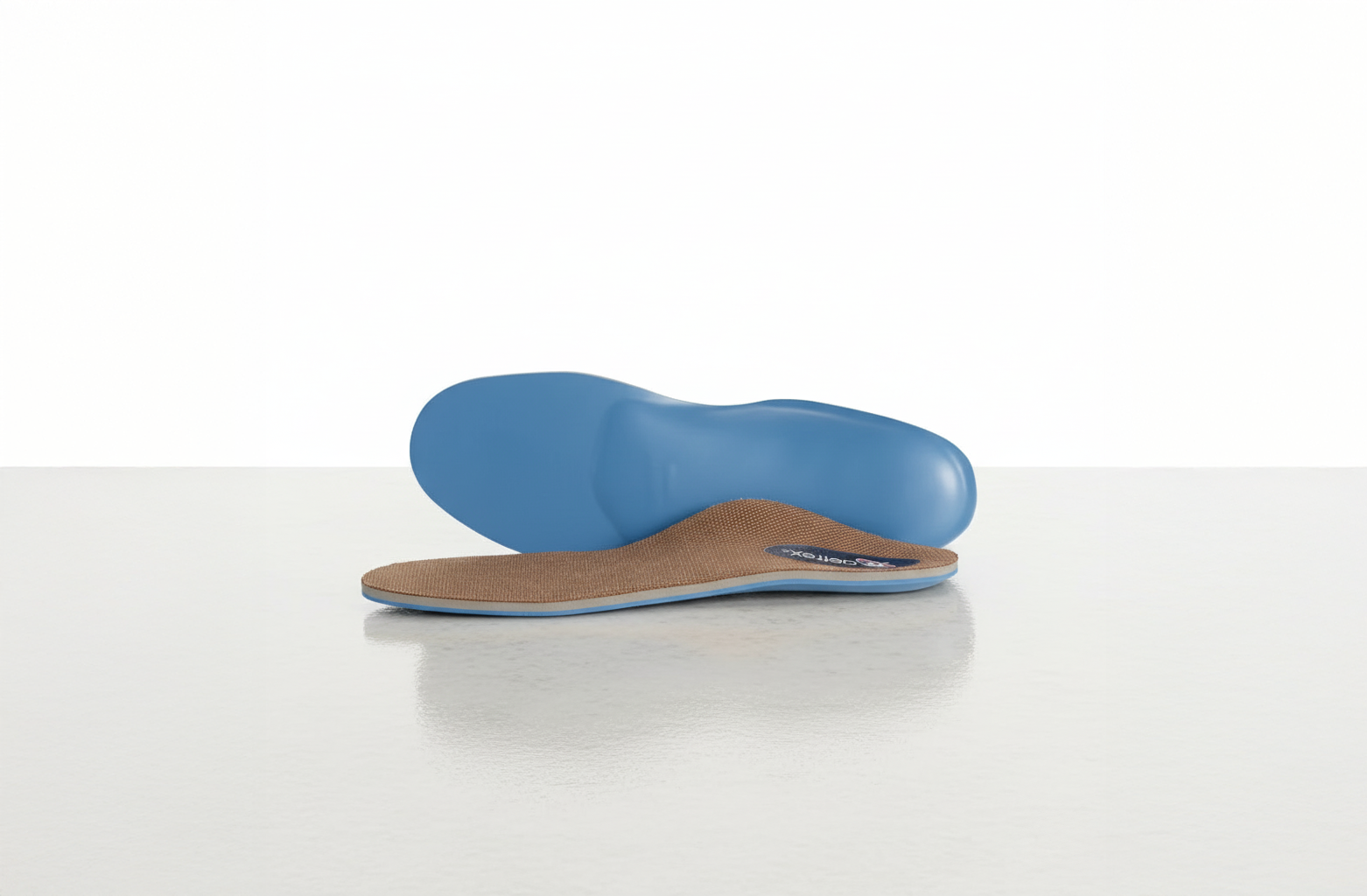
We've all been there. You grab those squishy gel inserts from the drugstore, hoping for a miracle. They feel great for a day, maybe two. But soon, they flatten into useless pancakes, and your aching feet are right back where they started. When your job requires you to be on your feet, that temporary fix just won't cut it. The search for the best insoles for standing all day is about finding genuine, structured support—not just a bit of short-lived cushion. It's about building a proper foundation for your entire body.
True, lasting comfort doesn’t come from flimsy padding. It comes from proper support that cradles your arches, absorbs shock, and corrects your alignment from the ground up. The search for the best work insoles for standing all day can feel overwhelming, but it’s a crucial step toward ending daily foot pain.
This guide will help you look past the gimmicks and focus on the features that deliver real, durable support.
Key Takeaways
- Proper Foot Support Aligns Your Entire Body: Standing all day creates a chain reaction of discomfort, and the right insole corrects your alignment from the ground up to relieve strain on your knees, hips, and back.
- Match Your Insole to Your Unique Arch Type: The most crucial step is choosing support designed for your specific foot, whether you have high, flat, or neutral arches, to ensure you're getting effective relief.
- Look for Quality Materials and Thoughtful Design: A great insole goes beyond basic padding. Prioritize features like shock-absorbing cushioning, durable construction, and breathable materials for comfort that truly lasts.
How Standing All Day Really Affects Your Feet
If your job keeps you on your feet for hours, you’re likely familiar with the deep, persistent ache that settles in by the end of the day. Standing on hard surfaces puts immense and continuous pressure on your feet, which act as your body's foundation.
This constant strain isn't just about being tired; it's a physical toll that can have lasting effects that travel from your soles all the way up your spine. Understanding what’s happening to your body is the first step toward finding real, lasting relief.
Where Does It Hurt? Common Pressure Points
When you stand for long periods, your body weight is concentrated on a few key pressure points, primarily your heels and the balls of your feet. This can lead to common issues like plantar fasciitis (a sharp heel pain) or metatarsalgia (pain in the ball of the foot).
The arches of your feet also work overtime to absorb shock and stabilize your body, and without proper support, they can become strained and sore. Many people start to feel this discomfort after just an hour or two, and it only intensifies as the day goes on.
The right pair of orthotics can help redistribute this pressure more evenly, providing immediate relief.
From Your Feet to Your Back: How Standing Affects Everything
That discomfort in your feet rarely stays put. Your feet are the base of your body’s kinetic chain, and when they’re not properly aligned, it creates a ripple effect. Poor foot support can cause your ankles to roll inward or outward, which in turn can throw your knees, hips, and even your lower back out of alignment.
This misalignment is often the hidden source of chronic pain in other parts of your body. Conditions like having flat feet can make this even more pronounced. By supporting your arches and stabilizing your feet, you’re not just caring for your feet—you’re promoting better posture and balance for your entire body.
Understanding Shin Splints and Foot Fatigue
Beyond the general aches, that constant pressure can lead to more specific problems like shin splints and chronic foot fatigue. Shin splints, that nagging pain you feel along the front of your lower leg, often happen when the muscles and tendons responsible for supporting your arch become overworked. When your feet aren't properly supported, these muscles have to work much harder to stabilize your body with every step you take on a hard floor. This repetitive strain is a direct result of your body trying to compensate for poor alignment, sending stress signals right up your leg.
Foot fatigue is more than just tiredness; it's a sign that the intricate structures in your feet are under duress. Your arches are designed to act as natural shock absorbers, but without adequate support, they can become strained and start to collapse. This is especially true for those with flat feet or low arches. The right support system is essential. Aetrex Helps to alleviate this by offering orthotics with signature arch support that cradles your foot, redistributes pressure evenly, and reduces the workload on your muscles and ligaments. This not only eases the immediate ache but also helps prevent the long-term effects of foot strain.
Is It Time for Better Foot Support?
How do you know if your current footwear isn't up to the task? The signs are usually clear. If you experience persistent foot pain that lingers even after you rest, or if your legs and back feel unusually fatigued after a long day, your feet are likely crying out for help.
Take a look at your current insoles, if they are the flimsy ones that came with your shoes or a cheap pair from the drugstore, they’ve probably flattened out and lost any supportive qualities they once had.
Investing in better support isn't a luxury; it's a necessity for your daily comfort and long-term health. A great first step is to use an Orthotic Finder to identify your specific needs.
What to Look For in Insoles for Standing All Day
When you spend most of your day on your feet, the right insole isn't just a nice-to-have—it's essential. But with so many options out there, it’s easy to feel overwhelmed. The key is to look past the marketing and focus on the features that actually deliver comfort and support.
A great insole does more than just add a layer of padding; it works with your foot to absorb shock, improve alignment, and reduce fatigue from the ground up. The best insoles are designed with specific materials and structural elements that address the main challenges of standing all day.
From providing the right kind of arch support to keeping your feet cool and dry, each feature plays a critical role in your overall comfort. Let's break down exactly what you should be looking for.
Why Arch Support is Your Foundation for Comfort
Proper arch support is the cornerstone of a great insole. Your arches are your body's natural shock absorbers, but they can't do their job effectively without the right support, especially on hard, flat surfaces.
A good insole should cradle your arch to help maintain proper alignment and prevent over-pronation, which is when your foot rolls inward. This stability doesn't just help your feet; it can also reduce stress on your ankles, knees, and back.
Aetrex orthotics are specifically designed to support your longitudinal arch, providing the alignment needed to keep you stable and comfortable throughout the day.
Cushioning: Your First Line of Defense Against Impact
Every step you take sends a jolt of impact from the ground up through your body. When you’re standing all day, that impact adds up, leading to tired, achy feet. That's where cushioning comes in.
Look for insoles made with premium, shock-absorbing materials like memory foam or gel. These materials are engineered to cushion your foot, absorb impact, and protect your body from repetitive stress.
Aetrex uses high-quality materials designed to provide a soft, protective layer that makes long hours on your feet feel much more manageable. The goal is cushioning that feels plush but is also resilient enough to support you day after day.
Choose Materials That Keep Feet Cool and Dry
Spending hours in the same pair of shoes can create a warm, damp environment—the perfect recipe for blisters and odor. That’s why breathable materials are a must-have feature in a work insole.
High-quality insoles often feature top covers made from moisture-wicking fabrics or mesh to promote airflow and pull sweat away from your skin. This helps keep your feet cool, dry, and comfortable, even during the most demanding shifts.
When your feet can breathe, you’re less likely to deal with the discomfort and irritation that can come from trapped moisture, making your women's footwear a much happier place to be.
Look for Durable Construction That Lasts
A cheap, flimsy insole might feel good for a day or two, but it will quickly flatten out and lose its supportive qualities. A great insole is an investment in your comfort, so durability is key. Look for insoles made with high-density foams and robust materials that are built to withstand daily wear and tear.
For example, Aetrex Premium Memory Foam Orthotics are designed with 43% more memory foam in the forefoot for lasting cushioning. By choosing a well-constructed insole, you ensure you’re getting consistent support that won’t break down when you need it most.
The Importance of a Deep Heel Cup
While arch support often takes the spotlight, your stability really starts at the heel. A deep heel cup is a crucial feature that cradles your heel, helping to keep your foot properly aligned with every step you take. This alignment is essential for preventing over-pronation—that inward roll of the foot that can throw your entire body off balance. By stabilizing your heel, a quality insole reduces unnecessary strain on your ankles, knees, and even your lower back. Aetrex helps to provide this foundational support in their footwear for plantar fasciitis, ensuring your body remains properly aligned from the ground up, which is a game-changer for anyone spending long hours on their feet.
Flexible Support That Moves With You
Good support shouldn't feel stiff or restrictive. Your feet are meant to move, and the best insoles work with your natural stride, not against it. Flexible support gives your arches the stability they need while still allowing your foot to flex and adapt as you walk or shift your weight. This is also where strategic cushioning plays a huge part. Every step on a hard floor sends impact up through your body, but an insole with resilient, flexible cushioning absorbs that shock before it can lead to fatigue. Aetrex orthotics are engineered to offer this ideal balance, combining structured support with premium, flexible materials that move with you for dynamic comfort all day long.
What's the Best Insole for Your Foot Type?
Choosing the right insole isn’t a one-size-fits-all situation. Your foot’s unique shape, specifically your arch type, plays a huge role in determining what kind of support you need to feel your best.
Using an insole that isn’t designed for your foot can do more harm than good, sometimes even creating new aches and pains. That’s why identifying your arch type—whether it’s high, flat, or somewhere in between—is the first step toward finding lasting comfort.
Think of your arch as your foot’s natural shock absorber. When it’s properly supported, it helps distribute pressure evenly across your foot with every step you take. This alignment is key, especially when you’re standing for hours.
The right insole works with your natural arch to maintain that balance, reducing strain not just on your feet, but on your ankles, knees, and back, too. It's amazing how much of our overall body comfort starts from the ground up.
If you're unsure about your arch type, using an Orthotic Finder can point you in the right direction and take the guesswork out of the equation. Getting this part right is essential because each arch type has very different needs when it comes to support and cushioning.
Got High Arches? Here's What You Need
If you have high arches, you might notice that most of your weight lands on the ball and heel of your foot. This can lead to focused pain and instability because your arch isn't making full contact with the ground to absorb impact.
The key is to find an insole that fills that gap. Aetrex Orthotics are designed to provide substantial support to the arch, helping to distribute pressure more evenly across the entire foot. This improves your alignment, eases strain on your pressure points, and gives you a more stable and comfortable foundation for standing all day.
Finding the Right Support for Flat Feet
For those with flat feet, the entire sole of the foot tends to make contact with the ground. This can cause the foot to roll inward, a motion known as overpronation, which can strain muscles and ligaments all the way up your leg.
The ideal insole for flat feet offers structured yet gentle support. A cushioned arch made of high-quality foam can help guide your foot into a more neutral position without feeling too aggressive.
his added structure provides incredible relief and can prevent the fatigue and discomfort that often comes with spending long hours on your feet. You can find great footwear for flat feet that incorporates this kind of support.
What About Neutral Arches?
Having neutral or medium arches is often considered ideal, but that doesn’t mean you can skip out on proper support. Your feet still do a ton of work, and a good insole provides the cushioning and stability needed to prevent fatigue.
The goal here isn’t to correct an issue but to maintain healthy alignment. Look for insoles that offer a balance of cushioning and moderate support to complement your foot’s natural shape. This ensures your feet stay comfortable and energized throughout the day without introducing support where you don’t need it.
Targeted Relief for Common Foot Conditions
When you’re dealing with a specific condition like Plantar Fasciitis, the right insole is less of a comfort item and more of a necessity. This condition, caused by inflammation of the tissue connecting your heel to your toes, requires firm, consistent arch support to ease tension.
The right orthotics can make a world of difference by properly supporting the arch and reducing the strain that causes that sharp, stabbing pain. Finding effective Plantar Fasciitis relief often starts with choosing an insole that provides the right structure to promote healing and prevent future flare-ups.
Top Insole Picks for All-Day Comfort
Finding the right insole can feel like a game of trial and error, but a few brands consistently stand out for their quality, support, and comfort. Whether you’re dealing with a specific foot condition or just trying to survive a long shift on your feet, the right insert can make all the difference.
We’ve rounded up some of the best options on the market, from premium orthotics designed for specific alignment issues to comfortable, budget-friendly choices that offer immediate relief.
Each of these picks targets the core needs of someone who stands all day: stability, cushioning, and durability. Think of an insole as the foundation for your entire body. When your feet are properly supported, it can help align your knees, hips, and back, reducing overall fatigue and discomfort.
As you look through these options, consider your specific foot type and the demands of your job to find the perfect match.
Best for Overall Support and Alignment
If you’re looking for targeted support that goes beyond simple cushioning, Aetrex is a fantastic place to start. Our orthotics are specifically designed to support your longitudinal arch and provide the alignment needed to reduce over-pronation—that inward rolling of the foot that can cause a chain reaction of pain.
By correcting your alignment, these insoles help relieve pressure on your heels and forefoot, making them a great choice for managing conditions like plantar fasciitis and metatarsalgia. The strategic cushioning and signature arch support work together to give you comfort that lasts through any shift.
Top Choice for Demanding Jobs
PowerStep is another trusted name in the world of foot support, and their Work Series is designed specifically for people who stand all day. If you’re a nurse, teacher, retail worker, or chef, these insoles were made with you in mind.
They focus on providing a perfect balance of stability and cushioning to absorb the impact of standing on hard surfaces for hours at a time. The PowerStep insoles are known for their firm yet flexible support, which helps cradle the foot and prevent fatigue before it starts.
Best for Professional and Dress Shoes
You’ve likely heard of Superfeet, and for good reason. They are a popular choice for athletes and workers alike, offering reliable, professional-grade support.
The Superfeet GREEN insole, in particular, is famous for its deep heel cup and supportive shape, which helps stabilize the foot and reduce stress on your feet, ankles, and knees. While they are known for their firm structure, many people find this level of support is exactly what they need to prevent aches and pains during long periods of standing.
For Maximum Cushioning: Memory Foam
For those who prioritize soft, customized cushioning, memory foam insoles are an excellent option. These inserts are designed to mold to the unique shape of your feet, providing personalized comfort and helping to relieve pressure points.
While they may not offer the same level of rigid, corrective support as a structured orthotic, they excel at shock absorption and creating a plush, comfortable feel inside your shoes. This makes them ideal for anyone looking to add an extra layer of softness to their work boots or sneakers.
Affordable Options That Still Deliver
You don’t have to spend a fortune to get quality foot support. If you’re new to insoles or just looking for an affordable upgrade, there are plenty of great choices available. We’ve engineered a variety of Aetrex orthotics that deliver our signature arch support at an accessible price point.
These options are perfect for providing all-day comfort and relief from common foot pain without a major investment. You can even use our Orthotic Finder to find the perfect entry-level option for your specific needs.
The Aetrex Advantage: Podiatrist-Recommended Support
When you’re looking for more than just a simple cushion, Aetrex offers a significant step up in support and design. Our orthotics are specifically designed to support your longitudinal arch and provide the alignment needed to reduce over-pronation—that inward rolling of the foot that can cause a chain reaction of pain. By correcting your alignment, these insoles help relieve pressure on your heels and forefoot, making them a great choice for managing conditions like plantar fasciitis and metatarsalgia. The combination of strategic cushioning and our signature arch support works to deliver comfort that truly lasts through any shift, addressing the root cause of discomfort rather than just masking it.
Aetrex Orthotics for Demanding Jobs
If you’re a nurse, teacher, retail worker, or chef, your job demands a unique level of endurance from your feet. Aetrex helps to provide the perfect balance of stability and cushioning needed to absorb the constant impact of standing on hard surfaces. Our orthotics are engineered to cradle the foot and prevent fatigue before it even starts. The firm yet flexible support stabilizes your foot, while premium cushioning materials absorb shock with every step. This thoughtful design ensures your feet feel supported and energized, even at the end of a 12-hour shift, making our men's footwear and women's collections ideal for professionals.
Aetrex Insoles for Professional and Dress Shoes
You shouldn't have to choose between professional style and all-day comfort. Aetrex insoles are designed to fit seamlessly into a wide range of footwear, including dress shoes and loafers. They feature a deep heel cup and a supportive shape that helps stabilize the foot and reduce stress on your feet, ankles, and knees, even in shoes without much built-in support. This professional-grade structure ensures you can maintain proper alignment and avoid aches and pains, whether you're in a boardroom or on your feet at an event. It’s the perfect way to add reliable support to your favorite pair of shoes without compromising on style.
Best for Maximum Cushioning
For those who prioritize a soft, plush feel, memory foam insoles are an excellent option. These inserts are designed to mold to the unique shape of your feet, providing personalized comfort and helping to relieve pressure points. While they may not offer the same level of rigid, corrective support as a more structured orthotic, they excel at shock absorption and creating a comfortable feel inside your shoes. This makes them ideal for anyone looking to add an extra layer of softness to their work boots or sneakers, especially if you're dealing with sensitive areas or conditions like metatarsalgia.
Great Budget-Friendly Insoles
You don’t have to spend a fortune to get quality foot support. If you’re new to orthotics or just looking for an affordable upgrade, there are plenty of great choices available that still deliver on comfort and durability. We’ve engineered a variety of Aetrex orthotics that provide our signature arch support at an accessible price point, so you don't have to compromise on quality. These options are perfect for providing all-day comfort and relief from common foot pain without a major investment. You can even use our Orthotic Finder to discover the perfect entry-level option for your specific needs.
Semi-Custom Insoles vs. Advanced Foot Scanning
Using an insole that isn’t designed for your foot can do more harm than good, sometimes even creating new aches and pains. That’s why identifying your arch type—whether it’s high, flat, or somewhere in between—is the first step toward finding lasting comfort. While many brands offer a semi-custom approach through online quizzes, Aetrex takes personalization a step further with advanced scanning technology. Understanding the difference can be the key to unlocking a truly perfect fit and finding the relief you’ve been looking for. It’s about moving from a good guess to a precise, data-driven solution for your feet.
Online Fitting Apps
If you're unsure about your arch type or specific pressure points, an online fitting tool is a great place to start. Tools like the Aetrex Orthotic Finder can ask a series of simple questions to point you in the right direction and take the guesswork out of the equation. Based on your answers about your daily activities and any discomfort you experience, it can recommend an orthotic designed to meet your needs. This is an easy and accessible way to get a personalized recommendation without leaving your home, helping you make a more informed choice from the start.
The Precision of Aetrex 3D Foot Scanners
For the most accurate and personalized fit, nothing compares to a 3D foot scan. Aetrex’s innovative foot scanners capture detailed data about your unique foot length, width, arch height, and pressure points in under a minute. This technology provides a complete analysis that goes far beyond what a simple quiz can offer, identifying exactly where your feet need the most support. The result is a recommendation for an orthotic that is perfectly matched to your foot, ensuring that the high-quality materials provide a soft, protective layer that makes long hours on your feet feel much more manageable.
How to Choose the Right Insole for You
Finding the perfect insole isn't about grabbing the first one you see off the shelf. It’s about finding the right match for your unique feet, your shoes, and your daily routine. Think of it as a personalized upgrade for your footwear.
When you get it right, the difference in comfort and support is incredible. But with so many options out there, how do you know where to start? The key is to focus on a few essential factors: your foot type, the fit, and how to properly introduce them to your feet.
Step 1: Identify Your Foot Type
Before you can choose the right support, you need to understand what you’re supporting. Your arch type—whether it’s low (flat), neutral, or high—is the foundation of good foot health.
Wearing an insole that doesn’t match your arch can actually cause more discomfort because it forces your foot into an unnatural position. If you’re not sure about your arch type, you can try the "wet test" at home by stepping onto a piece of cardboard with wet feet to see your footprint.
For a truly accurate analysis, you can get a digital scan that maps your pressure points. Aetrex’s foot scanners can give you a precise reading and help you understand exactly what your feet need.
Step 2: Ensure a Perfect Fit in Your Shoes
Insoles are typically sold in size ranges, like "Women's 7-9," so a perfect out-of-the-box fit is rare. Most full-length insoles are designed to be trimmed for a custom fit. The best way to do this is to remove the original liner that came with your shoe and use it as a template.
Place it on top of your new insole and carefully trace around it with a pen, then trim along the line with a pair of sharp scissors. If you find yourself between sizes, it’s always best to choose the larger size and trim down.
A little extra material is easy to remove, but you can’t add any back! This simple step ensures your orthotics sit perfectly inside your shoe without bunching or sliding.
Step 3: Give Your Feet Time to Adjust
Just like a new pair of shoes, your new orthotics need a break-in period. It’s completely normal for them to feel a bit strange or even slightly uncomfortable at first. This is because they are actively realigning your feet and providing support in places that may have been neglected.
To ease into it, start by wearing them for just one to two hours on the first day. Gradually increase the wear time by an hour each day. This gives your feet and body time to adjust to the new support system without feeling overwhelmed. Be patient with the process—that initial adjustment period is a sign that your insoles are starting to do their job.
Step 4: Know When It's Time for a Replacement
Even the best insoles don’t last forever. Over time, the materials will compress and wear down, reducing their supportive and cushioning benefits. If you start to notice your old foot pain creeping back in or see visible signs of damage like cracks or flattening, it’s time for a new pair.
As a general rule, you should consider replacing your insoles every six to twelve months, depending on how often you wear them and the intensity of your activity. Regularly checking them for wear and tear will ensure you continue to get the support you need to stay comfortable and pain-free on your feet.
Step 5: Care and Maintenance for Your Insoles
Once you’ve invested in a great pair of orthotics, you’ll want to make them last. Proper care not only extends the life of your insoles but also ensures they continue to provide the support and comfort you need day after day. A little maintenance goes a long way in keeping them fresh, effective, and ready for another long shift on your feet. Luckily, keeping your insoles in top shape is simple and doesn’t require any special equipment—just a few minutes of your time to protect your investment in your daily comfort.
How to Properly Clean Your Insoles
To keep your insoles fresh, it’s a good idea to clean them regularly. Start by taking them out of your shoes. In a small basin, mix some warm water with a bit of mild soap. Use a soft brush or a cloth to gently scrub the surface of the insoles, paying close attention to any areas that need a little extra care. Once they’re clean, wipe away any soap residue with a separate damp cloth. The most important step is to let them air dry completely before putting them back in your shoes. Never put them in a washing machine or dryer, as the high heat can damage the supportive materials and cause them to lose their shape.
A Simple Trick for Squeaky Insoles
Is there anything more annoying than a squeak with every step? If your insoles start making noise, it’s usually due to friction between the orthotic and the inside of your shoe. Thankfully, there’s an easy fix. Remove the insole and sprinkle a small amount of baby powder or cornstarch inside your shoe, right where the insole sits. This simple trick helps absorb any moisture and reduces the friction that causes that squeaking sound. Place the insole back in, and you should be able to walk in peace and quiet again. It’s a simple solution that can make a huge difference.
The Tech That Makes Modern Insoles Work
Insoles have come a long way from being simple foam pads. Today’s designs are packed with thoughtful technology aimed at giving you real, lasting comfort. Think of them as tiny, powerful support systems engineered specifically for your feet.
Modern insoles use advanced materials and biomechanical principles to do more than just cushion your step—they actively work to correct alignment, absorb shock, and distribute pressure evenly across your entire foot.
This means less stress not only on your arches and heels but also on your knees, hips, and back. From materials that mold to your unique foot shape to features that keep your feet cool and fresh, the goal is to create an environment where your feet can feel their best, even after hours of standing.
Understanding these features can help you choose an insole that provides targeted relief and makes a noticeable difference in your day-to-day comfort.
Advanced Designs for Pressure Relief
If you’ve ever felt a nagging ache in your heel or the ball of your foot after a long day, you know what a pressure point is. Modern insoles are engineered to address this head-on. They often feature strategic arch support designed to properly align your foot, which helps reduce over-pronation (when your foot rolls inward).
Aetrex designs orthotics that support your longitudinal arch, providing the alignment needed to distribute pressure more evenly. This prevents certain spots from taking on too much impact, offering relief exactly where you need it most.
Technology That Fights Foot Fatigue
That tired, heavy feeling in your legs at the end of the day isn't just in your head. When your feet aren't properly supported, your whole body has to work harder to stay balanced, leading to fatigue. Insoles with superior alignment features help keep your foot in a more neutral position.
This simple correction reduces the stress that travels up your body, easing strain on your feet, knees, hips, and even your lower back. It’s a holistic approach that helps you feel more energized and less worn out, turning a long workday into a much more comfortable experience.
Materials That Manage Moisture and Odor
Let’s be honest: spending all day on your feet can get a little sweaty. That’s why modern insoles often include materials designed for hygiene and comfort. Many feature top covers made from ultra-soft, breathable mesh to maximize airflow and keep your feet feeling fresh.
Some even incorporate antimicrobial coatings to prevent the growth of odor-causing bacteria. These thoughtful details ensure your feet stay cool, dry, and clean, which is a small but significant part of achieving all-day comfort in your favorite pair of women's or men's shoes.
Heat-Moldable Insoles for a Custom Fit
One of the most impressive advancements in insole technology is the use of materials that adapt to you. Memory foam is a perfect example. When you stand on it, the foam softens and contours to the unique shape of your foot, creating a personalized fit.
This custom molding helps spread your body weight evenly across the entire surface of your foot, which absorbs shock and reduces pressure on sensitive areas. When you take your shoes off, the foam slowly returns to its original shape, ready to support you again the next day.
Beyond Insoles: Other Ways to Find Relief
While a high-quality insole is a powerful tool in your comfort arsenal, it’s even more effective when paired with other smart strategies. Think of it this way: you wouldn’t put a high-performance engine in a car with worn-out tires. The same logic applies to your feet. Creating a complete support system involves looking at your footwear, your environment, and your daily habits. Combining the right orthotics with other supportive measures can dramatically improve your comfort and reduce the strain of being on your feet all day.
From the shoes you choose to the surface you stand on, every element plays a role in your overall well-being. These additional steps don’t have to be complicated or expensive, but they can make a world of difference in how you feel at the end of a long shift. Let's explore a few simple but effective ways to give your feet even more relief and build a comprehensive approach to all-day comfort that truly lasts.
Consider Anti-Fatigue Mats
If your job requires you to stand in one spot for long stretches—like at a register, a workstation, or in a kitchen—an anti-fatigue mat can be a game-changer. These mats are made from cushioned materials that provide a softer, more forgiving surface than hard concrete or tile. They work by encouraging subtle, continuous micro-movements in your leg muscles, which helps promote blood flow and reduce stiffness and soreness. If your workplace allows for it, asking for one of these mats can make a huge difference. It’s a simple environmental change that works in tandem with your supportive footwear to fight fatigue from the ground up.
Choose Shoes with Supportive Soles
An insole can only do so much if the shoe it’s in isn’t up to the task. Placing a great orthotic inside a flimsy, unsupportive shoe is like building a house on a shaky foundation. Look for footwear with features that provide inherent stability, such as a firm heel counter to prevent your heel from slipping and a sturdy sole that doesn't twist easily. Shoes with a slight "wedge" style sole can also be excellent for standing on hard surfaces. When shopping, prioritize shoes that are designed with support in mind from the start. For example, all Aetrex men's and women's footwear is engineered with our signature arch support built right in, creating a complete system of comfort and alignment.
The Benefit of Rotating Your Footwear
This is one of the easiest and most effective habits you can adopt for long-term foot health. Try to have at least two pairs of supportive work shoes and alternate between them each day. This simple practice gives the cushioning materials in your shoes and insoles a full 24 hours to decompress and bounce back to their original, supportive shape. It not only extends the life of your favorite footwear but also gives your feet a slightly different support pattern daily, which can help reduce repetitive stress on specific muscles and joints. Plus, it allows each pair to air out completely, which is a big win for foot hygiene.
When to See a Podiatrist for Custom Orthotics
High-quality, over-the-counter orthotics are incredibly effective for the vast majority of people seeking relief from common foot pain. Aetrex helps to provide targeted support for conditions like metatarsalgia and plantar fasciitis by properly aligning the foot. However, if you’ve tried supportive insoles and footwear and your pain is severe, persistent, or getting worse, it may be time to consult a professional. A podiatrist, or foot doctor, can perform a thorough evaluation to diagnose any underlying biomechanical issues. If needed, they can create fully custom orthotics molded specifically to the contours of your feet, offering a level of precision that can be necessary for more complex foot problems.
Your Smart Shopping Guide for Insoles
Once you know what you’re looking for in an insole, the next step is figuring out where to buy it. The right pair is an investment in your daily comfort, so it’s worth taking a moment to think about your shopping strategy.
Whether you prefer to see things in person or love the convenience of online shopping, you have plenty of options. The key is to find a retailer that not only has what you need but also offers the flexibility to make sure you’ve found your perfect match.
Buying Online vs. In a Store: What's Better?
Deciding between shopping in-store and online comes down to personal preference. Heading to a physical store allows you to see and feel the insoles firsthand. For a truly personalized experience, you can visit a retailer that offers an Aetrex foot scan, which gives you precise data about your arch type and pressure points to guide your choice.
On the other hand, shopping online offers unmatched convenience and a massive selection. You can easily browse different brands and styles, from full-length to 3/4 length options, right from your couch. This makes it simple to find specific orthotics designed for your work shoes without leaving home.
How to Compare Insoles and Get the Best Value
You’ll quickly notice that prices for similar insoles can vary quite a bit from one retailer to another. For example, a quick search for Aetrex insoles on a large marketplace like Amazon shows prices ranging anywhere from under $10 to nearly $70. This is why it pays to do a little comparison shopping before you click "buy."
Always check the brand’s official website first, as they often have the most complete selection and occasional exclusive deals. Then, browse a few trusted online retailers to see if they offer a better price. Taking just a few extra minutes to compare can ensure you get the best value for your money.
Always Check the Return Policy—Here's Why
A flexible return policy is your best friend when buying insoles, especially if it’s your first time trying a specific brand. Your feet might need some time to adjust, and what feels good out of the box might not be the right fit after a full day of standing.
A good return policy removes the risk, giving you the confidence to try a new pair. Look for companies that offer a trial period, like Aetrex’s 30-Day Wear Test, which lets you truly put your insoles to the test.
At a minimum, make sure the retailer offers free returns for at least 30 days, showing they stand behind their product.
Smart Tips for Finding a Great Deal
Who doesn’t love a good deal? High-quality insoles are worth the price, but there’s no reason to pay more than you have to. A great first step is to sign up for the email newsletter of brands you’re interested in, which is often the best way to get notified about sales and receive exclusive coupon codes.
Keep an eye out for seasonal promotions, especially around holidays. You can also check coupon sites for active discounts, where savings can sometimes be significant. With a little patience, you can often find top-tier women's and men's insoles at a much more comfortable price.
Related Articles
- Plantar Fasciitis: Causes, Symptoms, Orthotics & Shoes
- Foot Health FAQ | Aetrex
- Plantar Fasciitis Exercises: 10 Steps To Help Relieve Pain
- The Best Footwear for Plantar Fasciitis
- Am I Suffering from Plantar Fasciitis?
Frequently Asked Questions
What’s the real difference between a cheap gel insert and a quality orthotic?
Think of it this way: a cheap gel insert is like a soft pillow for your feet, while a quality orthotic is like a supportive mattress for your entire body. The gel insert provides temporary cushioning but typically lacks the structure to correct alignment issues.
A well-designed orthotic, on the other hand, is engineered with specific arch support and a firm heel cup to stabilize your foot, which helps distribute pressure evenly and improve your body's alignment from the ground up.
Will new orthotics make my shoes feel tight?
This is a common concern, but it's usually not an issue if you follow a couple of simple steps. Most quality insoles are designed to replace the flimsy factory liner that came with your shoes. By removing that original liner, you create the space needed for the new orthotic to fit comfortably.
It's also important to trim your new insoles to match the size and shape of the original, which ensures they sit perfectly flat without bunching up and crowding your toes.
How long will it take for my feet to get used to new insoles?
It's completely normal for new orthotics to feel a bit different at first, especially if your feet have been without proper support for a long time. Your insoles are gently guiding your feet into a healthier alignment, and your muscles need time to adapt.
We recommend a gradual break-in period. Start by wearing them for just an hour or two the first day, then add an extra hour of wear each day. Within a week or two, they should feel like a natural and comfortable part of your shoe.
Can I use the same pair of insoles in all my different shoes?
Yes, you absolutely can, and it's a great way to get the most value out of your purchase. High-quality orthotics are designed to be durable and are easily transferable between similar types of shoes, like from one pair of sneakers to another or from your work boots to your walking shoes.
Just make sure the shoes have a similar fit and a removable liner so the orthotic can sit properly inside.
My feet feel fine, but my back hurts after standing. Could insoles still help?
Definitely. Your body is a connected system, and your feet are the foundation. When your feet aren't properly supported, it can cause a subtle misalignment that creates a ripple effect up your kinetic chain, impacting your ankles, knees, hips, and lower back.
By providing proper arch support and stability, a good insole can correct that foundational imbalance, which often relieves strain and pain in other parts of your body.
Share:
How to Find the Best Work Boot Insoles for You
Find the Best Insoles for Standing All Day