

In Short: Knee pain has many causes, and insoles are not a treatment for it. But because your feet set the foundation for the whole leg, poor foot alignment — especially overpronation — can add strain up the chain to the knee. For some people, structured arch support that improves that alignment may help reduce that contribution. This is general information, not medical advice — see a clinician for knee pain.
Your feet are the base of a kinetic chain that runs up through the ankles, knees, and hips. When the arch collapses and the foot rolls inward (overpronates), the lower leg tends to rotate inward with it, which can change how load passes through the knee. Over a long day or a lot of miles, that altered alignment may add to knee strain for some people. It's one possible contributor among many — not the cause of all knee pain.
Insoles don't treat the knee, and they won't help if your knee pain comes from an injury, arthritis, or another issue unrelated to foot mechanics. What a structured orthotic can do is address the foot-alignment piece: supporting the arch and controlling overpronation so the foot — and the leg above it — tracks straighter. Whether that eases your knee is individual, which is why a clinician's assessment matters.
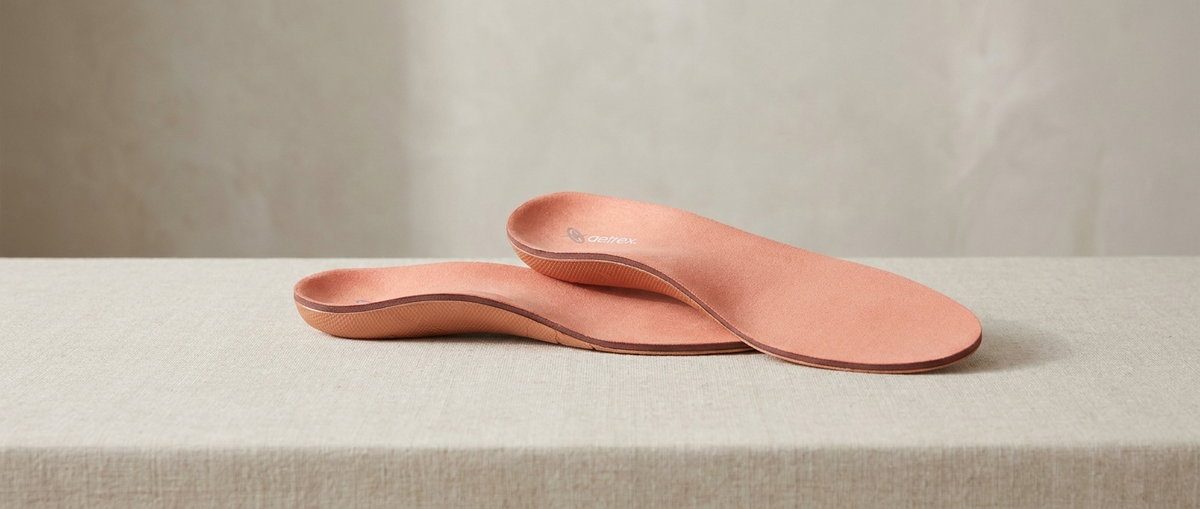
If overpronation is part of your picture, the Aetrex Premium Memory Foam Posted Orthotic ($79.95) is built to address it: signature arch support holds the arch, and a posted heel controls the inward roll, with 43% more forefoot memory foam than other Aetrex orthotics for cushioning. It drops into shoes you already own. Think of it as improving the foundation, not treating the knee.
Knee pain genuinely warrants evaluation. See a doctor or physical therapist if it's significant, persistent, swelling, locking, or following an injury — and ask whether foot support is appropriate for your situation. Insoles are a reasonable part of a plan a professional signs off on, not a substitute for that assessment.
Can insoles cure knee pain? No. Insoles don't treat the knee. They can address foot alignment and overpronation, which for some people contribute to knee strain — but knee pain needs a professional evaluation.
How might arch support affect my knees? By reducing overpronation, support helps the foot and lower leg track straighter, which can change how load passes through the knee. Results vary by person.
When should I see a doctor? If knee pain is significant, persistent, swelling, locking, or injury-related — before relying on insoles.
Shop the full range at aetrex.com. This article is general information, not medical advice.
Share:
Best Shoes and Support for High Arches
Shoes for Lower-Back Pain: Does Foot Support Actually Help?