

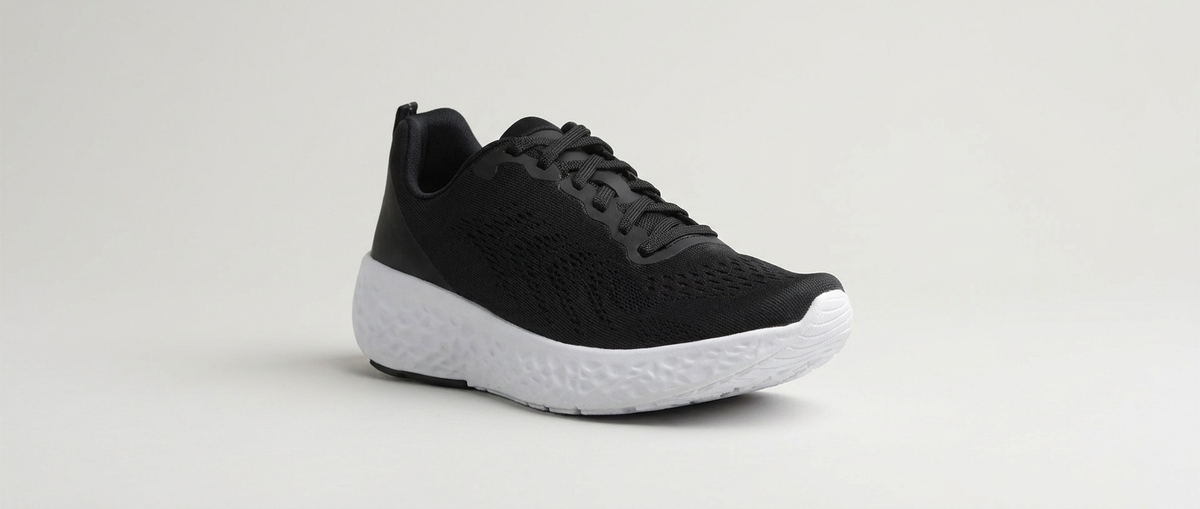
In Short: A high arch is rigid and doesn't flatten to absorb shock, so pressure concentrates under the heel and the ball of the foot and the arch itself is left unsupported in the middle. The support that helps fills that gap under the arch and adds cushioning at the two pressure points. Aetrex Premium Memory Foam Posted Orthotics ($79.95) and the Danika sneaker ($149.95) are built for this. This is general information, not medical advice.
With a high arch, the foot is more rigid and supinated — it doesn't roll in and flatten the way a flexible foot does, so it absorbs less shock. Two things follow: the heel and the ball of the foot take concentrated pressure with every step, and the middle of the arch sits up off a flat footbed with nothing filling the space. That's why high-arched feet often feel hammering at the heel and forefoot, early fatigue, and sometimes ankle instability.
Arch fill. Support that rises to meet the high arch so the load spreads across the whole foot instead of just the heel and forefoot.
Cushioning at the pressure points. Extra absorption under the heel and the ball of the foot, where a rigid arch concentrates force.
Stability. A secure, supportive base helps with the ankle instability some high-arched feet feel.
Soft, flat cushioning alone doesn't fill the arch gap — you need contoured support plus cushioning.
The Aetrex Premium Memory Foam Posted Orthotic ($79.95) brings the footbed up to meet the arch with signature contoured support, and carries 43% more memory foam in the forefoot than other Aetrex orthotics — cushioning right where a high arch concentrates pressure. It drops into shoes you already own. Aetrex's designs are informed by data from over 50 million foot scans, spanning the full range of arch heights.
Prefer it built into the shoe? The Danika Arch Support Sneaker ($149.95) pairs the same contoured arch support with extra-thick UltraSKY™ cushioning and comes in wide widths.
A very high, rigid, or progressing arch — or pain with numbness, frequent ankle rolling, or a sudden change — is worth a foot-health professional's assessment, since high arches can occasionally signal an underlying issue.
What kind of support is best for high arches? Contoured support that fills the arch gap, plus cushioning under the heel and ball of the foot. The Aetrex Posted Orthotic and Danika sneaker are built around both.
Do high arches need cushioning or structure? Both — structure to fill and support the arch, cushioning at the pressure points. Soft foam alone leaves the arch unsupported.
Will a flat insole help? Not much — a flat footbed leaves the high-arch gap empty. You want a contoured one that rises to the arch.
Shop the full range at aetrex.com. This article is general information, not medical advice.
Share:
What "Good Arch Support" Actually Means — and How to Spot It
Can Insoles Help Knee Pain? How Foot Support Fits In