

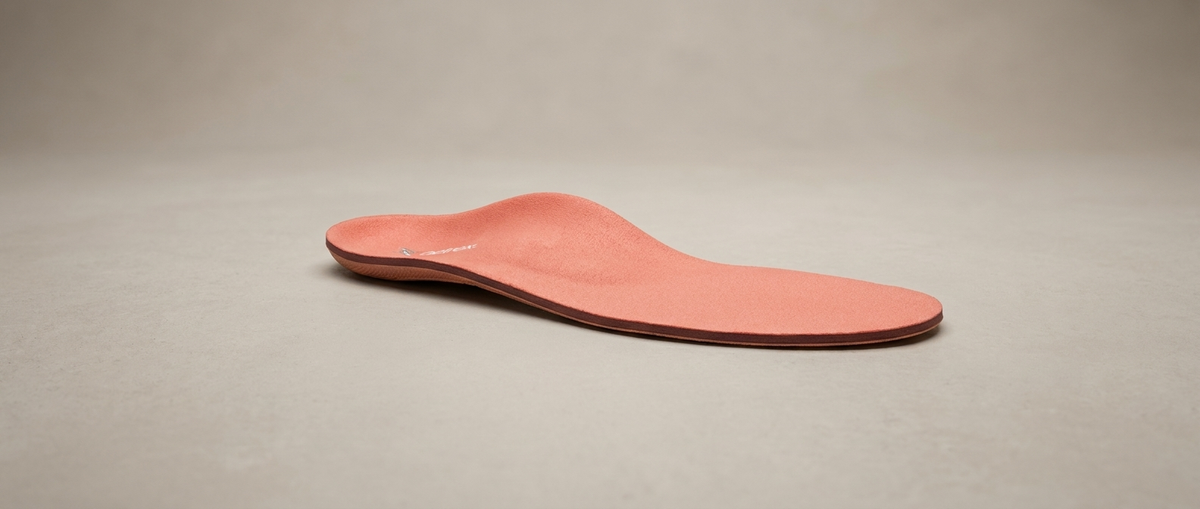
In Short: "Arch support" is on the label of almost every shoe and insole, but most of it is just soft foam that packs flat in weeks. Real arch support has structure: a contoured arch that holds its shape under your weight, a posted heel that controls how the foot rolls, and cushioning on top of that — not instead of it. Here's how to tell the difference. This is general information, not medical advice.
Because "arch support" isn't a regulated term, it gets stamped on everything from structured orthotics to a slightly raised bump of soft foam. The soft version feels nice in the store and then compresses flat within weeks of daily wear, leaving your arch with nothing to rest on. That's why people say a shoe "lost its support" — it never had structure, just cushioning that gave out.
It holds the arch in position. A genuine arch support is contoured and firm enough to keep your arch from collapsing under load, rather than squashing flat when you step.
It controls motion at the heel. A posted (reinforced) heel limits overpronation — the inward roll that strains the arch, heel, and knees. Cushioning alone can't do this; it takes structure.
It cushions on top of structure. Good support isn't hard. The best designs layer cushioning over a firm base, so you get comfort and alignment — not one at the expense of the other.
Press the arch of an insole or footbed with your thumb: structured support resists and springs back; soft foam just dents. Flex the heel area: it should feel stable, not floppy. And check whether the support is built on a firm base or is simply a layer of memory foam. If it packs flat under thumb pressure, it will pack flat under you.
The Aetrex Premium Memory Foam Posted Orthotic ($79.95) is a clear example of the layered approach: signature arch support and a posted heel for structure, with 43% more forefoot memory foam than other Aetrex orthotics for cushioning on top. Aetrex's designs are informed by data from over 50 million foot scans, so the arch geometry reflects real feet.
If you'd rather the support be built into the shoe, the Danika (women's, $149.95) and Chase (men's, $159.95) arch-support sneakers carry the same Aetrex Orthotic System — structured support plus UltraSKY™ cushioning — in an everyday shoe.
Isn't all arch support basically the same? No. Most is soft foam that flattens; real support is a contoured, firm structure with a posted heel, cushioned on top. The thumb-press test tells them apart quickly.
Does good arch support have to feel hard? No. The best designs put cushioning over a firm base, so they feel comfortable while still holding the arch in place.
How do I know if mine has worn out? When the arch area dents easily, the shoe feels "flat," or foot fatigue returns, the structure has packed down — time to replace.
Shop the full range at aetrex.com. This article is general information, not medical advice.
Share:
Stability Shoes for Flat Feet and Overpronation
Best Shoes and Support for High Arches