

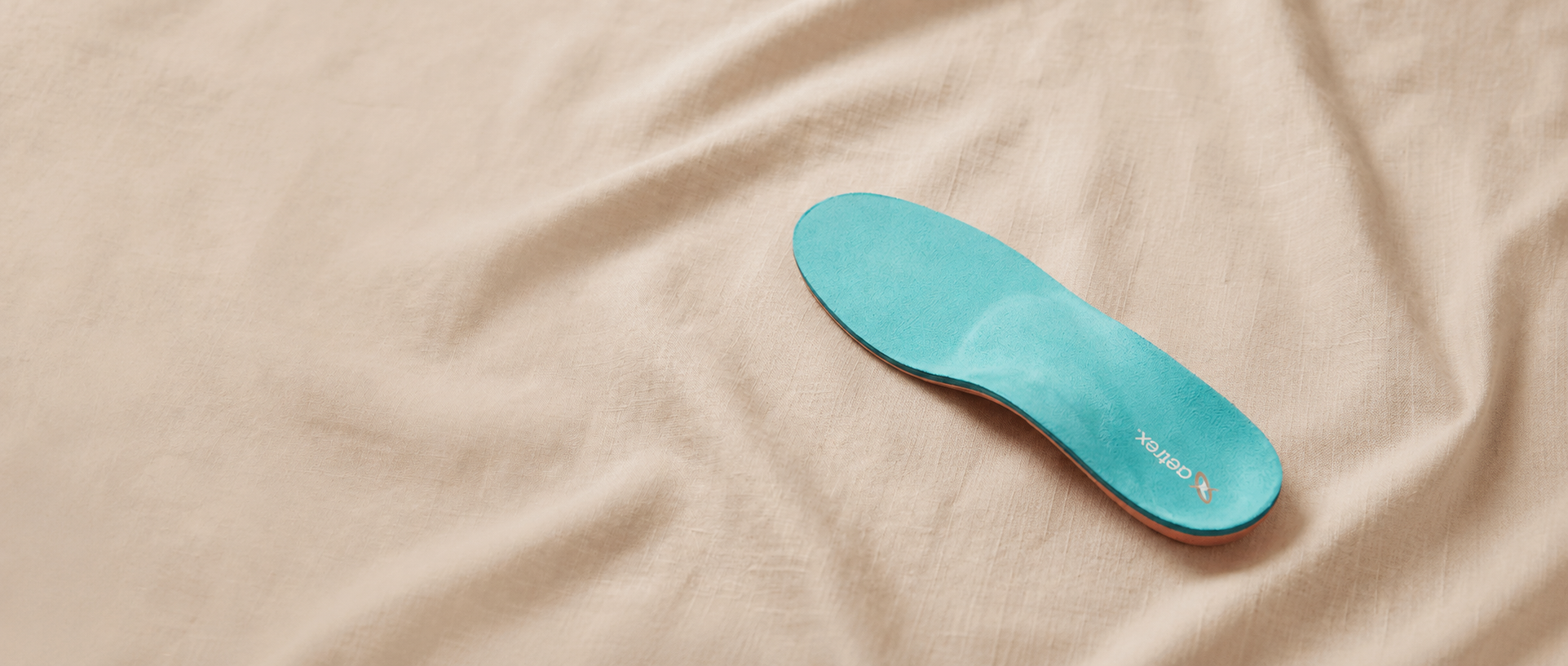
In Short: Most everyday foot pain falls into a handful of common problems — arch pain and plantar fasciitis, ball-of-foot pain, and heel pain. Many respond to the same basics: supportive footwear, structured arch support, and rest. Aetrex builds that support into both drop-in orthotics and complete shoes. This is general information, not medical advice.
Pain along the arch or a sharp first-step ache at the heel usually points to the plantar fascia or a collapsing arch. The mechanical fix is structured arch support that keeps the arch from over-stretching, plus cushioning for impact. Aetrex Premium Memory Foam Posted Orthotics ($79.95) combine signature arch support with a posted heel to help control over-pronation — designed to help with plantar fasciitis, arch pain, and metatarsalgia. Pair that with calf and fascia stretching and less time barefoot on hard floors.
Burning or aching under the ball of the foot means pressure is concentrated too far forward. Cushioning where that pressure peaks helps — the Posted Orthotic carries 43% more memory foam in the forefoot than other Aetrex orthotics, placed exactly at the ball of the foot, while the arch support and posted heel keep your weight from loading the forefoot as heavily.
Heel-strike soreness and first-step heel pain both ease with a combination of cushioning and alignment. The same Posted Orthotic cushions the heel and uses a posted heel to control the inward roll that strains the fascia — the two things that matter most for rearfoot comfort.

Shop Premium Memory Foam Orthotics
If you'd rather the support be built into the shoe, Aetrex builds its orthotic system into footwear too: the Danika Arch Support Sneaker ($149.95) for everyday and active wear, the Jillian sandal ($139.95) for warm weather, and the Sydney espadrille wedge ($159.95) for a dressier look — each with arch support engineered in.
 |
 |
A few basics help most everyday foot problems: choose supportive shoes over flat, unstructured ones; avoid long stretches barefoot on hard surfaces; stretch tight calves; and give irritated tissue time to settle before ramping activity back up. Aetrex's designs are informed by data from over 50 million foot scans, so the arch and pressure profiles reflect real feet.
Home care resolves many common foot complaints, but see a foot-health professional if pain is severe, persistent beyond a few weeks, worsening, or accompanied by swelling, numbness, or a wound — especially if you have diabetes or circulation concerns.
What helps arch pain and plantar fasciitis? Structured arch support that reduces fascia over-stretch, plus cushioning and stretching. Aetrex Premium Memory Foam Posted Orthotics are designed to help with arch pain and plantar fasciitis.
What helps ball-of-foot pain? Cushioning concentrated at the forefoot and support that keeps weight off the ball of the foot — the Posted Orthotic carries 43% more forefoot memory foam than other Aetrex orthotics.
Do I have to use an insert, or can the shoe do it? Both work — the orthotic drops into shoes you own, while the Danika sneaker, Jillian sandal, and Sydney wedge build the arch support into the shoe.
“I’m a big fan of these orthotics because they use memory foam to promote comfort around the foot. Memory foam can spread out when you put your weight on it, which may give support to the entire foot during each step rather than just one specific area. This may allow your bodyweight to be more evenly distributed and can reduce localized pressure in common places like the the arch or heel. Studies looking at the effect of using memory foam insoles have found improvements in comfort and pressure distribution. Using these orthotics from Aetrex, I believe many patients may notice their feet and body feel more comfortable as they move.”
— Anju Geevarghese, NP (Family Medicine), on Aetrex arch support
Shop the full range at aetrex.com. This article is general information, not medical advice.
 Shop Sydney Wedge
Share:
Heel Pain: Common Causes and How to Find Relief
How Long Do Insoles Last, and When Should You Replace Them?