

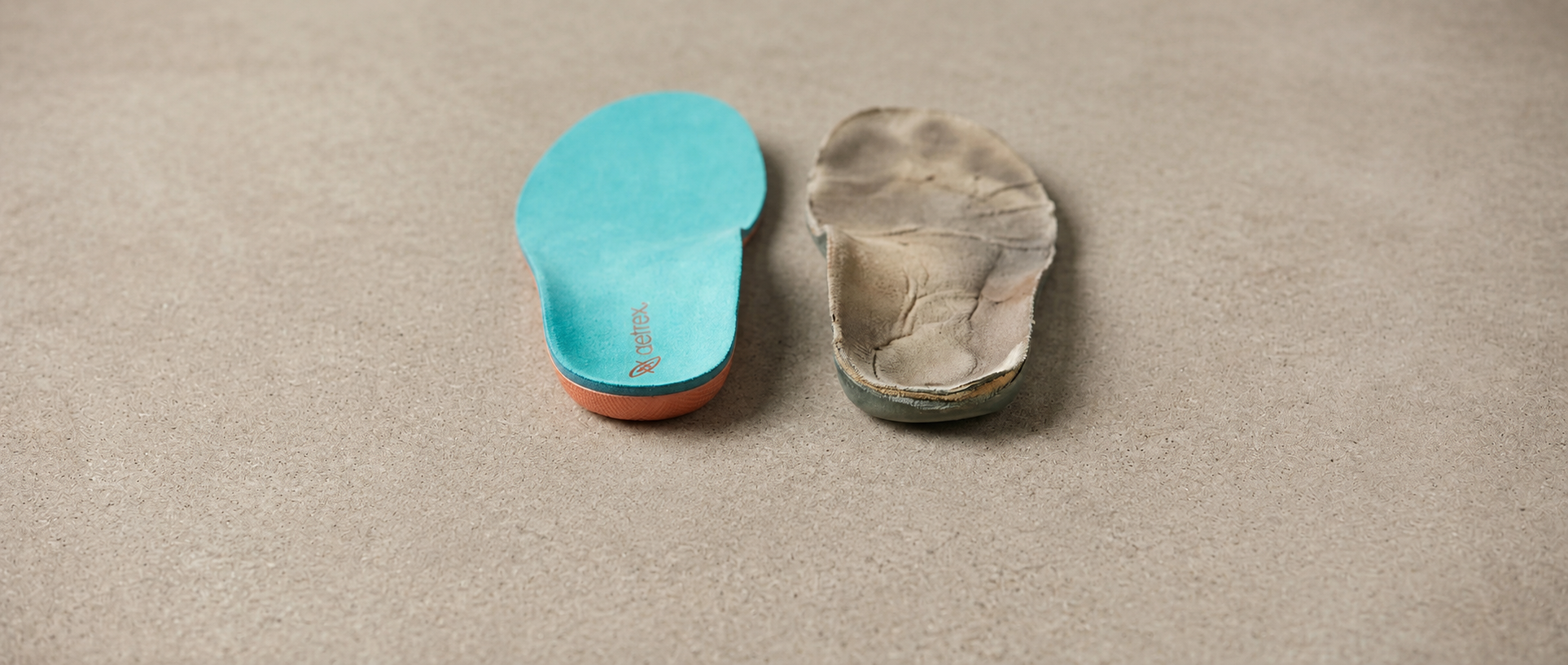
In Short: With daily wear, plan to replace insoles roughly every 6–12 months — sooner for cheaper single-layer foam, longer for multi-layer designs with a firm polyurethane base. The calendar is a guide, not the rule: flattened cushioning, reduced arch support, and returning discomfort are the real signals it's time.
Material layering, more than the calendar. A single-density foam insole compresses faster than a multi-layer design where distinct layers handle different jobs. A firm polyurethane base — like Aerocell™ — resists compression and helps the insole hold its structure through months of daily use, while a foam-only insert packs flat sooner. Your body weight, hours on your feet, and surfaces all accelerate wear: a 12-hour shift on concrete compresses cushioning far faster than intermittent desk-and-walk days.
The Aetrex Premium Memory Foam Posted Orthotic uses a three-layer build — a CopperGuard® antimicrobial top over lQl50™ Memory Foam, on an Aerocell™ polyurethane base for high energy return — that distributes daily stress rather than concentrating it in one foam layer. Steven H., after years of daily wear: "I have been using L2320 several years now and they are outstanding."

Shop Premium Memory Foam Orthotics
Replace them when you notice any of these:
Any one of these means the materials have degraded past their useful life — even if the insole still looks intact.
Rotate between two pairs so the foam gets overnight recovery time instead of staying compressed inside a closed shoe. Pull them out to air after long days. Avoid machine washing, which breaks down foam structure — wipe with a damp cloth instead. And start with the right size: a too-tight shoe causes edge wear and bunching that shortens life.
At $79.95, an orthotic that lasts 9–12 months costs less per day than a cheap insert replaced every few months — and it keeps supporting your feet the whole time rather than quietly going flat. Paula D., on her husband's 12-hour shifts: "he now wears these insoles religiously. They are worth the money."
How often should I replace insoles with daily wear? Roughly every 6–12 months for quality multi-layer insoles; every few months for basic single-layer foam. Replace sooner if you notice flattening, reduced support, or returning discomfort.
What are the signs my insoles are worn out? Flattened or creased arch, reduced bounce-back, the insole not lying flat, returning foot pain, or persistent odor.
Does rotating between shoes extend their life? Yes — giving foam time to decompress between wears helps it recover its shape.
“Your feet serve an important purpose in the kinetic chain, which makes up how the whole body is connected and works together. This chain is important to understand because it can influence how forces move through the ankles, knees, hips, and so on. To encourage better alignment starting at the foot, Aetrex has made their insoles with a special arch design that can assist with foot positioning. It gives me confidence to see research supporting the effectiveness of insoles like these. Clinical findings indicate that people who regularly wear insoles with good arch support can see changes in foot mechanics and alignment.”
— Dr. John Kasper, DO (Internal medicine), on Aetrex arch support
Shop the full range at aetrex.com.
Share:
Common Foot Problems and How to Ease Them at Home
Memory Foam vs. Firm Orthotic Support: Which Is Better for Heel Pain?