

In Short: For plantar heel pain (the plantar-fasciitis kind), the research on orthotics is cautiously positive: reviews of the evidence generally find they can help reduce pain in the short-to-medium term as part of conservative care — not as a stand-alone cure, and not for everyone. They work best combined with stretching, supportive footwear, and load management. This is general information, not medical advice.
Plantar heel pain is one of the most-studied foot complaints, and orthotics — both over-the-counter and custom — are among the most-studied treatments for it. The broad takeaway from systematic reviews and clinical guidance is measured: orthotics can provide meaningful relief for many people, mostly over the short and medium term, and they're widely recommended as one part of first-line conservative care. What the evidence does not claim is that orthotics cure the underlying condition on their own, or that they help every case equally. Results vary from person to person.
Two other honest points the research supports. First, for typical plantar heel pain, well-designed over-the-counter orthotics often perform comparably to custom ones for many people — custom devices are generally reserved for more complex or stubborn cases. Second, orthoses are most effective alongside the other conservative steps, not instead of them.
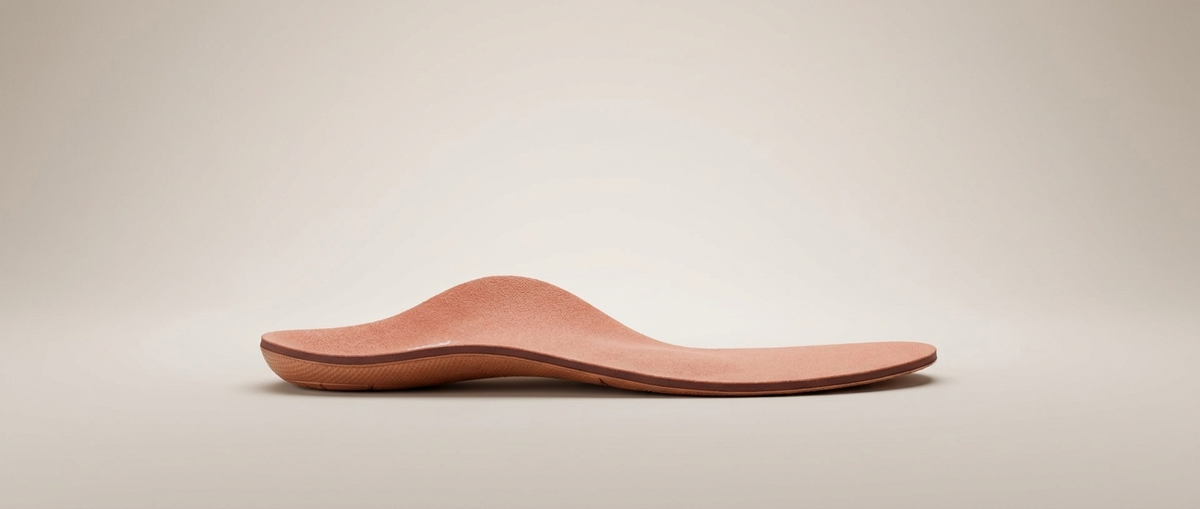
The rationale is straightforward: a structured orthotic supports the arch and helps control overpronation, which reduces the repetitive over-stretch of the plantar fascia at the heel, while cushioning absorbs heel-strike impact. That's the mechanical piece of a recovery plan — it doesn't replace stretching or rest, but it addresses the load that keeps the fascia irritated day to day.
Because the evidence supports orthotics as a first-line, conservative option, a quality over-the-counter orthotic is a reasonable place to start. Aetrex Premium Memory Foam Posted Orthotics ($79.95) pair signature arch support with a posted heel to control overpronation and 43% more forefoot memory foam than other Aetrex orthotics for cushioning. It drops into shoes you already own — the everyday support that stretching and rest work alongside. For how it compares with softer inserts, see memory foam vs. firm orthotic support.
Evidence is about averages, not guarantees — some people get substantial relief from orthotics and some don't. They're one tool in a plan that also includes stretching, supportive shoes, and time. And research on treatment is not a diagnosis: if your heel pain is severe, persistent beyond a few weeks of conservative care, worsening, or comes with swelling or numbness, see a foot-health professional to confirm what's going on and rule out other causes.
Do orthotics really help plantar heel pain, or are they hype? The evidence is cautiously positive: reviews generally find orthotics reduce pain for many people in the short-to-medium term, as part of conservative care — not as a cure on their own.
Are custom orthotics better than over-the-counter? For typical plantar heel pain, well-designed over-the-counter orthotics often perform comparably to custom for many people; custom is usually reserved for complex cases.
Will an orthotic fix my heel pain by itself? Usually not on its own. It addresses the mechanical load and works best combined with stretching, supportive footwear, and rest.
“Whenever your foot hits the ground, there’s an equal and opposite impact force that pushes back up through your body. To accommodate this force, your body is designed to absorb some of that shock. if it doesn’t absorb or distribute that force well, it can contribute to discomfort that may affect the foot or other joints. Depending on your alignment and footwear, this can contribute to pain and overuse injuries. One of the main reasons I encourage patients to use orthotics is because of how they can redistribute forces through the foot to support more optimal alignment. Over time, this may reduce stress on the joints and promote better body mechanics.”
— Dr. Brian Nicholls, DO (Emergency medicine)
Shop the full range at aetrex.com. This article is general information, not medical advice.
Share:
From Summer Sandals to Fall Shoes: Keeping Your Arches Supported
Foot Rolling and Stretching for Plantar Fasciitis: What Actually Helps