

In Short: Swollen feet, aching arches, and feet that seem to get longer or wider are common in pregnancy — driven by extra weight, fluid retention, and hormones that loosen ligaments. Supportive, roomy, easy-on footwear makes daily life more comfortable. None of this is a substitute for your prenatal care, and some swelling needs a provider's attention. This is general information, not medical advice.
Pregnancy changes feet in a few ways at once. Added weight increases the load on the arches; fluid retention causes swelling, often worse by evening; and the hormone relaxin loosens ligaments throughout the body, including the feet — which is why some people's arches flatten and their feet get noticeably longer or wider, sometimes for good. The result is often arch fatigue, general achiness, and shoes that suddenly feel tight.
Supportive arch support. As arches take more load and ligaments loosen, a supported footbed is more comfortable than a flat one — at home and in your shoes.
Room and adjustability. Feet that swell through the day do better in footwear that adjusts, so you're not stuck in something that fit in the morning and pinches by evening.
Easy on and off. Bending to fasten shoes gets harder later in pregnancy; a shoe you can manage without much bending helps.
Stable, non-slip footing. As your center of gravity shifts, steady footing matters more.
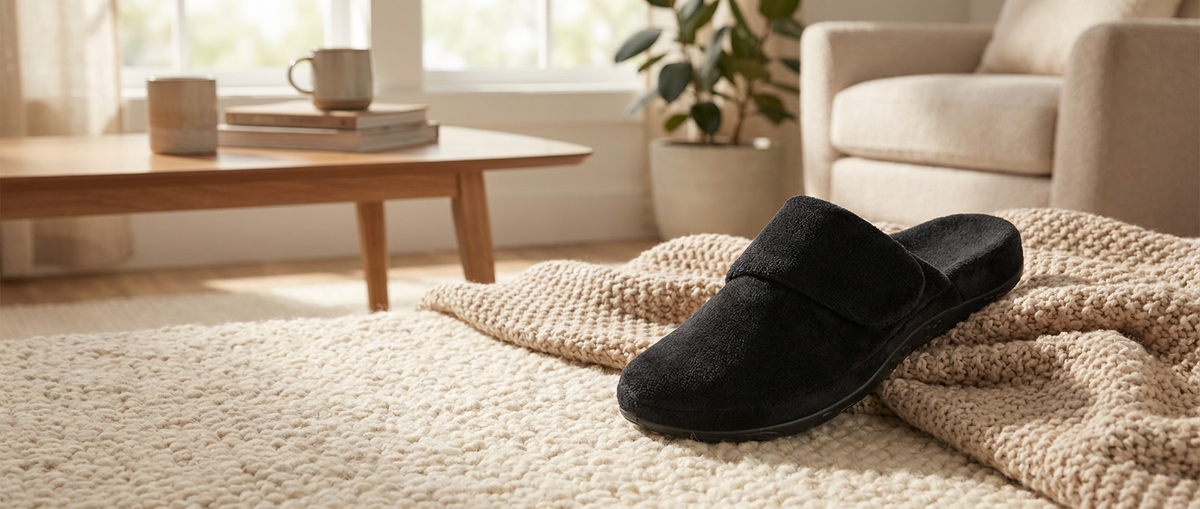
The Mandy Closed Toe Slipper ($84.95) fits a lot of this at home: built-in arch support and a memory foam footbed, an adjustable hook-and-loop strap that accommodates swelling, easy on-and-off, and a real outsole for steady footing on hard floors. For your everyday shoes, the Aetrex Premium Memory Foam Posted Orthotic ($79.95) adds arch support as your feet take on more load. Think comfort and support for daily life — not treatment.
Foot and ankle swelling in pregnancy is usually normal, but it can occasionally signal something that needs attention — so always follow your prenatal care team's guidance. In particular, sudden or severe swelling, swelling in one leg more than the other, or swelling with headache or vision changes should be reported to your provider promptly. Footwear is about daily comfort; your care team handles the medical side.
Why do my feet hurt and swell in pregnancy? Extra weight, fluid retention, and ligament-loosening hormones combine to cause arch fatigue, swelling, and sometimes longer or wider feet.
What footwear helps? Supportive, roomy, adjustable, easy-on shoes with steady footing — like the Aetrex Mandy at home, plus arch support in your everyday shoes.
“Whenever your foot hits the ground, there’s an equal and opposite impact force that pushes back up through your body. To accommodate this force, your body is designed to absorb some of that shock. if it doesn’t absorb or distribute that force well, it can contribute to discomfort that may affect the foot or other joints. Depending on your alignment and footwear, this can contribute to pain and overuse injuries. One of the main reasons I encourage patients to use orthotics is because of how they can redistribute forces through the foot to support more optimal alignment. Over time, this may reduce stress on the joints and promote better body mechanics.”
— Dr. Brian Nicholls, DO (Emergency medicine)
Shop the full range at aetrex.com. This article is general information, not medical advice.
Share:
The Best Travel Shoes for Long Days on Your Feet
Why Your Feet Hurt More in Cold Weather — and What Helps