

In Short: Many people with plantar fasciitis or arthritis notice their feet ache more in winter. Cold tends to stiffen tissues and joints, we move less, and we swap supportive summer sandals for flat boots and bare feet on cold floors — a combination that invites flares. Keeping support on your feet, indoors and out, is the simplest counter. This is general information, not medical advice.
A few things stack up when it gets cold. Tissues and joints tend to feel stiffer in the cold, so a plantar fascia or an arthritic joint that was manageable in summer can feel cranky. We're also less active in winter, so feet warm up and loosen less before we load them. And the footwear changes: the supportive sandals that kept arches happy all summer get replaced by flat, unstructured boots — or by bare feet and thin socks on cold hard floors at home. Less support plus stiffer tissue is a recipe for flare-ups.
Keep support indoors. If you go barefoot on cold floors all winter, your arches lose the support they had in summer. A supportive house shoe bridges the gap.
Carry support into winter shoes. Flat boots and casual shoes can take a drop-in orthotic so you don't lose arch support when the sandals go away.
Keep feet warm and moving. Warm feet and a little gentle movement or stretching before long standing help stiff tissue loosen.
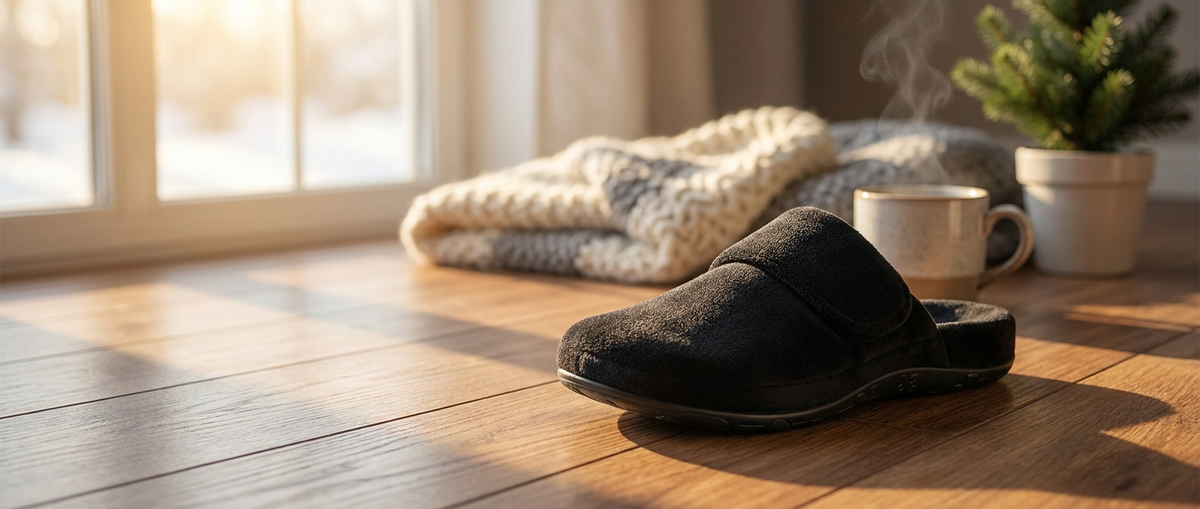
Indoors, the Mandy Closed Toe Slipper ($84.95) keeps arch support and a memory foam footbed on your feet on cold hard floors — closed-toe, so feet stay warm and covered. For your winter shoes and boots, the Aetrex Premium Memory Foam Posted Orthotic ($79.95) drops in to restore the arch support you had in summer sandals. Together they keep support on your feet from the moment you get up to the end of the day. For the broader at-home routine, see our arch-support slipper guide.
Seasonal stiffness is common, but see a foot-health professional if winter pain is severe, persistent, swelling, or clearly worsening year over year — especially with arthritis or diabetes.
Why does my plantar fasciitis flare in winter? Cold tends to stiffen tissue, we move less, and supportive summer sandals get swapped for flat boots and bare feet on cold floors — all of which reduce support and invite flares.
What helps foot pain in cold weather? Keep arch support on your feet indoors and out — a supportive house shoe at home and a drop-in orthotic in winter shoes — plus keeping feet warm and gently moving.
When should I see a professional? If winter foot pain is severe, persistent, swelling, or worsening — particularly with arthritis or diabetes.
“Your feet serve an important purpose in the kinetic chain, which makes up how the whole body is connected and works together. This chain is important to understand because it can influence how forces move through the ankles, knees, hips, and so on. To encourage better alignment starting at the foot, Aetrex has made their insoles with a special arch design that can assist with foot positioning. It gives me confidence to see research supporting the effectiveness of insoles like these. Clinical findings indicate that people who regularly wear insoles with good arch support can see changes in foot mechanics and alignment.”
— Dr. John Kasper, DO (Internal medicine)
Shop the full range at aetrex.com. This article is general information, not medical advice.
Share:
Foot and Ankle Changes in Pregnancy: What Helps Day to Day