

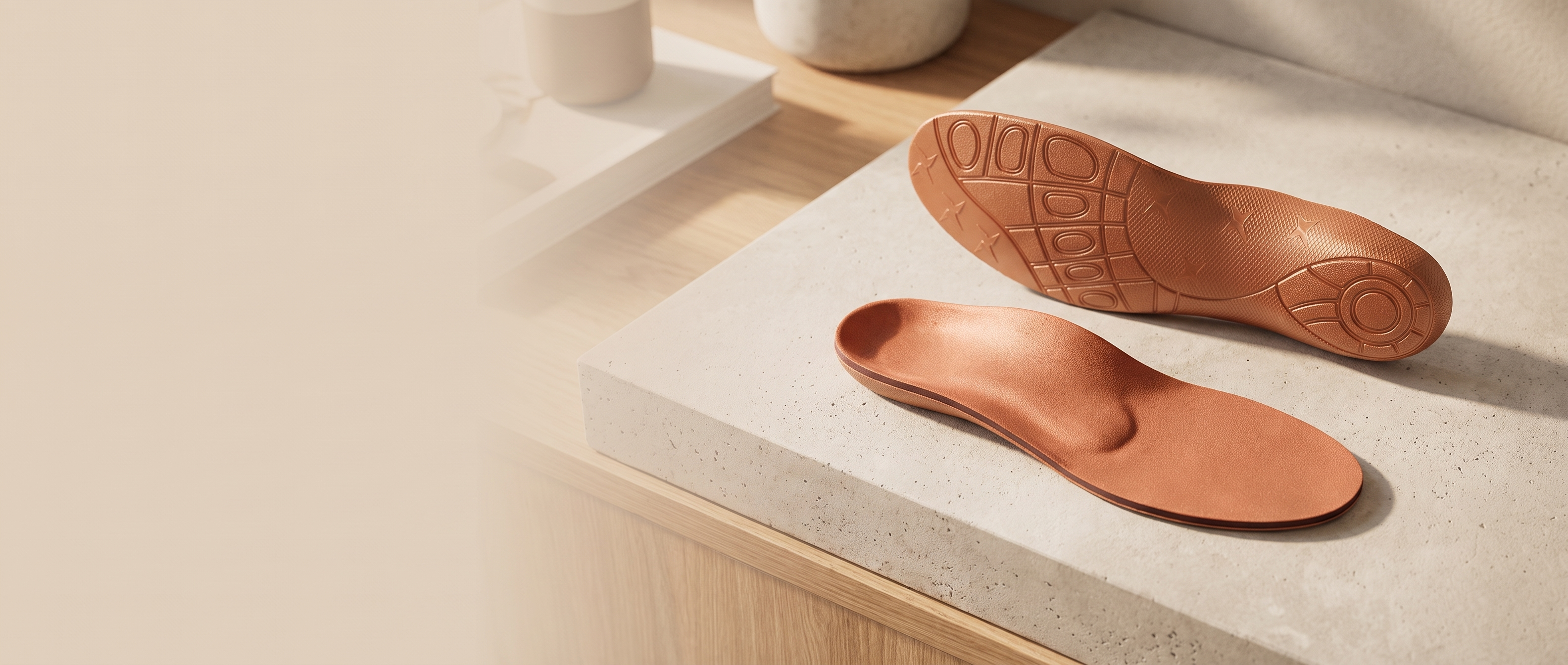
In Short: Are over-the-counter orthotics worth it? For most people dealing with arch pain, plantar fasciitis, or overpronation, a well-designed over-the-counter orthotic with variations customized to your needs, provides comfort and alignment comparable to custom orthotics — at a fraction of the cost. Custom orthotics make sense for complex structural issues. But technology-driven OTC options — informed by Aetrex's foot-scanning technology — now close the gap for everyday use.
“These inserts are more comfortable than the custom orthotics I paid for, and they work just as well. They keep my foot nicely aligned, relieving foot and knee pain, and they're pleasantly cushiony to walk on.” — Greg (5★)
Not an outlier. A pattern. Which raises a straightforward question: do you actually need custom orthotics, or is a data-informed OTC option the smarter starting point?
Three criteria matter — custom or OTC:
Most drugstore insoles fail on the first and third. They offer cushioning without structural support. Padding alone doesn't address overpronation or arch collapse — the root causes of most foot discomfort.
“Better than my podiatrist made orthotics. Highly recommend.” — Alfred D. (5★)
Arch-type specificity. The L2320 model is designed specifically for low arches to flat feet, with a posted heel to control overpronation. The arch profile matches a specific foot type.
Material layering. Aetrex Premium Memory Foam Orthotics contain 43% more memory foam in the forefoot compared to other Aetrex orthotics. The center layer uses lQl50™ Memory Foam, topped with CopperGuard® antimicrobial lining combined with microfiber, on an Aerocell™ polyurethane base for high energy return.
Data-driven design. The orthotic features Aetrex's signature Arch Support designed to biomechanically align the body and help prevent plantar fasciitis, arch pain, and metatarsalgia — informed by Aetrex's foot-scanning technology.
“I am a physical therapist who has dealt with heel pain for over a decade. Nothing has given me more instant relief than these orthotics.” — Christina M. (5★)

Shop Premium Memory Foam Orthotics
The large majority of owners rate the Aetrex Premium Memory Foam Orthotics 4–5 stars. The consistent theme: meaningful comfort during extended wear.
“These insoles have been a huge relief for my husband's sore feet. He is on his feet up to 12 hours at a time... They are worth the money.” — Paula D. (5★)
“I can walk for hours and hours, hike up and down hills and I don't have pain.” — Rebecca R. (5★)
An honest note: OTC orthotics — even well-designed ones — won't address severe structural deformities or post-surgical recovery needs where a prescribed custom device is genuinely necessary. For complex cases, OTC is a starting point, not the final answer.
Choose the right model for your arch type. The L2320's posted heel design targets overpronation in low-to-flat arches. High arch or neutral foot? A different Aetrex model serves you better.
Remove existing insoles before inserting. At 0.25 inches overall thickness, the Aetrex orthotic is designed to replace — not stack on top of — your shoe's factory insert.
Allow orthotics to air out between wears. The antimicrobial lining helps manage odor, but giving orthotics time to breathe extends freshness.
Know where they fit best. Recommended for walkers, nurses, doctors, teachers, chefs, and those who are on their feet often.
“These innersoles have made a world of difference. I have been using Aetrex for over six years.” — Jill L. (5★)
Are over-the-counter orthotics worth it compared to custom orthotics?
For most people with plantar fasciitis, arch pain, or overpronation — yes. A quality OTC orthotic designed from foot-scan data provides comparable alignment and comfort at a fraction of the custom price, which can run several hundred dollars.
What makes Aetrex Premium Memory Foam Orthotics different from generic drugstore insoles?
They combine biomechanical arch support, 43% more memory foam in the forefoot, a posted heel for overpronation control, and antimicrobial CopperGuard® lining. At $79.95, they sit between disposable drugstore insoles and far pricier custom devices.
How do I know if I need custom orthotics instead?
Severe structural deformity. Post-surgical recovery. Well-designed OTC orthotics tried without improvement. Those are the scenarios where a custom device is warranted.
Share:
Best Insoles for Severe Plantar Fasciitis Morning Heel Pain
Fashionable Supportive Sandals for 2026: Memory Foam Meets Style