

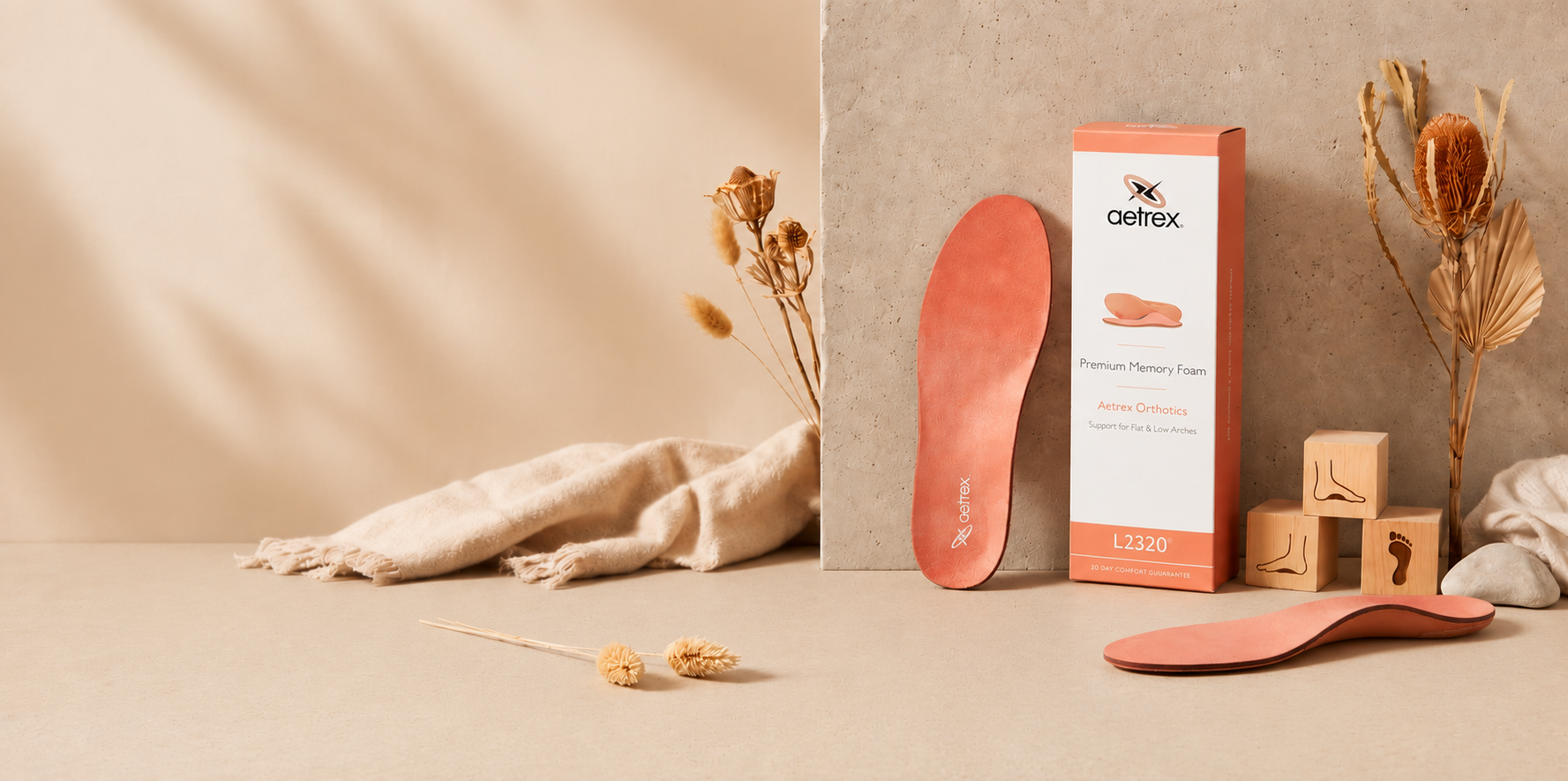
Not every foot needs the same insole. Arch height, foot width, and any existing foot condition all change what “support” actually means for you. An insole that suits one person's foot can sit wrong under someone else's high arch. This guide breaks down the type of insole to look for based on foot type, and where Aetrex's orthotic line fits each one.
A shoe insert works by filling the space between your foot and the shoe and supporting it in the right places. Get the arch height wrong and the insole either does nothing or pushes support into the wrong part of the foot. This is why “best insoles” lists that ignore foot type are only half useful. The starting point should always be your arch type and any specific foot condition, not the insole itself.
Aetrex determines arch type and pressure patterns using its Albert and FitAI foot scanning technology, drawing on a database of more than 50 million 3D foot scans collected through in-store scanners at retailers including DSW, ASICS, and Fit2Run. That scale of data informs how Aetrex's orthotic lines are built and sized across arch types, rather than a single generic shape sold in multiple sizes.
High arches tend to underpronate, placing more load on the heel and ball of the foot with less natural shock absorption. Look for an insole with a deeper heel cup and a firmer arch contour to fill the gap between foot and shoe without collapsing under pressure.
Flat or low-arch feet tend to overpronate, rolling inward during the step. These benefit from a more structured arch support that guides the foot toward a more neutral position, paired with a stable heel cup to control excess motion.
A neutral arch generally needs moderate, balanced support rather than a corrective structure. The goal is cushioning and everyday comfort.
For plantar fasciitis, look for an insole with firm arch support and a cushioned heel area. Aetrex's Signature Arch Support line is designed around anatomical alignment, positioning support to help hold the arch's shape through the step.
Feet affected by diabetes or reduced sensation benefit from an insole focused on cushioning and pressure distribution rather than correction. Aetrex's Conform Orthotics use a Plastazote top cover that molds to the foot during the gait cycle for a cushioned, customized feel. If you have diabetes or reduced sensation, ask your provider what's appropriate before making a change.
Insole thickness matters as much as arch type, especially with dress shoes or shoes without a removable factory footbed. Aetrex's Fashion Orthotics (L100) measure about 0.0125 inches thick for slim-fitting shoes, while the Unisex Thinsoles Orthotics (L1300) run about 0.082 inches for a slightly higher profile in sneakers and casual shoes. If you're sizing between shoe sizes to fit an orthotic, most guidance recommends sizing up rather than down.
If you're not sure which category you fall into, an in-person 3D foot scan is the most reliable way to check. Aetrex's FitAI-enabled retail partners can measure arch height, pressure distribution, and width in a few minutes. If an in-store scan isn't available near you, Aetrex's online orthotics quiz can help narrow down arch type and support needs based on your symptoms and shoe habits.
Do insoles help with plantar fasciitis?
An insole with arch support and heel cushioning can support the arch and cushion the heel, which is why podiatrists commonly recommend supportive insoles alongside stretching and other care.
Can I use the same insole in different shoes?
Only if the shoes have removable factory insoles and similar width and depth. Moving an insole into a shoe with a non-removable footbed or a snug toe box can crowd the fit.
How often should I replace my insoles?
Most insoles should be replaced every 6 to 12 months depending on use, or sooner if you notice visible compression, uneven wear, or a change in comfort.
This article is general information and isn't a substitute for medical advice. If you have a diagnosed foot condition, check with your podiatrist or physician about the right support for you.
Share:
Best Shoes for Plantar Fasciitis in 2026: What to Look For and Aetrex Picks
Plantar Fasciitis Walking Sandals: What the Aetrex Jillian Does